

The power utility, Eskom, stated in its most recent power system update that it was moving forward with a phased programme to eliminate load reduction by 2027.
Image: File
The power utility, Eskom, stated in its most recent power system update that it was moving forward with a phased programme to eliminate load reduction by 2027.
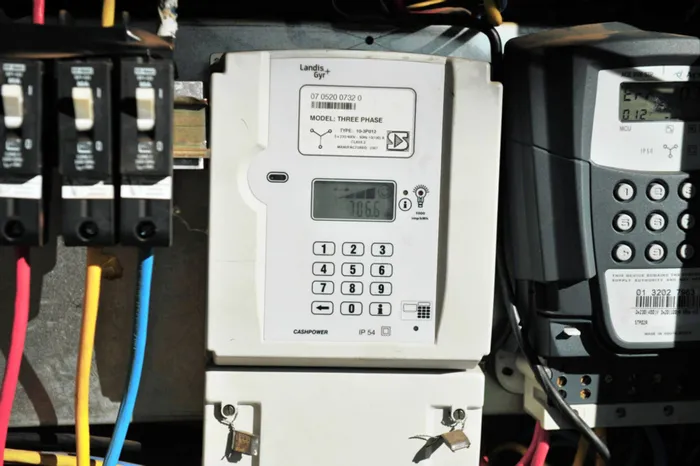
This initiative is centred around a nationwide smart meter rollout, which is already yielding measurable outcomes.
Eskom has managed to avoid load shedding for a record-breaking 308 days straight, which it attributes to the Generation Recovery Plan and the solid performance of the power stations.
However, in high-risk areas with illegal connections and infrastructure damage, load reduction remains a temporary necessity.
Eskom’s strategy to end this involves a multi-pronged approach targeting 971 feeders and is set to benefit approximately 1.69 million customers.
Key to this is the installation of smart meters, which enable remote management of non-paying users without resorting to blanket load reduction that penalises compliant customers.
“One of the biggest criticisms I get is from people who say, ‘Minister, I pay for my electricity, I am not illegally connected, and yet I am punished the same as everyone else.’ With smart meters, we can isolate those who choose not to pay and not make others collateral damage,” Minister of Electricity and Energy, Kgosientsho Ramokgopa, previously stated when unveiling the plan.
A recent report revealed that in KwaZulu-Natal alone, Eskom is suffering annual losses of R6 billion primarily because 50% of its 1.2 million provincial customers are engaging in electricity theft.
Eskom’s Senior Manager for Customer Services, Dadewabo Mbhele said in the Pietermaritzburg area, 90% of people do not pay for electricity.
To date, Eskom has installed 470,134 smart meters nationwide, with 183,956 of these on load reduction feeders, giving customers greater visibility over their usage and supporting accurate billing.
The utility noted that with 157 feeders already removed from load reduction, an estimated 208,819 customers are now benefitting.
The smart meter deployment is concentrated in provinces with the highest network risk, with approximately 90% of installations on load reduction feeders situated in Gauteng, Mpumalanga, Limpopo, and KwaZulu-Natal.
The installation of 577,347 smart meters on high-risk feeders is planned as a phased programme. This initiative is set to achieve full rollout by 2027, with the initial phase targeting completion by March 2026.
The rollout has not been without its challenges, as Eskom’s installation teams are facing significant resistance in the field. The latest update highlighted that “installation teams continue to face persistent resistance, including intimidation, violent incidents, and repeated work stoppages”.
These disruptions have led to deployment delays, with approximately 122,000 planned meter conversions postponed so far, undermining the stability of the rollout.
Asad Gaffar, chairperson of the Westville Ratepayers Association, expressed scepticism about the technology upon the launch of the KwaZulu-Natal rollout in October 2025.
“Instead of rolling out these devices, Eskom should be looking at ways to increase its output as the demand for electricity grows. Most countries have long-term plans to ensure that their electricity requirements are met. Only in South Africa do we struggle due to having the wrong people in management,” Gaffar commented.
Eskom, however, emphasised that the meters are about “building a smarter, more connected South Africa”.
The smart meters provide customers with real-time control, monitoring of balances, and eligibility for rewards programmes like Demand Response (DR).
Furthermore, Eskom said smart meters are intended to improve access to Free Basic Electricity (FBE), allowing the government to “front-load” the 50 kWh monthly allocation to qualifying households. Current FBE registrations are at 582,110 customers, reflecting only about 28% of the 2.1 million eligible base.
As Eskom continues to partner with communities and upgrade infrastructure, the utility urges the public to support this intervention.
“Eskom calls on communities to report illegal connections, use electricity responsibly, and protect infrastructure.”