

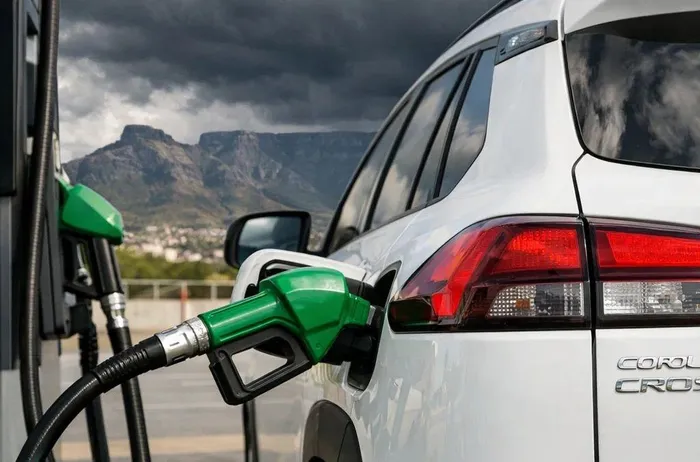
Petrol hikes in excess of R5 and diesel increases of more than R10 expected from Wednesday.
Image: AI / Sora
SOUTH Africa is on the brink of unprecedented fuel price increases, with potential economic repercussions. As the government considers intervention, the impact on consumers and businesses looms large.
The only thing potentially standing in the way of this fuel price calamity is government intervention in the form of temporary fuel tax reprieves that have been widely called for. Although a Cabinet committee was set up last week to evaluate the fuel price impact, no interventions had been announced at the time of writing.
As it stands, and assuming there is no last-minute government intervention, month-end data from the Central Energy Fund is pointing to petrol price increases of between R5.31 for 93 Unleaded and R5.82 for 95 Unleaded. Diesel looks set to increase by between R10.13 in the case of 500ppm and R10.27 for the cleaner 50ppm.
Added to that are tax increases announced during the recent 2026 Budget Speech, which will see an additional 21 cents per litre added to the tally through increases to the General Fuel Levy (9 cents), Carbon Levy (5 cents) and Road Accident Fund Levy (7 cents).
Should the above scenario unfold, motorists can expect to pay in the region of R25.50 for 95 Unleaded petrol at the coast and R26.33 in the inland areas, where the less expensive 93 Unleaded will cost around R25.71. The official fuel price adjustments for April are expected to be announced by government early this week.
Diesel is where even bigger shocks come in, with the wholesale price of 50ppm projected to rise to R28.32 at the coast and R29.08 in Gauteng. This excludes the wholesale and retail margins, which usually add around R2 to R3 to the final price paid at fuel stations - unlike petrol, diesel is an unregulated fuel.
War in the Middle East
The war in the Middle East has led to a surge in international oil prices, with the cost of Brent Crude surging by around 38% since the previous review period. Brent averaged around $95 per barrel in March, up from $69 the previous month.
While the rand also weakened due to the economic uncertainty caused by the war, oil prices account for the bulk of the aforementioned under-recoveries that will lead to April’s fuel price hikes.
Rising inflation ahead
April’s rising fuel costs are expected to ripple through the economy quickly, with transport and logistics sectors feeling the greatest impact. Diesel in particular drives up operating expenses along supply chains, adding pressure on businesses already dealing with sluggish demand.
For everyday shoppers, the effect often manifests in higher prices for essentials like food and household goods, as the cost of moving products increases.
These fuel-driven price pressures also make the inflation picture in South Africa more challenging, potentially limiting the central bank’s room to cut interest rates.