

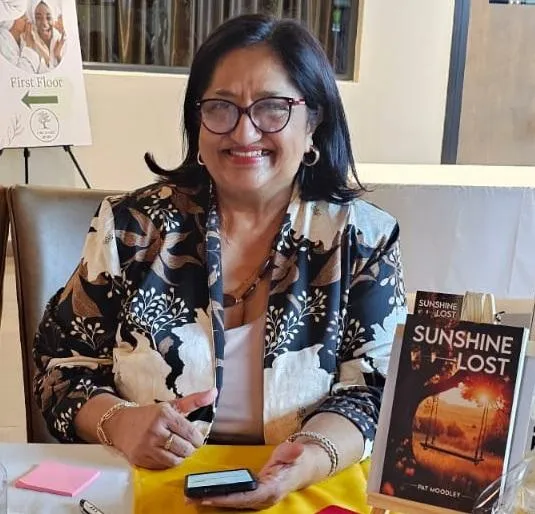
Pathmavathi Moodley, former head of the Department of Justice and Constitutional Development in KwaZulu-Natal.
Image: Supplied
FOR almost three decades, Pathmavathi Moodley, former head of the Department of Justice and Constitutional Development in KwaZulu-Natal, has exemplified a life advocating for justice, particularly the rights of women and children in South Africa.
The 65-year-old, from Kloof, shared her journey which started from humble beginnings to later becoming a leader in legal reform.
Moodley was born in Cato Manor. Her father, Meganathan Moodley, now late, sold tea and tobacco products, and her mother, Gonalutchmee, was a housewife.
Moodley said that due to the Group Areas Act, her family moved to Parlock, and then later to Isipingo Hills.
“I don’t recall much of my early childhood in Cato Manor and Parlock. However, I have many fond memories of Isipingo Hills. It was a safe area. My brother and I rode our bicycles around the neighbourhood and no one scolded us for being out late. We lived in a close-knit community where neighbours cared for every child as if they were their own.
“It is sad that many children don’t belong to such communities now. They don’t have that freedom to just be children, and to play freely without fear,” she said.
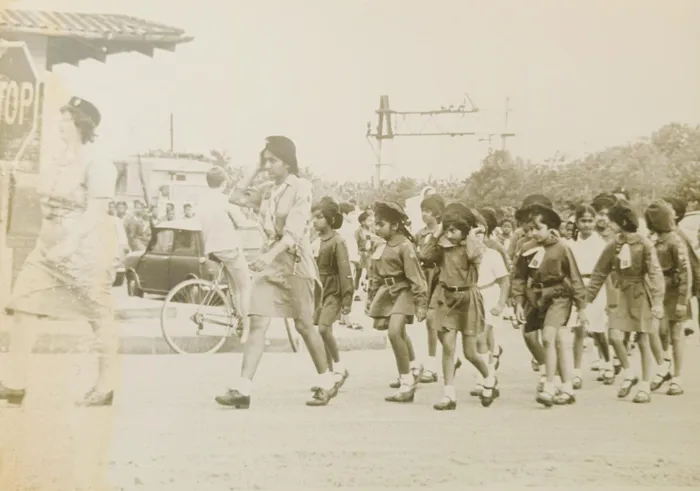
As a teenager, she was a Girl Guide.
Image: Supplied
Moodley said her family were part of a small temple group.
“The group raised money to build a hall in the community. I participated in every Hindu festival. I sang and danced, which was an important part of my development because it made me confident and eloquent.”
Moodley was also a Girl Guide as a teenager.
“As a Girl Guide, I was taught life skills and coping mechanisms. While we enjoyed fun activities like camping, we also learnt skills such as changing a tyre. It was not just about learning to cook or bake. It was a good part of my childhood.”
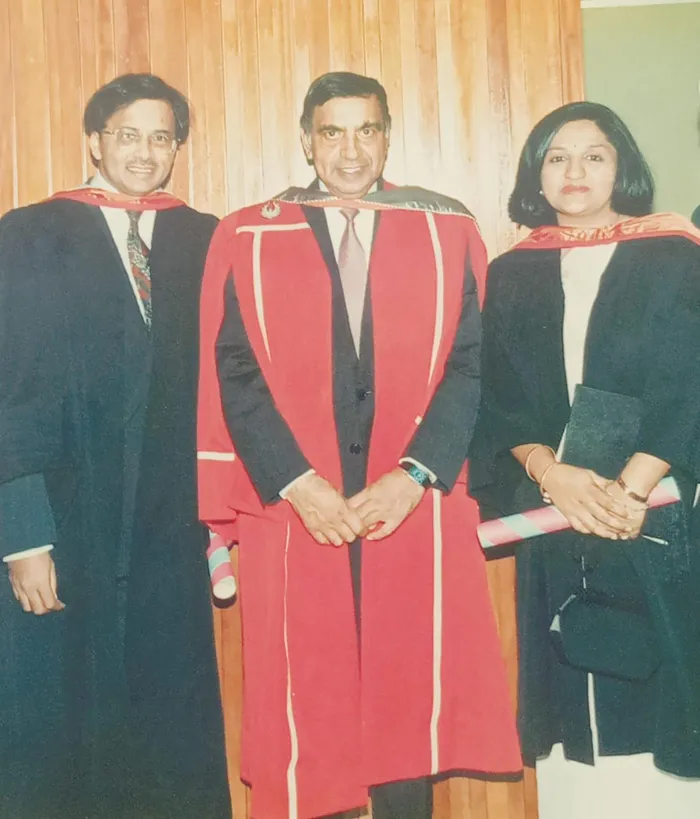
She graduated with a Master of Laws (LLM) from the University of KwaZulu-Natal. She is seen with, from left, advocate Rajesh Choudree, SC, and the now late Dullah Omar, the country’s first Minister of Justice.
Image: Supplied
Moodley attended Class 1 (Grade 1) at a primary school in Parlock before attending Methodist Indian Primary School in Durban from Class 2 (Grade 2) to Standard 2 (Grade 4).
She attended Isipingo Primary School from Standard 3 to Standard 5 (Grade 5 to 7).
From Standard 6 (Grade 8), she attended Isipingo High School where she matriculated in 1977.
“I enjoyed school, and absolutely loved drama. Although the subject wasn't part of our curriculum, we produced plays every year. I was also part of the debate team and competed in the Jan Hofmeyr Memorial Speech Contest with a presentation on the emancipation of women.
“I was also a voice for my fellow classmates. In matric, the school refused to let us have our ball because of problems caused by pupils from the previous year. As deputy head girl, I led a protest to the principal’s office demanding the opportunity to have our ball. He told me I could lose my badge, but I told him we could not be punished because of what others had done. Eventually, we negotiated and made a deal, and we had our ball,” Moodley said.
She wanted to pursue a career in law.
“I must have been around 13 or 14 years old when my dad took me to meet his lawyer, Zubie Seedat. I remember seeing this young, beautiful woman dressed in a sari walk out to meet him. I thought to myself, ‘wow, if this is what lawyers look like, I also want to be one’. It just so happened that I had the opportunity to work with her. She has been an inspiration to me because she has given many women opportunities to complete their articles at her practice.”
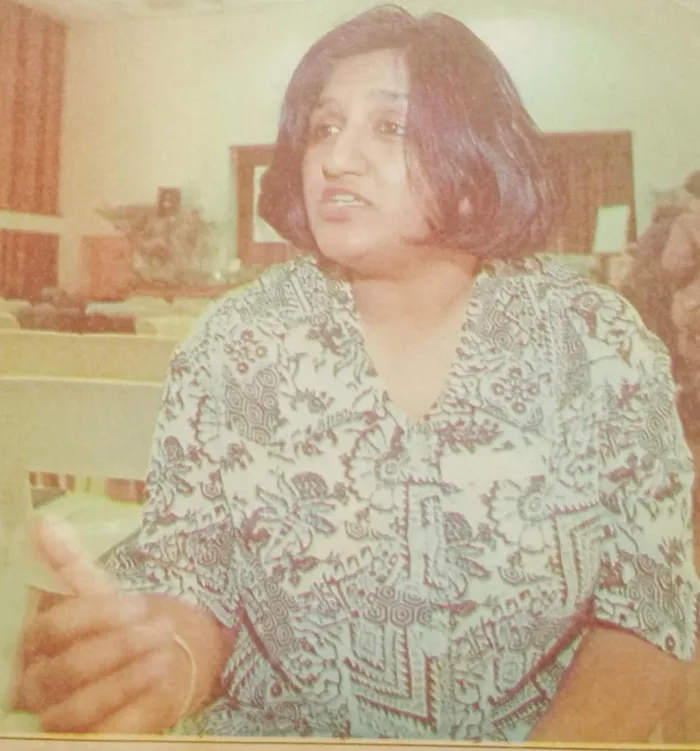
While lecturing at the then-University of Durban-Westville
Image: Supplied
Moodley completed a BA Law degree at the then University of Durban-Westville (UDW) in 1980. She graduated with a Bachelor of Laws (LLB), and later, a Master of Laws (LLM). Moodley is also a qualified family mediator.
Career
After graduating with an LLB in 1982, Moodley worked as a graduate assistant at UDW for a year. She was appointed as junior lecturer in 1984.
“However, in 1985, I thought that if I was going to practice as an attorney, I would need to do articles. So I left lecturing and completed my articles in 1986. However, in January 1987, my eldest son was born, so I was at home for most of that year and then went back to practice for a short while. In 1989, I had my second son and realised it was difficult to practice while taking care of two young children.
“In 1990, I returned as a lecturer in the law department at UDW. At the time we started moving towards a new democracy. I was one of the first lecturers to teach constitutional law and the Bill of Rights when it was introduced. I was drawn to it because of the focus on the rights of women and children,” she said.
Moodley said in 1995, the university received an invitation from the University of Western Cape to do a presentation on juvenile justice, focusing particularly on the rights of children who were incarcerated.
“During a meeting to discuss who would do the presentation, everyone said they didn't know anything about it, but since I was lecturing on Constitutional Law and the Bill of Rights, I should do it. So I did the research and presented a paper at the conference. I was nervous, but all went well. I also met some brilliant people during this time.
“A few months later, I received a call from the now late Dullah Omar, who was the newly-appointed minister of justice at the time. Before this, he was the director of the University of the Western Cape’s Community Law Centre, which hosted the conference. He asked me to sit on a project committee, which was started to draft legislation for child justice and children's rights. We drafted the Child Justice Act and the Children’s Act.”

With Ronald Lamola, the former Minister of Justice and Correctional Services, at the opening of the Point Family Court in 2020.
Image: Supplied
During this time she lectured criminal law at UDW, and decided to start a project with her students.
“At the time there were thousands of children in prison awaiting trial, and the project aimed to secure their release pending trial. However, they could only be released into the custody of their parents. My students were tasked with going to the prison and ‘adopting’ a child with the aim of finding his family. The students then had to meet with the prosecutor to set a date and time for the child to be requisitioned to court, and released in their parents' custody. The project was an enormous success and the students had first-hand experience of working within the criminal justice system.”
Moodley said she thereafter applied for a position at the South African Law Reform Commission (SALRC). When she left UDW, she was the assistant dean of the law faculty.
“The Department of Justice was looking for someone to co-ordinate the writing of the child justice legislation. I was the first black researcher to be appointed to the SALRC in 1997, which was a great achievement. I held the position of principal state law adviser.”
Moodley, who relocated to Pretoria, returned to Durban in 2000.
“My dad, who had been diagnosed with cancer, became sick and my mum could not cope alone. However, I was seconded to an office in Durban. But in that year, I was asked to be a magistrate in the Durban Court’s Family Court due to my interest in women’s and children’s rights, and contributions toward legislation. I happily agreed. I served as a magistrate, while also working for the Department of Justice.
“When legislation changed, I could no longer do both. I had to choose between working for the Department of Justice, which was the executive, or to stay in the judiciary. But by then I already knew how I wanted to continue my career, which was to make a change through policy-making and drafting of legislation.
“In 2004, I returned to the department and relocated to Pretoria again. However, this time I was appointed as the director of family and child law. By this time, the Child Justice Act and Children’s Act were ready to go to Parliament and I was part of that process.”
In 2006, Moodley returned to Durban and was appointed as the department’s director of legal services.
“The department had set up provincial offices and I was transferred to that position. It was the best move as I was now involved in implementing legislation and working on the ground learning what the challenges were, and finding ways to overcome them.”
In 2018, Moodley was appointed as the head of the Department of Justice and Constitutional Development in KwaZulu-Natal, and held the position until her retirement in December 2024.
"I was responsible for 100 courts, managed our relationships with other stakeholders at provincial level, and oversaw the implementation of legislation in the province.
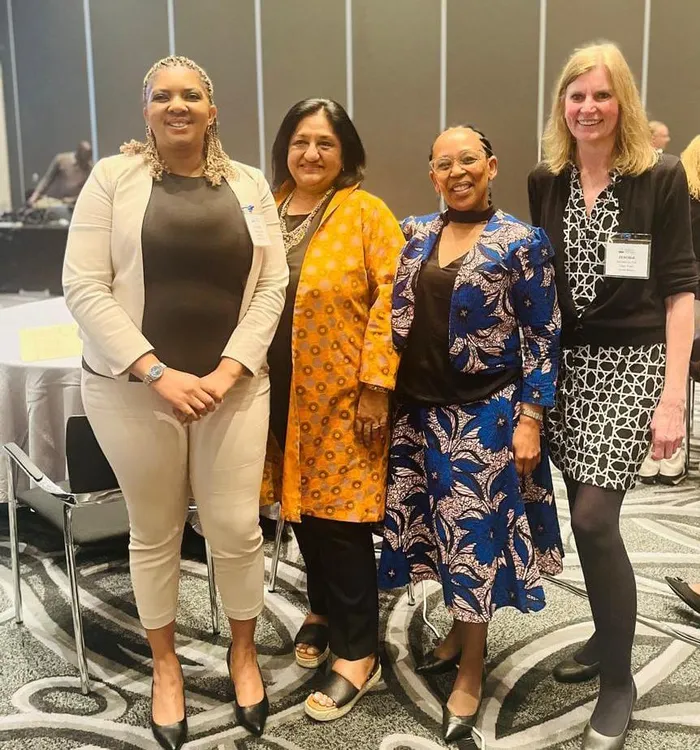
Moodley with Karabo Ozah, director of the Centre for Child Law; Justice Connie Mocumie of the Supreme Court of Appeal, and Zenobia Du Toit, a director at Miller du Toit Cloete Incorporated, at the first AGM of the International Academy of Family Lawyers held in Nairobi, Kenya in 2025.
Image: Supplied
She said there were many highlights, including the opening of the Point Family Court in 2020.
“It is a court dedicated to family law cases. The court was also designed and equipped so that matters could be heard virtually. This worked well because cases could still be heard during the Covid-19 pandemic, and when the respondent in a maintenance case, for example, is in another province or abroad.
“In some instances, when a domestic violence victim does not want to face her perpetrator or be seen in public, they can appear virtually. We also built the Port Shepstone Magistrate’s Court, and revamped the Chatsworth and Umbumbulu magistrates' courts.
Moodley said public outreach and advocacy were a core focus.
“We held many programmes in communities and schools regarding sexual abuse, child abuse, trafficking, and in the latter part of my career, teenage pregnancies. For me, it has always been about creating awareness among women and children about their rights and their resources to get assistance.
“We retrained staff such as court managers because there was a negative image of how people were treated in court. We took complaints very seriously, investigating each one and making sure the complainant got the assistance they deserved. I hope that this ethos will continue within the department,” she said.

With Justice Dunstan Mlambo, the Deputy Chief Justice of South Africa.
Image: Supplied
Moodley said after her retirement, Chief Justice Mandisa Maya asked her to sit on a committee to draft the anti-sexual harassment policy for the judiciary, which was released last year.
She has also been doing work with the United Nations Office on Drugs and Crime (UNODC).
“I worked with them in drafting an online training manual, and a debriefing manual for the judiciary. The debriefing manual was quite important because often judges, magistrates, prosecutors and lawyers dealing with criminal matters, see a lot of explicitly-graphic material; and there is no debriefing for them. While it may be part of their job, they are also human beings with emotions, Seeing such material can affect them. The manual speaks to various interventions that the judiciary may employ to manage stress and trauma.
“In working with the UNODC, we have held workshops for social workers. Many have not been trained on what they need to know and do when they have to appear in court. It was a success, and we hope to conduct more workshops in the future,” she said.
Moodley said she wrote the first femicide review in South Africa while working with the UNODC.
“We analysed a femicide case, and tried to establish why the woman was killed despite all the policies and laws we have in place. We had an intersectoral committee, which included the police, Department of Social Development, National Prosecuting Authority and traditional leaders, to assist with finding what happened. We were not looking to find fault, but to identify the gaps to make sure they don’t recur.”
Moodley said she worked with her friends, Nita Maharaj, the founder of the non-profit organisation Belle of the Ball by Kajil, and Darian Smith of Community Fathers in Wentworth, and held empowerment workshops for matriculants from disadvantaged communities.
“The empowerment programme consists of interactive workshops focusing on confidence, self-belief, emotional awareness, financial literacy leadership and practical life skills beyond the classroom.”
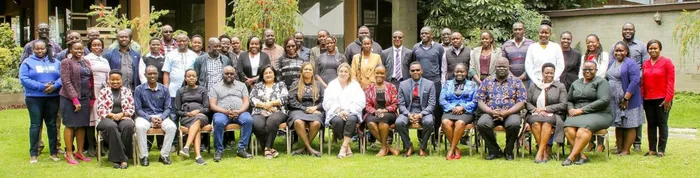
Moodley, seated fifth from left, provided training on child justice to the judiciary in Kenya.
Image: Supplied
Moodley is an Honorary Research Fellow of the School of Law at the University of KwaZulu-Natal and an Associate Fellow of the International Academy of Family Law.
She has also trained extensively, including being invited to Namibia and Kenya to train their judiciary on child law.
“I was adopted by Kenyan delegates and given the name Njeri, which means warrior.“
She also presented at an International child law seminar at the London Metropolitan University in 2011.
Moodley recently launched her debut book, Sunshine Lost, which explores the themes of grooming, bullying, and child and sexual abuse.
The book been hailed by the Chief Justice Maya as “a masterpiece of advocacy disguised as narrative”.
“It is a story of a young girl who is groomed and sexually assaulted by a teacher at her school. She is also bullied by her peers, and becomes addicted to a stimulant for courage to face daily life at school. While the book is written in a style and language meant for children, the content is harsh. However, I am acutely aware of this and deliberately crafted it to reflect the harsh realities of the rape and abuse of young children. There is unfortunately no soft-landing with these cases.”
Moodley said the book was for children, parents and teachers because it would create safe platforms within schools, and the home where children might raise these issues.
“The reality is that children are often too fearful to speak out, and remain silent victims. Parents also don't often see that their child may be going through something. This book is an educational tool for children to break the silence, for parents to be more observant, and for teachers to be more cautious about how they handle complaints from children.
“My hope is for the book to be introduced to schools and used as a tool to educate about such ills, while encouraging children, who are victims of any abuse, to have the courage to speak out,” she said.
The grandmother of two said she enjoyed spending time with her family, travelling, writing and crocheting.