


Levana "Lavana" Hiralal and Tanya Devparsad of Dala U Crew. Sanjeev Singh, content creator of Dala U Crew, said the government needed to invest more into content creators. He said content creators and podcasters needed support to build legitimate business from the ground up.
Image: Facebook
THE government's new tax regulations for content creators have sparked mixed reactions among influencers, who call for more support and resources to thrive in a challenging digital landscape.
Last week, the portfolio committee on communications and digital technologies held a podcasting roundtable with policymakers, regulators, podcasters and legal experts, for constructive engagement on the future of podcasting and content creation in South Africa.
This follows initial warnings by Sars in September 2025 for content creators to declare their earnings after they declared that social influencers would be added to their segmentation model for tax.
Committee chairperson Khusela Sangoni-Diko said podcasting and content creation was not a challenge to be curtailed, but a sector to be supported.
She highlighted its growing influence within South Africa’s digital economy, particularly as a platform driven by young people and new entrants.
She said while freedom of expression remained a cornerstone of South Africa’s constitutional democracy, it must be exercised alongside responsibility.
The committee acknowledged concerns raised during the roundtable relating to harmful content, including hate speech, misinformation and privacy violations, noting the need for accessible and effective remedies.
The committee further noted that South Africa already possessed a strong legal and regulatory framework, anchored in the Constitution, existing legislation and self-regulatory mechanisms.
However, they noted that challenges persist in the form of fragmentation, complexity and insufficient coordination across institutions.
The roundtable highlighted key gaps requiring attention, including the need for a simple and accessible complaints mechanism for the public, greater clarity on institutional roles and a proportionate regulatory approach that recognises the distinction between small-scale creators and large digital platforms.
The committee emphasised that the policy conversation must extend beyond regulation to include measures that actively enable the sector.
“These include addressing barriers such as high data costs, limited access to equipment, the need for skills development and the importance of unlocking sustainable monetisation opportunities for local creators.
“The role of digital platforms was also a central theme, with a clear expectation that platforms must act with greater transparency, accountability and responsiveness to South African laws and societal values, given their influence over content visibility, distribution and economic outcomes.
“This marks the beginning of an ongoing process. The insights shared provide a strong foundation for the committee’s work going forward. Our task now is to translate these inputs into a balanced framework that protects citizens, promotes innovation and ensures accountability,” Sangoni-Diko said.
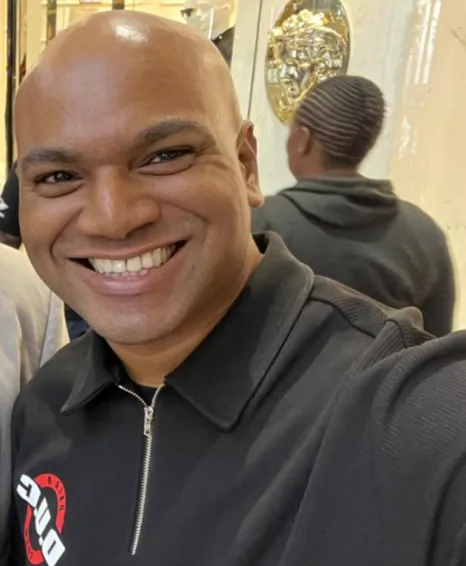
Dala U Crew founder, Sanjeev Singh
Image: FACEBOOK
Sanjeev Singh, content creator of Dala U Crew, said the government needed to invest more into content creators.
He said content creators and podcasters needed support to build legitimate business from the ground up.
“The focus should not be on getting money back from content creators and podcasters. This seems like a cash-grab opportunity, as the government is seeing an industry that is booming and now they want to jump onto the bandwagon and tax these poor individuals who are finally seeing some fruit of their labour.
“Unfortunately it comes at the wrong time when South Africans are struggling to find employment, especially youngsters. Now that they finally found a means to earn an income, they have to worry about the little money that they make being taxed.
“Only about 1% of content creators will actually be able to do this full-time and make a living from this. Most content creators supplement their incomes with the money they earn,” he added.
Singh said most content creators who had registered businesses already paid tax, and had no problem with adhering to the law.
“I support all legislation. But the government is not doing enough to encourage young people, and they have not given them the tools to learn how to become influencers. No steps have been taken to assist anybody in creating or growing platforms.
“It is unfair for the government to call for taxes now, because they see that we are earning money. Some of us do pay tax already because we have registered a business, but it is only a very small fraction that actually earn a full-time income.
“People are making bare-minimum incomes and they do content creation on a part-time basis to support their lifestyles. If it is going to be a professionalised field, give us the necessary building blocks to become successful content creators.
“Put content creators on TV and in legitimate spaces where they can teach others how to create content, how to earn money, how to know what content to create and when to post.
“What is being done to assist people to become professional content creators? We have the personality in South Africa. Content creation is about putting yourself out there.
“Putting content creators, podcasts, streamers, onto a list for tax, without doing enough to grow the field is not accepted.
“Content creators make the bare minimum, and it is usually a subsidy to their income. Most only earn a couple thousand rand to help them in life. How can South Africans survive in this rough financial climate if this too is taxed but not supported enough?” Singh said.