

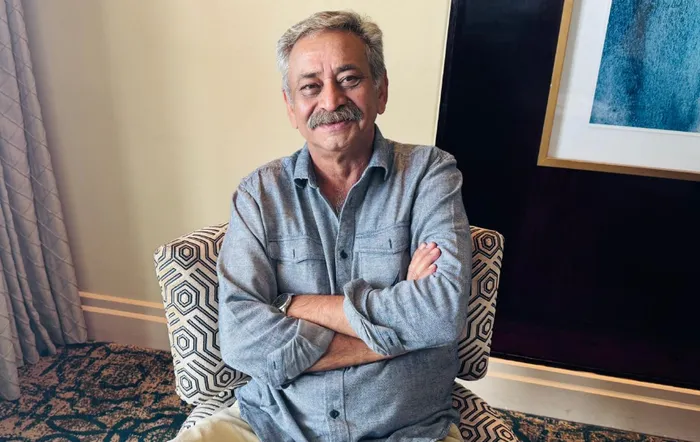
Sushil Rajpal.
Image: Monishka Govender
Sushil Rajpal, a graduate of the Film and Television Institute of India (FTII), built a decades-long career behind the camera before stepping into the director’s chair.
Now 62, Rajpal is drawing from a lifetime of experiences across India, and beyond, as he prepares for his next cinematic venture, one that he hopes will partly unfold in South Africa.
Rajpal, who was recently in Durban for the Durban Indian Film Festival 2026, was born in Bombay (now Mumbai). His journey into film-making began with cinematography, a craft he honed after earning his diploma from FTII, Pune.
Over the years, he worked extensively in advertising films, collaborating with some of Mumbai’s most respected directors.
His professional foundation in visual storytelling later shaped his approach as a film-maker.
Having lived in regions such as Bihar, Jharkhand, Gorakhpur, Delhi and Mumbai, Rajpal developed a deep connection with grassroots narratives from North India. This authenticity became the backbone of his directorial debut, Antardwand, a film inspired by the real-life experiences of a close friend.
The film tackled the social issue of groom kidnapping in Bihar and won a National Award in 2008, marking Rajpal’s arrival as a serious storyteller.
“My first film was talked about a lot. Creatively, it did much better than commercially. These kinds of stories are for a niche audience.”
Despite the critical acclaim, the journey to release Antardwand was far from easy.
“It only took 30 days to shoot and three months to complete, but it took three years to release because it was an independent film and we needed someone to back it. I enjoyed directing the film and always wanted to tell this story. I actually kept the story for years, waiting until the moment I could direct it.”
Rajpal’s transition from cinematography to directing was a natural progression.
“I was a cinematographer, used to make and watch lots of films. Cinematography was my profession. That is how I got into directing.”
For Rajpal, directing is less about technical complexity and more about emotional authenticity.
“If you ask me honestly, it is easy. We know the technique of film-making. The real challenge is enhancing the impact, making situations feel believable, whether they are real or fictional.”
His approach is fluid rather than rigid. While scripts provide a blueprint, Rajpal believes in adapting to the environment during filming.
“On location, things change like dialogues, costumes, even character traits. You have to be open to those changes,” he said.
Currently, Rajpal is developing multiple projects, including a fiction film that will be his second directorial venture.
Unlike his debut, the upcoming film will blend English and Hindi dialogue and feature scenes shot in South Africa.
“About 30% will be in South Africa and the rest in India. It is a situational drama, more emotional, and I believe it will connect with a wider audience.”
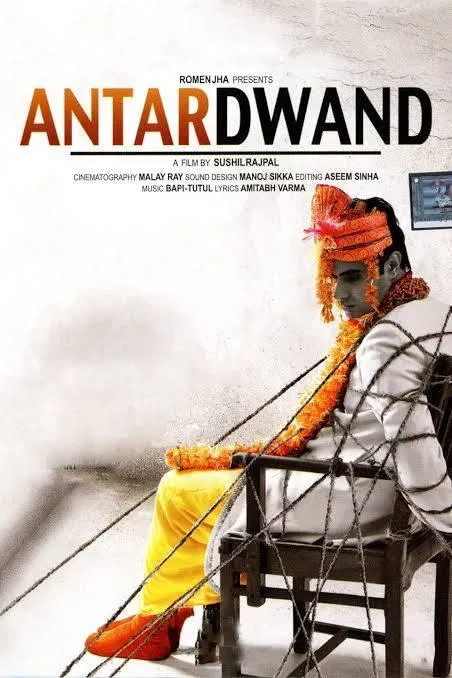
Sushil Rajpal's first film, Antardwand.
Image: Supplied
Rajpal also highlighted the evolving nature of Indian cinema, particularly the shift from purely entertainment-driven films to socially conscious storytelling.
“Initially, films were made just to entertain but people realised cinema can influence society. Now, especially with OTT platforms (digital services), more meaningful stories are being told.”
Despite this evolution, he acknowledged the enduring cultural significance of song and dance in Indian films.
“It is part of our culture. If a film has scope for it, why not use it? We are naturally equipped with dancers and choreographers.”
However, Rajpal himself leans more toward story-driven narratives than action-heavy spectacles.
“Every director has a personality. I focus more on stories. Action is often handled by specialists anyway.”
According to Rajpal, one of the biggest challenges in filmmaking remained financing and creative compromise.
“The hardest part is getting financial backing and once producers come in, there are many suggestions. The challenge is knowing how to incorporate them, or say no, without losing the essence of the story.”
Casting, on the other hand, was a more intuitive process for him. With years in the industry, reaching actors was often straightforward.
“You send them a synopsis. If they like it, they call you for a narration,” he explained.
Still, commercial considerations sometimes override creative preferences, especially when producers are involved.
During his recent visit to Durban for the Durban Indian Film Festival 2026 hosted by the Indian Consulate in the city, Rajpal also conducted workshops with film students.
While he praised their enthusiasm, he noted the limitations of virtual engagement.
“If it is online, you cannot judge much. You need face-to-face interaction to really understand students."
Reflecting on his influences, Rajpal cited films from the era of Amitabh Bachchan as formative in shaping his cinematic sensibilities. He expressed a preference for socially grounded films over purely commercial ones, emphasising storytelling that resonated with real-life experiences.
“I met many big actors, like Amitabh Bachchan and Shah Rukh Khan, they are brilliant actors. You feel their presence and the characters they are playing. It is wonderful to watch them live.”
As he prepares to begin production on his next film in the coming months, he says cinema should feel real.
“Even if it is fiction, when you are in the theatre, you should feel it is really happening in front of you and that has always been my aim when I direct films. I want the audience to feel something. When you watch a film, you will instinctively know if it is good or bad,” he said.
“With my new project, I hope to bridge India and South Africa, and continue my commitment to authentic storytelling, and hope it reaches a global audience as well,” said Rajpal.