

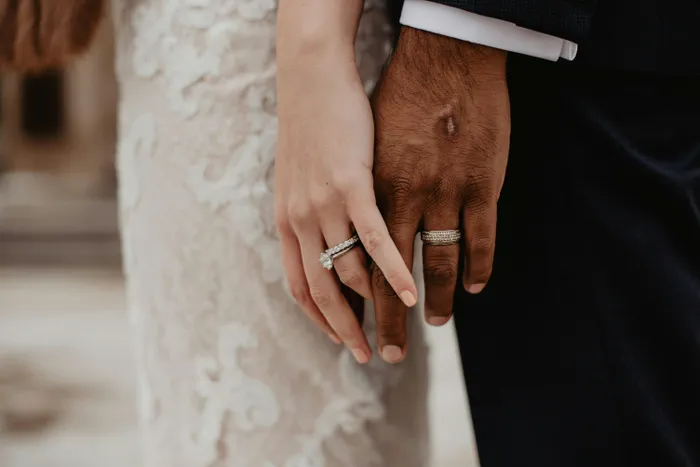
Religious leaders have noted patterns of overspending and extravagance for weddings.
Image: Pexels
RELIGIOUS leaders have weighed in on the concerns raised by Indian entrepreneur Jasveer Singh, and believe that his concerns resonate strongly among all religious groups in South Africa.
Dr Yusuf Patel, secretary general of the United Ulama Council of South Africa, said they were witnessing similar patterns of overspending and extravagance.
“Weddings, walimahs (receptions), baby showers, and even milestone birthdays have become increasingly elaborate. It is not uncommon for families to spend beyond their means, sometimes dipping into savings meant for education, housing or long-term security.
“Financial prudence is sometimes sacrificed for short-term social approval. Several factors intersect and drive this. This includes social comparison, where constant exposure to curated lifestyles creates unrealistic benchmarks, and cultural signalling where lavish functions are sometimes seen as indicators of success and respectability.
“Social media certainly amplifies this. Events are no longer just experienced. They are broadcast. We need to balance social media versus genuine acts of love.
“It is not entirely one or the other. Many families begin with sincere intentions, honouring a child or celebrating a union, but these intentions are often overtaken by the desire to create a memorable or impressive event,” Patel added.
He said social media could subtly redefine what memorable meant.
“Even where religion encourages simplicity, culture may push in the opposite direction. Over time, what was once optional becomes perceived as obligatory. The consequences can be significant. It can lead to financial strain, where debt and depleted savings can burden families for years.
“It can also lead to marital stress, where couples may begin their lives together under financial pressure. Intergenerational tension arises where parents may feel compelled to meet expectations set by others, even against their better judgement. There is also a shift in values, where the younger generations may internalise the idea that outward display is more important than substance.
“Islam values joy and generosity, but in restoring balance. When celebration becomes competition, and love becomes performance, something essential is lost. The real question we must ask is: are we building homes, or staging events?” Patel said.
Professor Brij Maharaj, deputy president of the South African Hindu Maha Sabha, said marriage was considered a sacred samskara (life-cycle ritual) in Hinduism, essential for preserving religious and scriptural injunctions, and promoting cultural continuity.
He said for Hindu parents, weddings were a once‑in‑a‑lifetime duty and an expression of love, responsibility and honour.
“Families, therefore, feel morally and spiritually compelled to host a deserving celebration that honours tradition. Religious festivals and wedding ceremonies have become opportunities for ostentatious displays of wealth. Wedding planners often command high fees, while the vital and central role of priests is sometimes overlooked.
“Hindu weddings in South Africa have become elaborate multiday, multilayered cultural events. Bollywood and social media influence have increased pressure on young couples to host visually-impressive events.
“The different ceremonies blend tradition, spirituality and modern trends, especially the visual spectacle (decor, clothing, stage design), and often reflect social status. They serve as important markers of identity, cultural preservation and family unity, but they have also become increasingly costly,” he added.
Maharaj said while there was no readily available information, it was possible that extravagant ceremonies and celebrations could add to financial challenges.
“This aligns closely with broader South African trends, where weddings may increasingly function as social displays that can exceed a family’s financial capacity.
“The ideal would be to ‘cut your coat according to your cloth’, to adapt your spending and plans to the resources available to you. While parents often cover the bulk of the costs, working couples are increasingly contributing to wedding expenses.
“A balanced approach – honouring tradition while embracing financial responsibility – may help ensure that weddings remain meaningful, joyful experiences without long-term financial consequences. The ideal should be that couples should not commence married life with financial debts,” he said.
Reverend Cyril Pillay, head of the Spiritual Crime Prevention Forum, said he had officiated weddings for 44 years, and he had also noticed a shift in how couples balanced traditional cultural expectations with their own modern, personal preferences today.
“I speak from a place of deep experience, having witnessed nearly half a century of these milestones. My perspective shifts the focus from the price tag to the intent, celebrating joy and preserving heritage.
“Critics often look at the external display, but I want to highlight the internal values of family traditions and personal joy. When I officiate these colourful weddings, I see the nuances that outsiders miss.
“There are three main reasons why people might lean toward criticism. First, critics often view weddings through a purely functional lens, arguing that the money could be better spent on a house or charity. They miss the point that for many, the wedding is an investment in communal bonds and family legacy.
“Second, observers often mistake a large-scale traditional event for social obligation. I have seen that for many families, these extravagant details are actually a joyful choice to showcase their culture, not a burden they are forced to carry.
“Third, people often judge others' spending based on their own financial reality. If they cannot imagine spending that much, they label it excessive, ignoring the affordability and planning,” he added.
Pillay said weddings were often a vibrant expression of a family’s roots.
He said grand weddings were a way to share a couple’s blessings with their entire community.
“Preparation is where culture lives. From the specific rituals to the attire, a wedding is often the most vibrant expression of a family's roots. Whether it is a quiet ceremony or a week-long festival, the right wedding is the one that fits the couple’s values and means.
“For many, especially in the Indian diaspora or successful families, a grand wedding is a way to share their blessings with their entire community. My stance against stereotyping joy is a powerful reminder that judging how someone celebrates their most important day is often a failure to understand their heart,” Pillay added.