

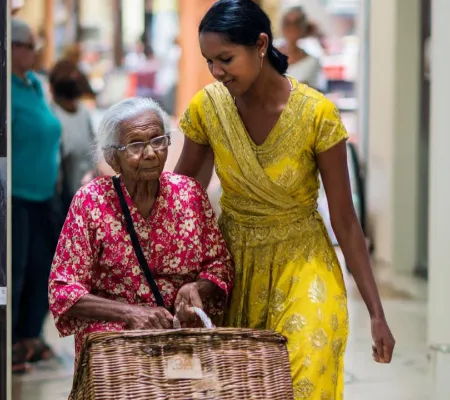
Kindness is not about excess. It’s about intention, says the writer.
Image: Meta AI
THERE was a time when kindness was instinctive. When we greeted strangers. When we noticed discomfort. When we didn’t need a reason to care. Somewhere along the way, that shifted.
Today, we move through life faster, more guarded, more preoccupied. We pass people at robots, in parking lots, in shopping centres – seeing them, but not really seeing them. We scroll past suffering online, double-tap a post, and move on. And perhaps the most uncomfortable truth of all, this has become normal. We are not living in an age of cruelty. We are living in an age of indifference.
Globally, the headlines are relentless. From humanitarian crises like the Israel-Hamas war to ongoing economic hardship in many parts of the world, people are being exposed daily to images of struggle and survival. And while awareness has increased, empathy has not necessarily kept pace. Instead, we are becoming desensitised.
In South Africa, this plays out in deeply familiar ways. The car guard you avoid eye contact with. The informal trader you negotiate down to the last rand. The domestic worker whose life you know very little about, despite how closely it intersects with yours. We are co-existing, but not connecting. And while economic pressure is real, while many people are genuinely struggling to make ends meet – there is a subtle danger in allowing hardship to harden us. Because when survival becomes the priority, compassion often becomes optional.
But here’s the thing: kindness is not about excess. It’s about intention. It’s in the way you speak to someone who can do nothing for you. It’s in the patience you show when it’s easier to be abrupt. It’s in the small, seemingly insignificant moments that, collectively, define the kind of society we live in. We often think change must come from policy, from leadership, from large-scale intervention. And yes, those matter. But the truth is, the emotional climate of a country is shaped just as much by its people.
By everyday choices. By whether we choose to acknowledge or ignore. To give or to withhold. To see … or to look away. And perhaps the most important question we need to ask ourselves is this: when did we stop seeing each other as human first? Because children are watching. They are learning, not from what we say, but from how we behave. They are absorbing our priorities, our biases, our blind spots. And if we are not intentional, we risk raising a generation that values convenience over compassion.
A generation that is successful – but disconnected. We don’t need grand gestures to fix this. We need presence. Awareness. A willingness to interrupt our own patterns. Look up. Make eye contact. Acknowledge someone’s existence. Because dignity is not a luxury, it is a basic human need. And a better world will not be built by policies alone. It will be built by people who choose, daily, to care.