

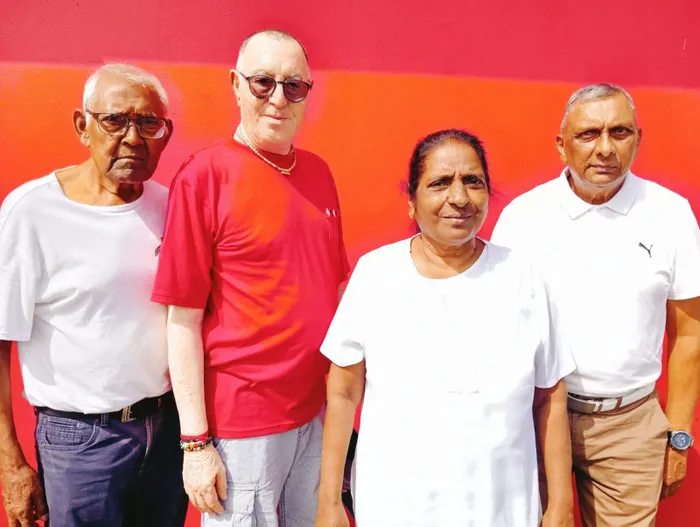
Former residents of Tin Town, from left, Gopichand Baichu, Raj Maharaj, Selvie Moonsamy and James Naidu.
Image: SUPPLIED
FIFTY years ago, the residents of Springtown Flats, commonly known as “Tin Town”, were forced to flee when their homes were flooded.
On March 21, 1976, the Umgeni River, which ran alongside homes, burst its banks after heavy rains. Hundreds of wood-and-tin homes were damaged, and several families were forced to flee; some with just the clothes on their backs.
Shortly thereafter, the then City Council (eThekwini Municipality) allocated houses to some of the residents, mainly in Phoenix.
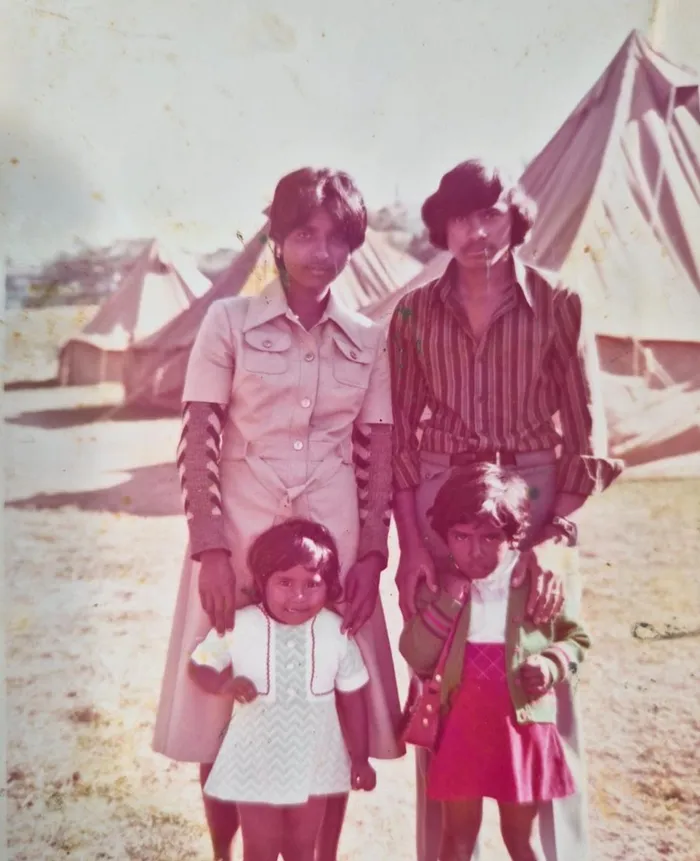
Selvie Moonsamy, with a fellow Tin Town resident at 'Tent City'. Her 5-year-old daughter, Pam, now late, is on the right.
Image: Supplied
Former residents shared with the POST, their memories of growing up in Tin Town, and the experience of leaving their homes because of the flood.
Selvie Moonsamy, 70, of Clayfield in Phoenix, said that due to the Group Areas Act, she and her family were moved from Briardene to Tin Town.
“I was still quite young, but I remember we had to pack up and leave our homes. When we arrived in Tin Town, we were given a plot of land. My dad quickly built us a wood-and-tin home. The bucket system toilet was outside. We also did not have piped water or electricity.
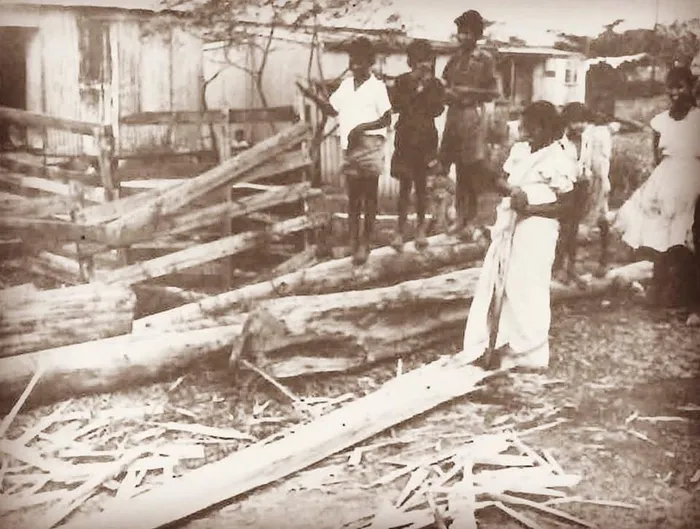
During happier times.
Image: Supplied
“We used to collect water from the communal tap, and had to burn wood to make a fire to boil water or to cook. We lived a simple life, but it was enjoyable. We lived in a close-knit community, where all the children played together. Neighbours did not fight with one another. There was only love,” she said.
Moonsamy, said on the day of the flood, she was at a church with her eldest daughter, Pam, now late.
My 5-year-old daughter and I attended church service every Saturday evening, continuing into Sunday morning. The church was situated near the Umgeni River. I remember it rained heavily for a few days.
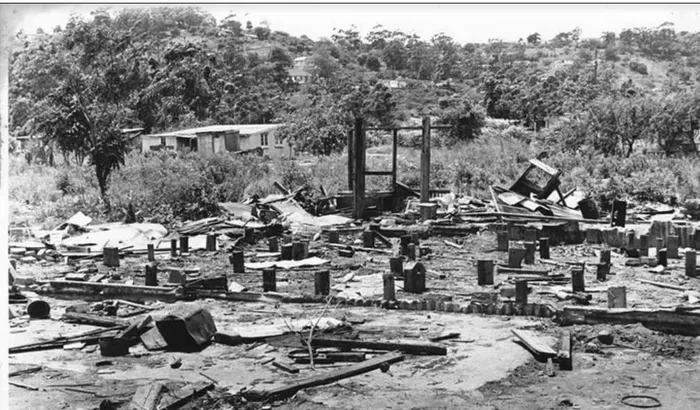
The aftermath of the flood in Tin Town in 1976.
Image: Supplied
“Some of the men from the church and community were monitoring the water levels. It must have been just before midnight when I heard screams that the river burst its banks. I grabbed my daughter and ran to our home.
“I told my mother and sisters to quickly pack what they could, and we needed to leave. I grabbed a few of my daughter's things and we started running towards a bus that had arrived. There were also the council trucks, which usually came to remove the buckets we used for the toilet. But the trucks were clean. My family and I jumped on the bus,” she said.
Moonsamy said they were taken to a school in Alpine Road.
“We spent a night there, and the next day we were moved to another hall. During this time, people, including Fatima Meer (now late), gave us blankets, food, clothes and other necessities.
“After a few days, we went back to our homes. We were lucky because the structure of our houses was not damaged. We tried to salvage what we could. During this time, Fatima Meer and others also used our yard as a distribution point for food and clothing.
“We continued to live at our home, even though ‘Tent City’ was set up at a sports ground in Asherville. I attended church service there on Sundays. After some time, we were informed that we would receive a house in Phoenix. We were allocated a flat in Clayfield, where my two younger daughters were born. We later bought a house in the area,” she said.
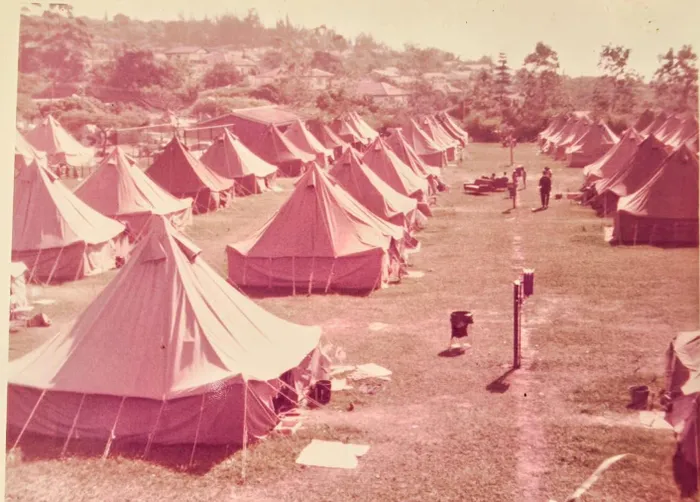
The tent site which was set up to house residents of Tin Town after the flood damaged their homes and belongings.
Image: Supplied
Moonsamy said she was proud to have been a resident of Tin Town.
“I will always hold Tin Town close to my heart, as it is where my roots are, and it is where I had many good moments in my younger days.”
Gopichand Baichu, 87, of Stonebridge in Phoenix, said his family were also moved due to the Group Areas Act.
They lived on New Germany Road in Reservoir Hills.
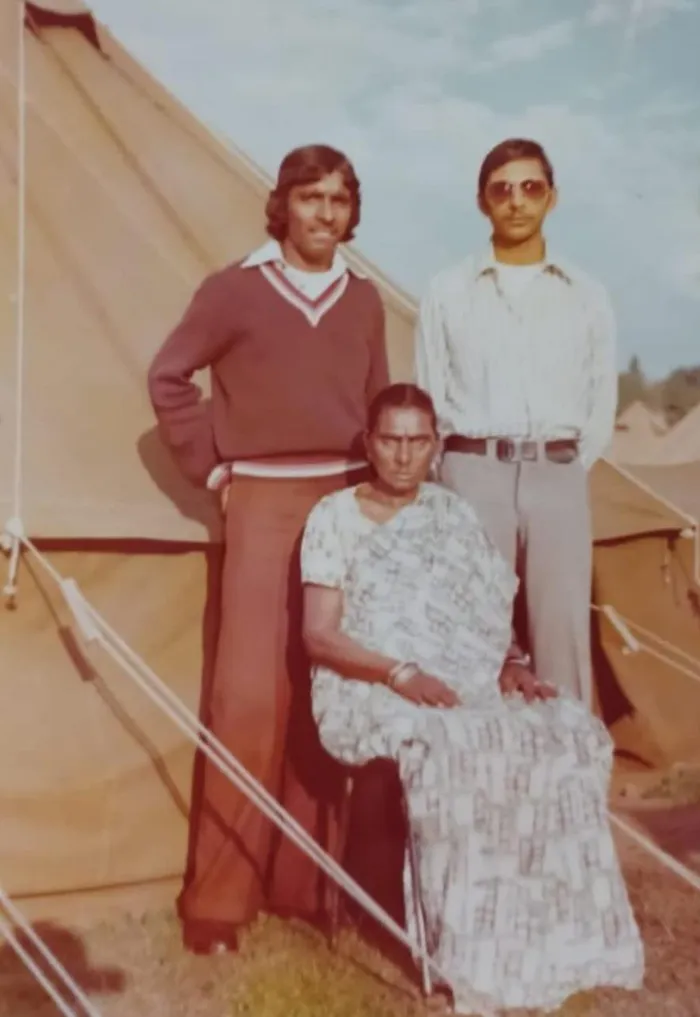
James Naidu, right, with his brother, Roy Naidu, and their mother, Kistamah Naidu, while staying at 'Tent City'.
Image: Supplied
“My parents and my elder brother, who was married, each received a piece of land. We built our houses using wood and tin. It was difficult because of the heavy rains, and the roofs often leaked. But it was our home.”
Baichu, who worked as a long-distance truck driver, said he was en route to Johannesburg at the time of the flood.
“I remember it had rained quite heavily that Friday when I left. I was driving in Kloof, when I got a weird feeling, and I told my co-driver that I felt something bad was going to happen.
“After arriving in Johannesburg, we quickly offloaded the goods, and returned to Durban. It was late on Saturday evening. We had just entered Alpine Road, when we were stopped and told that Tin Town had been flooded, and everyone had to leave. I panicked because I didn’t know if my mother, wife and two sons, aged 6 years and 10 months, were safe.
“I was told to go to a school which housed the residents, and I found them there. I was relieved. We were thereafter moved to a community hall for a few days and then told it was safe to go to Tin Town. Thankfully, my family had locked the doors and windows of our house before leaving. Even though the water got inside, our belongings were still there. We cleaned and saved what we could.
“But, at the same time, homes were looted. We decided that some of us would have to sleep in the cars to watch the houses, while others would stay in the tents that were set up in Asherville,” he said.
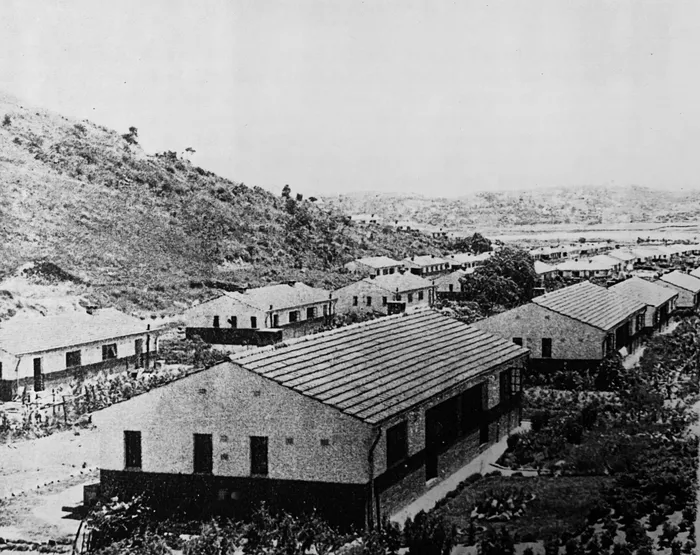
Fox Glove Place, Springfield.
Image: 1860 Heritage Centre
Baichu added that his family were among the first batch of Tin Town residents to be given a house in Stonebridge, Phoenix.
Raj Maharaj, 64, of Mount Edgecombe, said he, his parents and five siblings were moved from Siripat Road in Reservoir Hills to Tin Town, because of the Group Areas Act, in 1966.
“Growing up in Tin Town was fun, and boys played on the road with their tops and marbles. We did not have a sports ground, so we played soccer in the cemetery. The ground was flat.
“We also did not have many other facilities such as shops. The residents operated tuckshops from their homes. The vegetable and fowl vans came to the area on Saturdays,” he said.
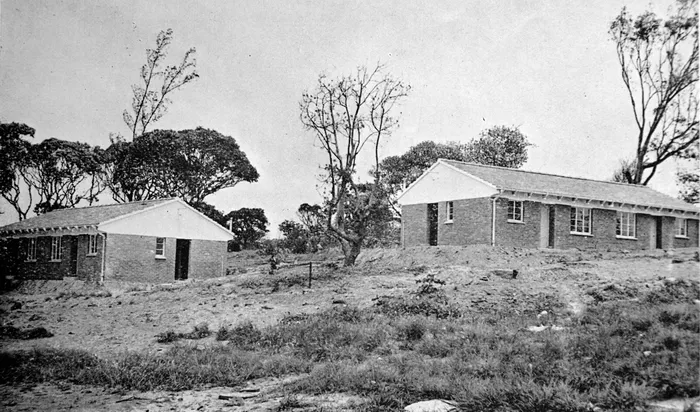
Springfield extension centenary scheme.
Image: 1860 Heritage Centre
Maharaj said he was 14 years old at the time of the flood.
“Our house was quite close to the river. All the youngsters, including myself, monitored the river. We said when it reached a certain level, we would tell the residents to prepare to leave.
“But we did not realise that further down, the river had burst its banks, and the water started gushing into the area. My parents, sister-in-law, two nephews, and I got into my father’s car and left.
“We got to my sister-in-law’s parents' home in Springtown. When my parents and I went back a few days later to check our home, we were shocked. I can still picture our home. The mattresses were flattened, and there was a thick slab of mud on them.
“From the stains on the wall, the water had reached almost two metres. After that, my brother and sister-in-law stayed with her parents, while my parents and I stayed with family in Clare Estate, until we were allocated a house in Stonebridge in 1977,” he said.
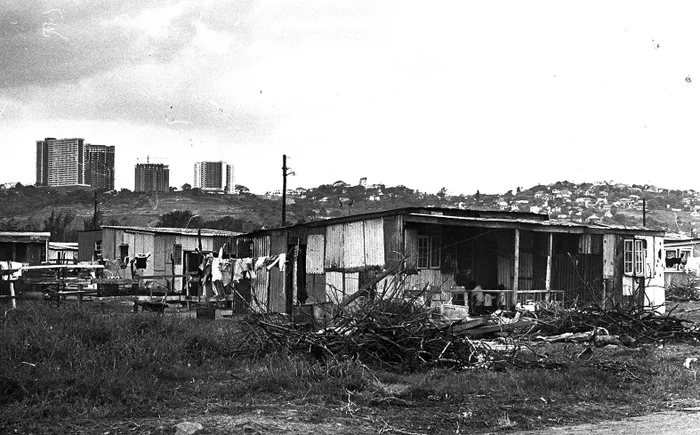
Tin Town
Image: Tin Town Collection
Maharaj added that if he had an opportunity to live in Tin Town again, he would.
“Tin Town will always be my home.”
James Naidu, 72, of Palmview in Phoenix, said due to the Group Areas Act, he and his family were moved from Burman Drive, near Umgeni Road, in 1964.
They also built their own house using wood and tin.
Naidu, who was 22 years old at the time, said he had been visiting friends in Chatsworth on the day of the flood.
“I remember that while on the way home, I was stopped and told that the area was flooded. I panicked because I did not know where my mother and sisters were, but thankfully they were housed at a church.
“My mother told me that within seconds the house had filled up with water. They only managed to take some important documents, and leave. But by that time the water had reached the door-handle level. Our home was in a low-lying area, and stood on blocks. The water had reached roof level. I was quite devastated because I had also just bought a new car, which was parked in the yard,” he said.
Naidu added that his family stayed in Tent City before being allocated a house in Stonebridge, Phoenix.
The residents recently gathered for a 50-year reunion at the Stonebridge Community Hall.