

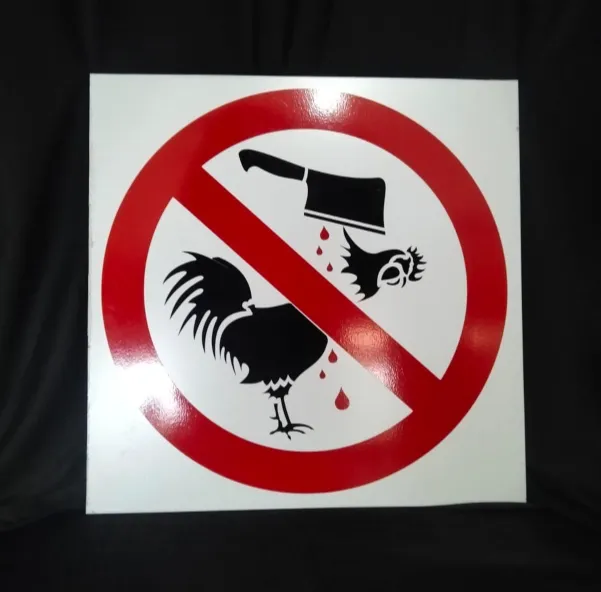
Amanzimtoti residents are demanding action over recurring chicken slaughter rituals on public beaches, saying the practice is leaving carcasses behind, creating hygiene concerns, and upsetting visitors.
Image: Supplied
Residents of Amanzimtoti are calling for the installation of signage to prohibit chicken slaughter on their beaches.
Fed up with chicken carcasses littering Amanzimtoti’s popular beaches, residents want to put up their own signage prohibiting the ongoing slaughter on their shorelines.
However, their application to erect the signage has received no attention from eThekwini Municipality.
During the Easter weekend, out-of-town visitors watched in shock as chickens were slaughtered on public beaches, a weekly ritual where groups gather and often leave behind the remains of dead animals.
Resident Carol Lane, who has rescued many chickens from the beach over the last seven years, told IOL she had sent numerous emails to the municipality to approve the erection of the signage, but she did not receive a response.
Robert Kukla, owner of Eco Signs and Designs, initiated the donation of “No Chicken Slaughter” to "help protect public health, safety, and the well-being of the community."
"The practice of chicken sacrifice is currently taking place within public swimming areas, where it is visible to families and young children, causing distress and raising serious hygiene concerns.
"Furthermore, these activities are being conducted without the necessary legal permissions.
"Despite our proactive effort and having already printed the signs at our own cost, we have been unable to proceed due to the municipality not granting approval for their installation," he said.
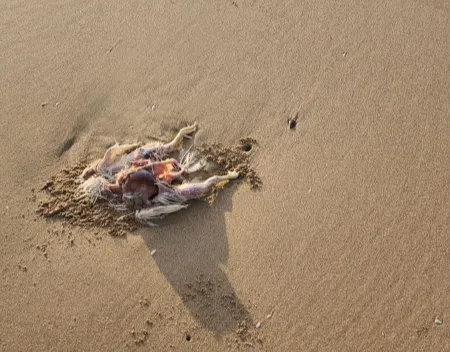
Amanzimtoti residents are frustrated by ongoing chicken slaughter rituals taking place on public beaches, saying they are leaving behind carcasses.
Image: Supplied
Resident Russ Andraos said the matter was becoming increasingly concerning.
"While we understand that certain practices may be linked to cultural or traditional beliefs, the question that many residents are asking is why these activities are being carried out on public beaches, which are shared recreational spaces for everyone.
"This particular activity has been reported to both beach officials and law enforcement on several occasions. Unfortunately, despite multiple complaints and requests for intervention, the situation appears to be continuing without any visible action being taken," he explained.
eThekwini Municipality spokesperson Mandla Nsele said the city was open to considering and approving community-installed signage of this nature, provided it met all specifications and complied with the applicable standards and regulations.
"Any individual or community group intending to install signage must submit a formal written request to the manager under the Development Planning Division responsible for the specific public space. This request should clearly outline the proposed location of the signage, the scope of work, the materials to be used, and confirmation that the signage will comply with the municipality’s prescribed specifications," he said.
Nsele said eThekwini’s 2015 beach by-laws are explicit that no animals are allowed on beaches unless authorised by the municipality, with limited exceptions such as approved ritual use, designated areas, or guide dogs.
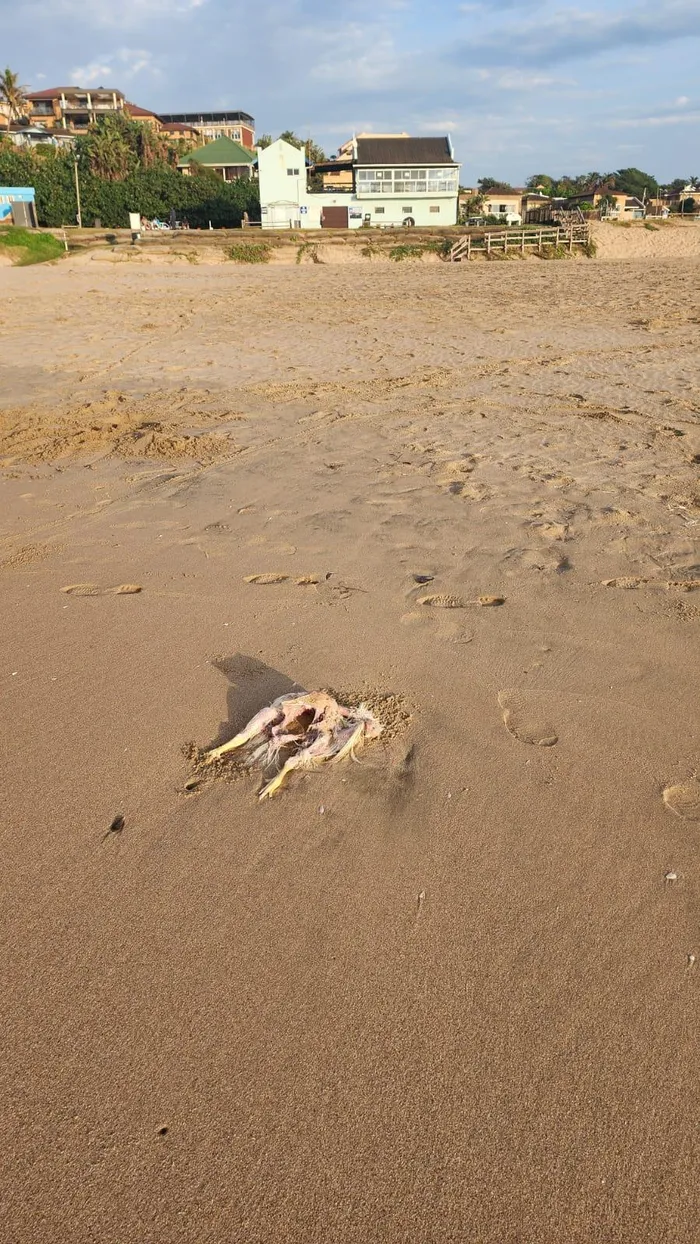
Amanzimtoti residents are demanding action over recurring chicken slaughter rituals on public beaches, saying the practice is leaving carcasses behind, creating hygiene concerns, and upsetting visitors
Image: Supplied
Any slaughter in a public space would require prior municipal approval or clear signage permitting it, he said. Nsele said the municipality’s 2022 animal by-laws require anyone intending to conduct a ritual or cultural slaughter outside an abattoir to notify the city at least seven days in advance, provide full details of the event, and obtain a compliance certificate.
"Neighbours must also be informed, and the city may impose conditions or suggest alternatives if public health or nuisance concerns arise."
Dumisani Mkhwanazi, founder and chairperson of Abelaphi Bendabuko Base-Afrika (ABBA) and a traditional healer based in Umlazi, told IOL that signage alone would not stop beach rituals.
"These practices continue because people find healing, protection, and connection to ancestors through them. While residents have a right to raise concerns, the Constitution also protects cultural and religious practices. The solution is not prohibition, but dialogue."
ABBA calls for engagement between traditional health practitioners, eThekwini Municipality, and communities to agree on safe, regulated protocols that respect cultural rights, public health, and the environment. Banning these practices only drives them underground," he said.
President of the Umsamo Institute and University of KwaZulu-Natal African Healing and Religion and Ancestral Studies honorary professor, Velaphi Mkhize, said the issue stemmed from the biggest challenge in the traditional healing space - the growing number of people who were not genuinely called or properly initiated.
"There is also widespread ignorance. Not everyone has the gift of cleansing, yet many are doing it anyway. This is why we see rituals that do not resolve people’s problems and increase conflict within the sector. There is little understanding of sacred practices, including the proper use of water and the importance of cleanliness, both of the space and of the practitioner.
"While residents’ concerns are understandable, signage alone will not solve the issue, as it is unlikely to be respected.
"A more effective approach would be to restrict access or ensure that those using these spaces are held accountable for keeping them clean and treating them with respect.
"Rituals should also be conducted responsibly, without bringing harmful elements into public spaces unnecessarily," he said.