

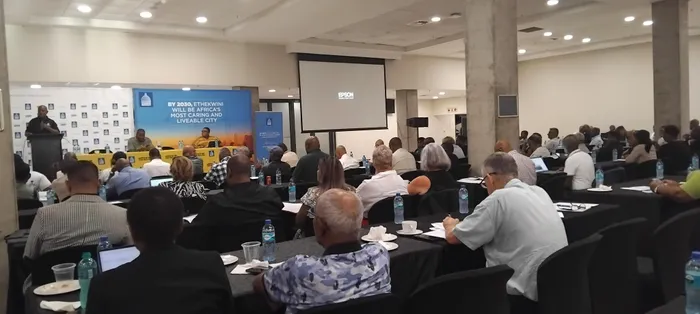
The eThekwini Municipality met with ratepayer associations to discuss the draft budget and tariff increases
Image: Zainul Dawood
Ratepayers in eThekwini express their concerns over proposed tariff increases during discussions with municipal officials, highlighting issues of non-revenue water and inadequate service delivery.
The municipality invited ratepayer associations to discuss the draft Integrated Development Plan (IDP) 2026-2027, the draft budget, and tariff increases. The proposed budget for 2026/2027 was R74.7 billion, comprising an operating budget of R68.8 billion and a capital budget of R5.9bn.
The municipality's proposes tariff increases for residential water (15% residential and 16% for businesses), electricity (10.5%), property rates (5%), sanitation (13%) and domestic refuse removal (13%).
Cyril Xaba, eThekwini Mayor, said ratepayers were an important stakeholder in the city. He told ratepayer associations that the municipality was run like a business and also spoke of many achievements in the 2025/2026 financial year including road rehabilitation and improvements in water supply.
Ish Prahladh, chairperson of the eThekwini Residents and Ratepayers Association (ERRA), requested ward-based plumbers to prevent water loss, which was reported at an estimated 58%. He said resolving the problem will have a knock-on effect on non-revenue water, culminating in lower tariffs.
Staying on water, Prahladh identified an increase in illegal car washes in suburbs including the use of water to wash public transport vehicles.
“These should be metered so the municipality can generate revenue. We are also concerned about the high cost of hiring security companies to protect municipal staff when they are attending to repairs. The theft of electricity has been impacting ratepayers for more than a decade and we can see the problem is worsening,” he said.
Asad Gaffar, chairman of the eThekwini Ratepayers Protest Movement (ERPM) found that the draft budget was inadequate, incomplete, and non-compliant with the principles of transparency, accountability, and meaningful public participation as required by the Municipal Finance Management Act (MFMA).
The ERPM identified several shortcomings in the draft budget which included transparency around the infrastructure surcharge, water revenue loss and outsourced services expenditure.
“The budget projects revenue of R14bn from water sales, despite only R11bn being required. With the cost of purchasing water from Umgeni Water at R6.3bn, water has become the municipality’s most profitable revenue stream, despite an estimated 50% water loss across the system,” Gaffar said.
The ERPM also spoke on unfunded water tanker services, meter reading and estimated billing which ratepayers were complaining about daily. Gaffar said residents, landlords and businesses face extreme pressure – often having to enter into forced payment agreements to avoid services being disconnected.
“The city has failed to supply new or replacement meters to residents whose meters are compromised thereby impacting revenue collection. Spending on outsourced security services for municipal contractors and projects is not listed as a line item, denying ratepayers insight into costs and beneficiaries,” Gaffar said.
He added that the draft budget document does not disclose revenue generated per ward, nor how much of that revenue is reinvested in those communities. Other concerns raised by the ERPM was alleged misallocation of Parks and Gardens funding, departmental salary costs, investments in undisclosed vanity projects while failing to uplift previously disadvantaged communities.
Gaffar said, the water turnaround strategy did not quantify actual savings and the increase in informal settlements was troubling.
“The Integrated Development Plan does not provide relief or support for struggling small enterprises many of which have already closed, further eroding the city’s revenue base and employment opportunities,” he said.
Gaffar also highlighted the collapsing municipal infrastructure, unpaid municipal debt by staff and councillors, escalating debt, and problems with wastewater treatment works. He said spending R180 million to promote tourism is a concern.
Xaba said the municipality was engaging with uMngeni-uThukela Water and Eskom on their proposed tariff increases for bulk water and electricity purchases.
“These increases place a significant burden on our residents. We will continue to persuade these entities to reconsider and revise their tariffs in the interest of our customers,” he said.