

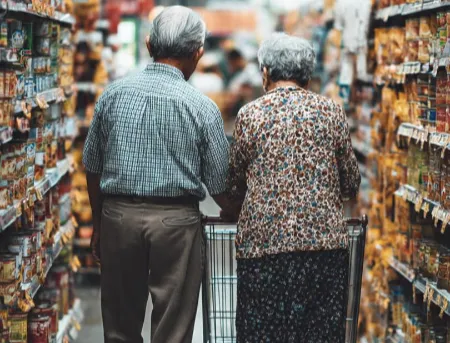
Fuel price hikes and electricity tariff increases have pushed up the cost of everyday goods, forcing consumers to find savings wherever possible, including products that would previously have been avoided due to concerns over expiry dates, said still good.
Image: Meta AI
Amidst rising living costs, South Africans are increasingly opting for discounted, near-expiry goods, reshaping shopping habits and addressing food waste
In areas such as Cape Town’s Southern Suburbs, Durban North and Johannesburg’s Northern Suburbs, demand for short-dated products has picked up, according to still good, a South African social enterprise that connects retailers and consumers to reduce food waste, lower grocery costs and fight malnutrition.
“These are some of the country’s most affluent areas,” said still good CEO Steffen Burrows.
The online marketplace, which sells discounted near-expiry and surplus products, said it has seen strong uptake in these areas as households look for ways to cut costs.
Burrows said, “we aim to intercept a portion of the 10 million tonnes of food wasted annually in South Africa before it ever reaches a supermarket shelf”.
This comes as economic pressures continue to mount.
Fuel price hikes and electricity tariff increases have pushed up the cost of everyday goods, forcing consumers to find savings wherever possible, including products that would previously have been avoided due to concerns over expiry dates, said still good.
Research suggests those concerns have long shaped buying behaviour.
A study by the Department of Food and Nutrition at the Durban University of Technology found that many households struggle to interpret expiry labels, contributing to significant food waste.
In South Africa, post-consumer food waste is estimated at about $2.7 billion annually, or 0.7% of GDP, despite 26% of the population regularly experiencing hunger and a further 28.3% being at risk.
The study found that 67.9% of the 190 households that were randomly selected in the KwaDukuza municipality – 80km north of Durban – feel guilty about wasting food, while bread, vegetables and salads account for the largest share of discarded items.
“Many more said they would waste less if they were informed about the adverse effects of food waste on the environment and economy,” the researchers said.
Separate research published on ResearchGate found that brand loyalty and risk aversion also influence purchasing decisions, leading consumers to avoid near-expiry products and prompting retailers to discard edible goods.
However, rising cost pressures appear to be shifting these perceptions.
Still good said it has expanded its offering from discounted grocery “value bags” to a broader online marketplace that includes personal care items, cleaning products and electronics, with discounts of up to 60%.
In its first year, the platform helped shoppers save nearly R6 million through the sale of discounted products, while also allowing retailers to recover value from stock that might otherwise have gone to waste.
Burrows explained that the "Goods Marketplace differs from still good in that customers select exactly what they want to buy, whether that be sweets, batteries, peanut butter, deodorant, bin bags, washing up liquid, or wireless earbuds – with savings ranging from a few rand to hundreds of rands on bigger ticket items".
“The Goods Marketplace is still good’s online store that helps South Africans lower their cost of living by buying discounted items while assisting companies recover revenue on short dated and problematic stock,” said Burrows.
Still good is partnering with stores across Pick n Pay, Spar and Food Lovers Market franchises and corporate stores as well as several independent retailers across Gauteng, KwaZulu-Natal, Northern Cape, Eastern Cape, Western Cape, Free State and North West
The company said demand has accelerated in recent weeks, with the number of available products tripling as both suppliers and consumers increasingly adopt the model.
This indicates “that even middle-class consumers are under pressure or appreciate that using products close to expiry is good for the environment,” said Burrows.
At the same time, the model addresses a broader structural issue in South Africa’s food system, where large volumes of edible products are discarded while many households struggle to afford basic groceries.
Still good said it aims to intercept a portion of the estimated 10 million tonnes of food wasted annually in South Africa before it reaches landfill. “We built still good on the belief that great products shouldn't go to waste just because they're close to their best-before date,” said Burrows.