

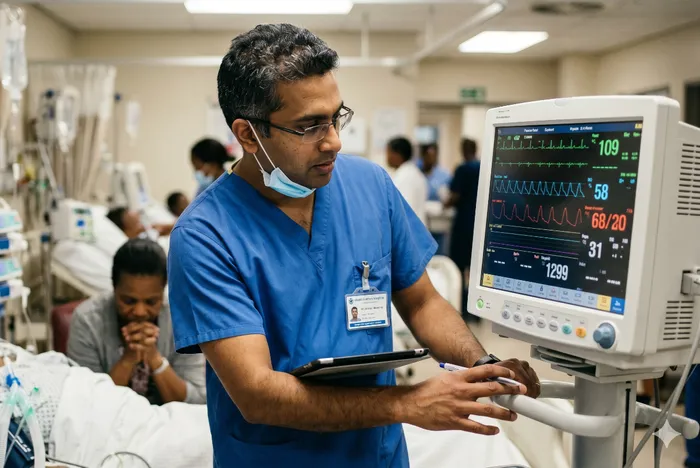
As the law stands, health practitioners who assist patients in dying will face the consequences before the Health Professions Council of South Africa (HPCSA) as this is regarded as unethical.
Image: Google Gemini
RELIGIOUS leaders have vowed not to support Dignity SA’s court application for law reforms and to decriminalise medically-assisted dying, claiming that this is viewed as suicide, which is not condoned in any religion.
Cyril Pillay head of the Spiritual Crime Prevention Forum, said medically-assisted dying was an “alternative name for suicide”.
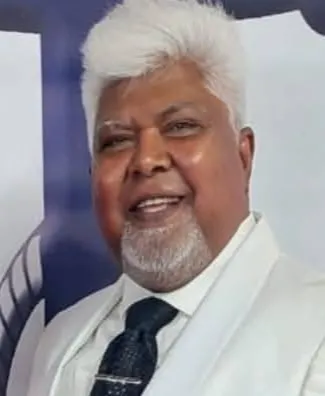
Cyril Pillay
Image: Facebook
He said they would not support the call for law reforms.
“We always have people who speak about and consider medically-assisted death. However, we believe in life and in God being the giver of life. Nobody condones suicidal, irrespective of the individual's life circumstances.
“The majority of people always offer hope and a solution compared to a premature death option. We believe that God gives life, and also has an assigned time for our departure from earthly life.
“We believe that God has allotted a prescribed amount of days for us to live on earth. Some are stillborn and some die at a very old age,” he said.
“We believe that whatever our situation and circumstance are on earth, we do not have the right to forcefully, intentionally or medically terminate our lives.
“I would not support a legal framework for medically-assisted dying as I always proclaim and pray for life and I prepare people for a natural death at their pre-determined time,” Pillay said.
Dr Yusuf Patel, secretary general of the United Ulama Council of South Africa, said: “In Islam, medically-assisted dying whether framed as euthanasia, assisted suicide, or mercy killing is firmly prohibited because human life is regarded as a sacred trust from Allah, and only He has the prerogative to give and take life.”
Patel said the Qur’an affirmed that life and death belonged solely to God (67:2) and prohibited the unjust taking of life except by right (17:33), while prophetic teachings warn of severe accountability for suicide and intentional self-harm.
“Within this framework, both actively ending a patient’s life and assisting in it are not permissible, regardless of consent or suffering, and this includes physician-assisted death.
“In practice, such questions do arise in clinical and pastoral settings, particularly in cases of terminal illness or severe suffering, but they are usually expressions of fear of pain, or loss of dignity rather than a direct wish for death.
“This is addressed by emphasising palliative care, emotional support, and the spiritual value of patience and perseverance. Accordingly, I would not support the legalisation of medically-assisted dying, as it conflicts with the Islamic principles of the sanctity of life, the prohibition of intentional killing, and the protection of vulnerable individuals from pressure or coercion, even if unintended,” Patel said.
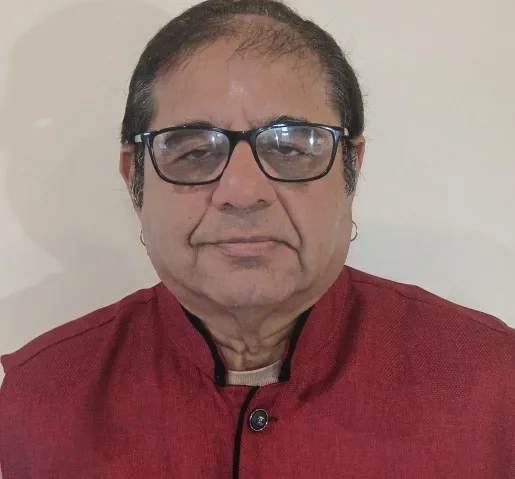
Dr Lokesh Ramnath Maharajh
Image: File
Pundit Lokesh Maharajh, chairperson of the Priests' Council for the South African Hindu Maha Sabha, said in Hinduism, the perspective on medically-assisted dying was shaped by a deep spiritual concern for the soul and its journey.
He said over the years, they had observed that the topic of medically-assisted dying had grown into a major global conversation, becoming increasingly common in both public discussions and academic circles.
“For more than half a century, the ‘right to die’ has been a subject of intense debate in many parts of the world, including the Netherlands, Britain and Japan. We have noticed that people often raise these questions as they witness the giant strides being made in biotechnology and artificial intelligence. These modern advancements can now prolong the functions of the body even when there is no longer any hope for a true recovery, leading many to wonder about the ethics of such interventions.
“In our experience, people typically mention or ask about assisted dying when they are faced with the harsh reality of incurable diseases, especially when medical science can no longer offer a way to ease extreme physical pain. There is also a deep concern regarding the loss of dignity; many individuals feel that reaching a state of total helplessness diminishes their quality of life. Furthermore, within our changing social structures, the elderly sometimes express these thoughts because they feel they have become a burden to their families, causing them to question the end of their journey,” he added.
Maharajh said they too would not support the call for law reforms and the decriminalisation of medically-assisted dying.
“We would not support the call for a legal framework to make medically-assisted dying legal, as our conviction is rooted in deep spiritual, moral, and scriptural principles. At the heart of this view is the belief in the sacredness of life.
“We see life as a divine gift rather than a human possession that can be discarded for the sake of convenience or ‘ad hoc’ adjustments. It is our duty to respect the moral power of the universe and the natural timing of the soul’s journey, rather than creating laws that attempt to bypass these higher principles.
“We also have serious ethical concerns regarding the slippery slope that legalisation could create. Making assisted dying legal risks a decline in our collective moral values, as it might encourage choosing death as an easy solution to a complex problem. Instead of taking a life, our society should focus on providing the deep, compassionate care that a suffering person truly needs,” he added.
He said it was important to note that while Hinduism generally maintained this stance, the tradition did acknowledge rare and special circumstances.
“In some classical views, if a person has reached extreme old age or is suffering from an incurable illness that makes it impossible to perform necessary bodily purifications and spiritual duties, the idea of assisted dying might be contemplated.
“Our view is rooted in the foundational principle of ahimsa (non-violence, non-injury, or harmlessness in thought, word and deed), which calls for total non-violence in thought, word and action.
“Because we believe the soul within everybody was a sacred part of the divine, intentionally ending a life even with the aim of stopping physical pain is often seen as a violation of this essential duty to protect all living things.
“The Vedas reinforce this by teaching that life is a sacred gift whose duration is set by a moral power far greater than human agency. By ending a life prematurely, one is seen as disrupting the natural and divine cycle of birth and death,” added Maharajh.
Jerald Vedan
Image: Supplied
Jerald Vedan, chairperson of the KZN Buddhist Society, said there were moments that medically-assisted dying appeared compassionate, but “Buddhism asks us to pause”.
He said one of the core principles of Buddhism was “do not take life, including one’s own".
“Not because life is always easy, but because life, even in suffering has meaning, and death is a moment of deep spiritual significance. The state of mind at death matters. A death shaped by despair is not seen as true peace.
“This is the Buddhist challenge. Compassion is not about ending life to end suffering. It is about standing with the suffering and refusing to abandon them.
“There are strong arguments for dignity and choice. But we must ask when medically assisted death becomes a legally permissible option, will the vulnerable always feel free to choose life?
“As a society, we must be careful what we normalise. If death becomes the solution, we must ask: have we truly relieved suffering, or have we simply lost the will to face it?” Vedan said.