

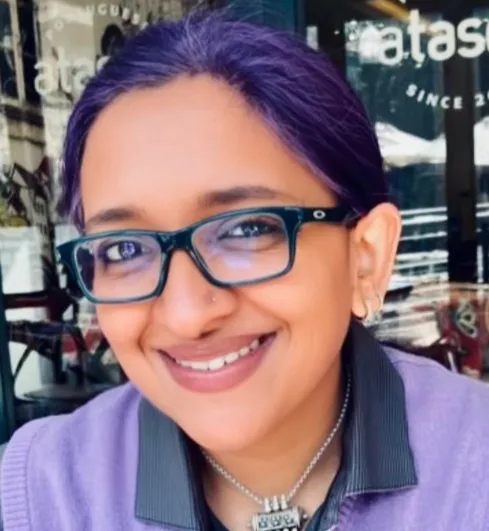
Dr Suhayfa Bhamjee
Image: Supplied
DR Suhayfa Bhamjee's research highlights the disconnect between South African criminal law and constitutional values regarding voluntary euthanasia, advocating for a legal framework that respects patient autonomy and dignity
Bhamjee, a senior lecturer at UKZN’s School of Law, had investigated medically assisted dying as a part of her PhD thesis titled "Death and dying in a constitutional democracy – An analysis of the South African criminal law and a call for law reform".
She said her research was prompted by a concern about the disconnect between South African criminal law and constitutional values in the end‑of‑life decision‑making.
“We live in a constitutional democracy that places human dignity, autonomy and bodily integrity at its core, yet our law continues to treat all forms of voluntary active euthanasia as murder, regardless of the patient’s wishes, mental capacity, or degree of suffering.
“I was particularly interested in why the law refused to recognise consent and capacity in this context, even though these concepts are foundational to many other areas of medical and criminal law. My thesis therefore arose from a desire to interrogate whether the continued criminalisation of voluntary euthanasia is constitutionally justifiable,” she said.
The central argument of her thesis was that the criminalisation of voluntary active euthanasia was inconsistent with the Constitution.
“The thesis advances a pro‑choice position, rooted in patient autonomy and decision‑making capacity. It challenges the assumption that the right to life necessarily requires the state to compel individuals to remain alive in circumstances where life has become intolerable to them. In my view, dignity and autonomy must form part of how the right to life is understood in an end‑of‑life context.
“The South African Law Reform Commission investigated euthanasia under Project 86, culminating in a report published in 1998. Importantly, the commission recognised that the issue warranted legal reform and produced a draft bill that would permit medically-assisted dying under strict conditions.
“Despite this, the recommendations were never implemented. The result is that South African law remains unchanged decades later, still relying on pre‑constitutional common‑law principles that do not adequately reflect modern constitutional values or medical realities,” added Bhamjee.
She said a key obstacle had been a lack of political will.
“Voluntary euthanasia is often treated as a morally-sensitive and politically-risky issue, which has resulted in legislative reluctance rather than principled engagement. This hesitation has been compounded by moral and religious opposition, concerns about abuse and so‑called slippery‑slope arguments, and a cautious interpretation of the right to life.
“I proposed a tightly-regulated legislative framework that allows medically-assisted dying in strictly-defined circumstances. The focus should be on autonomy, capacity, voluntariness, and informed consent. This includes ensuring that the patient is an adult with full decision‑making capacity; the request is voluntary, informed and persistent; and if the patient is suffering from a terminal or incurable condition causing intolerable suffering,” she added.
Bhamjee said medically-assisted dying should be legalised through clear, carefully-drafted legislation, not piecemeal court decisions.
“The framework should centre around autonomy and capacity, clearly distinguish voluntary euthanasia from non‑voluntary or involuntary practices, and include strict safeguards, reporting obligations, and oversight mechanisms.
“It should also protect healthcare professionals who act lawfully, and permit conscientious objection without compromising patient access.
“This is not about promoting death. It is about recognising that, in limited circumstances, continuing life may itself be experienced as a profound harm. A constitutional democracy should be able to respect life while also respecting a person’s right to choose how they die,” Bhamjee said.