

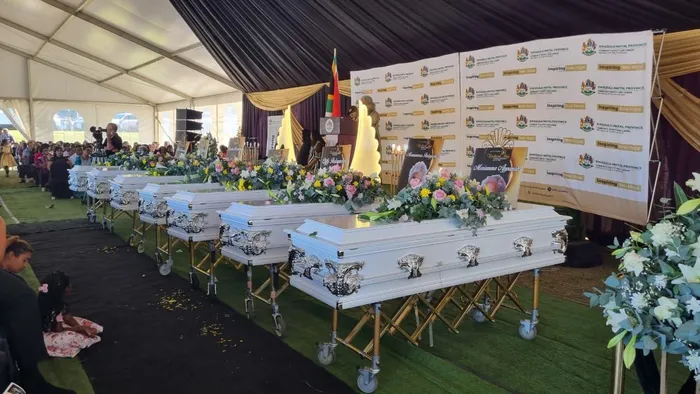
The coffins of the seven family members at the funeral on Sunday.
Image: Tumi Pakkies/Independent Media
By Tuesday evening, temperatures in KwaZulu-Natal were starting to drop.
A welcome reprieve from the blazing heat.
The shift in weather patterns is always more pronounced in areas like Newark.
Wide open spaces, extensive greenery, fewer houses.
It’s mostly rural, and adjacent to the Tugela River.
It's one of those places that's easy to miss if you are not looking for it.
Much like Alan Monswamy's modest home.
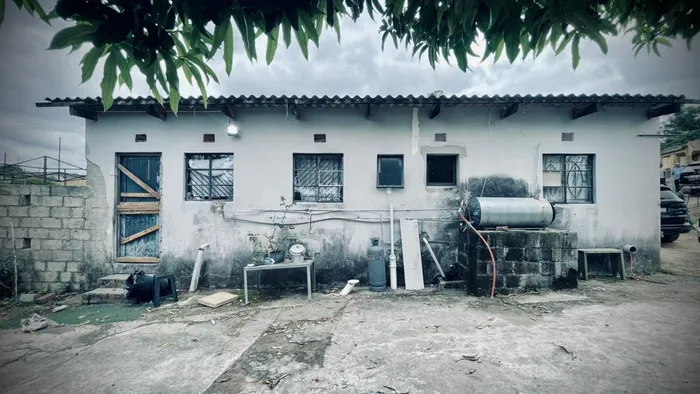
The family home in Newark.
Image: Dasen Thathiah
Just off the R102, hidden from sight.
But, unfortunately, not to everyone.
Around 9pm that night, four young men silently approached the Monswamy residence.
It was familiar to at least one of them.
After all, Alan – who did maintenance work – was his employer.
He knew the Ford Ranger they would eventually steal.
He knew the layout of the property they would rob.
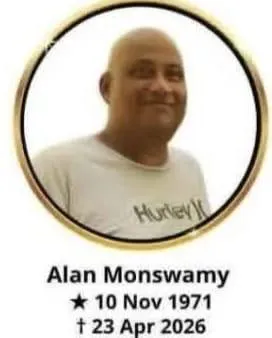
Alan Monswamy.
Image: Supplied
He knew the family they'd do unspeakable things to.
All seven relatives who'd later spend their final moments begging for mercy in a soggy, secluded bush, far away from home.
Under the cover of darkness, the men slithered into the fenced property.
Inside, Alan had settled in for the night with his family.
His wife, Sandy, and their children, Kraidon, 27, and Shamarie, 20.
His in-laws, Mooniamma Padayachee, 79; Mariamma Appanah, 83; and Cliffy Padayachee, 51.
Their attackers wouldn't have struggled to gain access through the kitchen door.

Sandy Monswamy
Image: Supplied
There's no security gate.
Unheard of in big cities, but pretty normal in rural KZN.
A now-tragic testament to the inherent trust here.
Alan may have reacted first to the intruders' presence.
But the silver 9mm pistol the criminals had – stolen in Flagstaff, EC, in February – was the decider.
It gave them the audacity to go about their evil business without much resistance.
All the victims were tied up.
Shamarie was possibly violated in the worst way, her natural protectors helpless nearby.
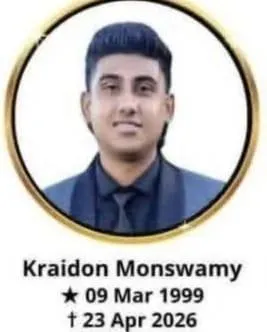
Kraidon Monswamy
Image: Supplied
Such depravity within the walls where love appeared to live, is difficult to conceive.
Walls adorned with a larger-than-life portrait of Alan and Sandy's late daughter, Ricquelle.
With a sticker proudly stating "Family is what happens when you fall in love."
And a shiny Merry Christmas sock still hanging above the front door.
About 10 minutes after their forceful entrance, the robbers transferred R50,000 from Alan's bank account to his son.
Seven minutes later, an online transfer to Kraidon's phone was completed.
For many South African victims, this is where their ordeal would have ended.
Traumatised, permanently scarred – but alive.

Shamarie Monswamy.
Image: Supplied
What happened over the next few hours shows the chilling intention harboured by the four youngsters.
Instead of fleeing, they bundled their victims into the back of Alan's Ford Ranger.
Stripped of all dignity, like animals being led to the slaughter.
To escape with the bakkie, the attackers would have slid open the steel driveway gate.
Two slightly rusted, dark red crosses enjoy pride of place on that security barrier.
A symbol of the Monswamys's faith.
With all hope evaporating, that faith would have been the only comfort to lean on during their darkest hour.
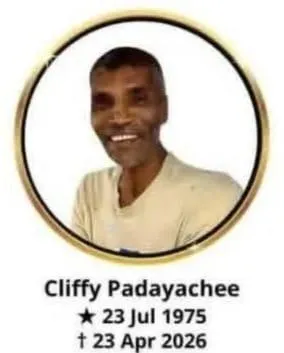
Ciffy Padayachee
Image: Supplied
It must have been freezing cold at the back of the Ford.
They wouldn't have known it then, but their destination was almost 200 kilometres away.
About two long hours, on bumpy terrain.
But it wasn't long enough for sanity to prevail among the captors.
For the victims to convince them to let them go.
Or, for the traffic police to randomly stop the overloaded vehicle.
What were the Monswamys thinking on that trip?
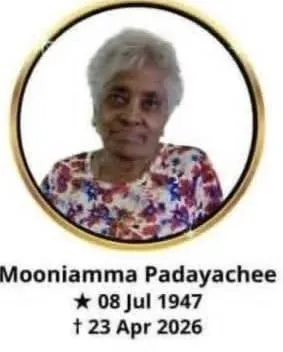
Mooniamma Padayachee
Image: Supplied
Did they get to talk to each other?
Hold hands?
Pray together?
How were the older women processing all of this?
They'd lived in Tugela all their lives.
Simple people, from a simpler time.
Cocooned by familiarity.
That protective barrier; the sense of safety – all shattered in minutes.
It would have been almost midnight when the robbers herded them into a dense bush in the Melmoth area.
After the family provided the necessary bank PINs, their end began to draw closer.
The savages once again targeted Shamarie.
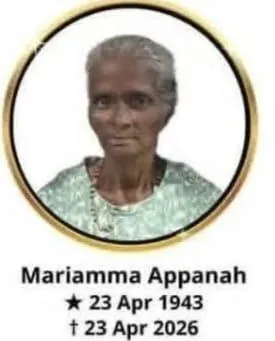
Mariamma Appanah
Image: Supplied
When her attacker had snatched the last of her, he finished her off with a knife.
With only four bullets left in the 9mm pistol, one victim was shot.
Then another.
The final two bullets were directed at Alan's head.
Was it planned that way?
Was all of this deeply personal, or just about money?
All the remaining family members were stabbed to death.
Three generations, permanently silenced by apparent greed.
On Wednesday morning, the sun would have illuminated a gory scene.
Only no one would find them until darkness fell again.
While her boss lay lifeless in a bush, a domestic worker reported for duty at the Monswamy residence by 7.30am.
She raised the alarm, prompting an immediate police and security response.
Neighbours rushed to the house.
Anxiety, panic and disbelief filled the air.
Somehow, in the still of night, an entire family had disappeared without anyone hearing a thing.
In under 12 hours, police captured two of the suspects.
Later, a third was in handcuffs.
They were found at their homes, mere kilometres away from the Monswamy residence.
The victims' cellphones were among the 11 in their possession, creating a distinct link.
So, at around 10.30pm, a team of senior and specialised police officers left Newark for Melmoth with one of the suspects.
By 1am, he pointed out where he and his accomplices had allegedly played God a day earlier.
This tragic tale highlights the worst of South Africa for a few reasons.
A safe space violently violated.
A father emasculated.
A whole family unit erased.
The problems we face are far bigger than policing and justice.
Killers get deleted in shootouts and go to jail in the thousands.
But the next generation of potential murderers is already here and developing. In diapers, in school uniforms, or hanging out on the street corner.
To the Monswamys's loved ones, the seven white coffins will always symbolise a deep loss.
To the rest of us, it should be a reminder; a call to action.
We need to do so much better in our homes, schools and communities.
Collectively, we need to do so much more to raise leaders, not killers.

Dasen Thathiah
Image: Supplied
Dasen Thathiah is a senior reporter at eNCA, writing here in his personal capacity. He is an award-winning journalist, with more than 20 accolades under his belt. Follow him on @DasenThathiah on X or Facebook.