

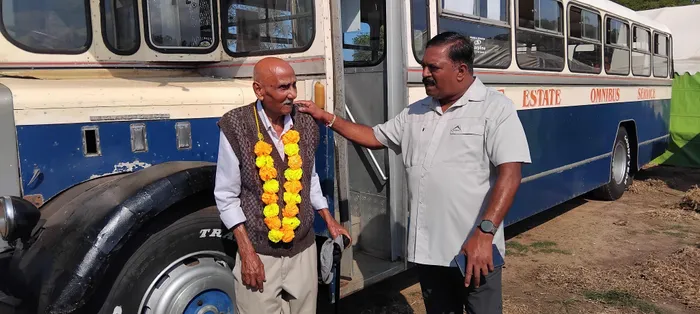
Kenny Rehman, of Bobby's Coach Works in Clairwood, and Seelan Achary, the chairperson of the Shri Mariammen Temple in Mount Edgecombe.
Image: Supplied
KENNY Rehman celebrated his 89th birthday by visiting the Leyland OPS 4/5 bus he helped create, and reflecting on his family's legacy in the Durban bus industry.
Between May and August 1963, Rehman, a bus-body builder, worked long hours helping shape a Leyland OPS 4/5 bus at his father's company, Bobby’s Coach Works, in Clairwood.
He was 26 years old then, and he built the buses with his father and brothers.
Recently, as part of his birthday celebrations, Rehman visited the grand old lady of the privately-owned buses in Durban once more.
The bus was on display at the Shri Mariammen Temple Society in Mount Edgecombe during a celebration to mark the 50th anniversary of Phoenix.
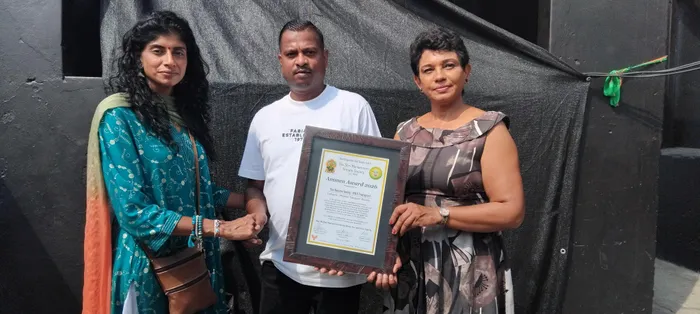
Krishnan Naidoo, centre. representing R&S Transport, received an Ammen Award from Venashree Naidu, left, and Nirmala Thool, from the Mount Edgecombe Arts and Culture Council. R&S Transport provided a bus service between Phoenix and Durban since 1976.
Image: Supplied
A delighted Rehman gently climbed the steps of the bus. He was visibly emotional when he caught a glimpse of the interior and the driver's solitary cab, recalling the different roles each family would play in building a bus, from window fitting, welding, seats, body work and painting.
Temple chairperson, Seelan Achary, said as part of the temple’s celebrations of Phoenix's 50th anniversary, they focused on the bus services which operated from 1976, in Phoenix and Mount Edgecombe.
“They were the first faces our parents saw at dawn, and the warm smiles that ensured they reached home safely at dusk. These buses carried an entire community's future on their shoulders. Now it’s our turn to say thank you. The extraordinary work they have done for the upliftment of the community must be acknowledged,” Achary said.
He presented Ammen Awards to the old bus drivers and conductors.
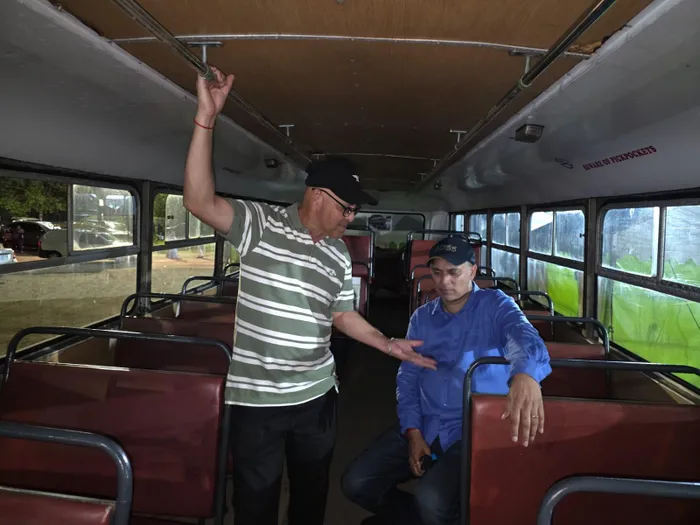
Actors and comedians Henry Ramkissoon and Koobeshan Naidoo recalled their days travelling on a similar bus. Here Ramkissoon pretends to be a bus conductor collecting the fare.
Image: Supplied
Sabir Bux, of Mayville Bus Service, had driven in Phoenix since the early 1980s.
He was a teenager in 1979, when his father, Osman Bux, bought buses and permits to operate a commuter service between Phoenix and Durban.
“The Bux family is grateful for the support from the community during the past five decades,” he said.
Rakesh Bhim, chairperson of the Bus Owners Association, also commended the Phoenix bus services for reaching this milestone.
Suveer Maharaj, the South African Bus Owners Association (SABOA) chairperson – KwaZulu-Natal, described the 50th celebration of Phoenix buses, as significant.
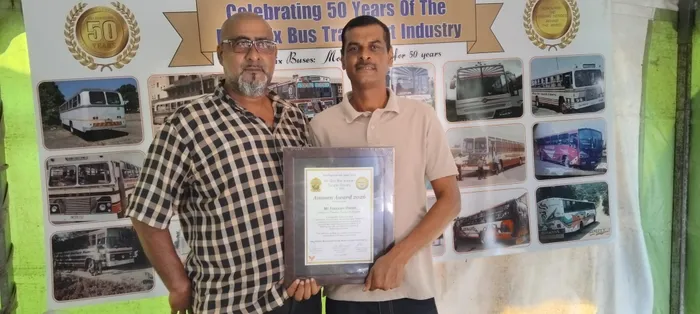
Long-serving bus drivers, Yusuf Mahomed and Nazir Divan.
Image: Supplied
He said the Saboa proudly acknowledged the longstanding and meaningful contribution of the bus industry to the temple and the broader community.
“Marking 50 years of Phoenix is a remarkable milestone, and we recognise the value of honouring the history, heritage and people who have contributed to its growth. The role played by bus operators and workers in connecting people, supporting livelihoods, and strengthening communities over the years is deeply appreciated and respected,” he said.
Maharaj added that initiatives such as the bus commemoration and the restoration of the vintage 1963 Leyland OPS bus were commendable, because they preserved an important part of their shared history and inspired future generations.
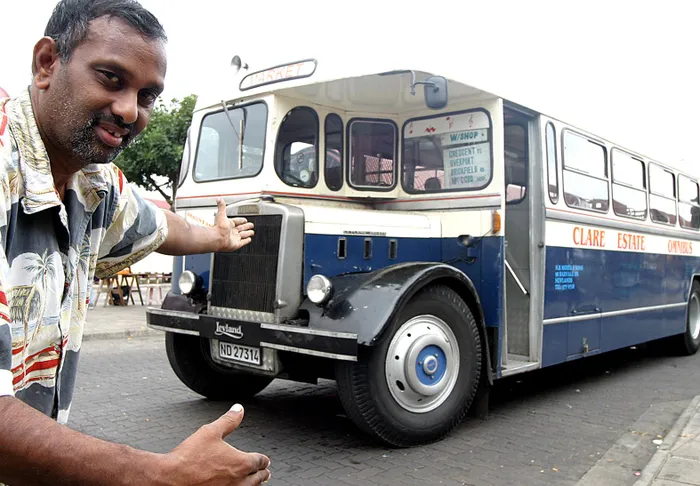
Sadasivan Moses at a drive through the Durban CBD in 1997. Moses's wish was to preserve the bus.
Image: Zanele Zulu
According to research, and the purchase and sale agreements, Nalludu Ramsamy Moses purchased two buses on May 6, 1963, from Leyland Albion (Africa) Ltd, which later became known as Leyland Motor Corporation (Natal) Ltd, which was based on South Coast Road in Mobeni.
Nalludu formed Clare Estate Omnibus Service in the mid-1930s. By 1963, his sons, Thontattan and Sadasivan, were part of the bus company, NR Moses and Sons.
Leyland then entered into a memorandum of agreement between themselves, the Moses family and Bobby's Coach Works that was situated on Flower Road in Clairwood for the erection of the body.
The bus chassis was fitted with a Leyland 680 engine for R8,140.
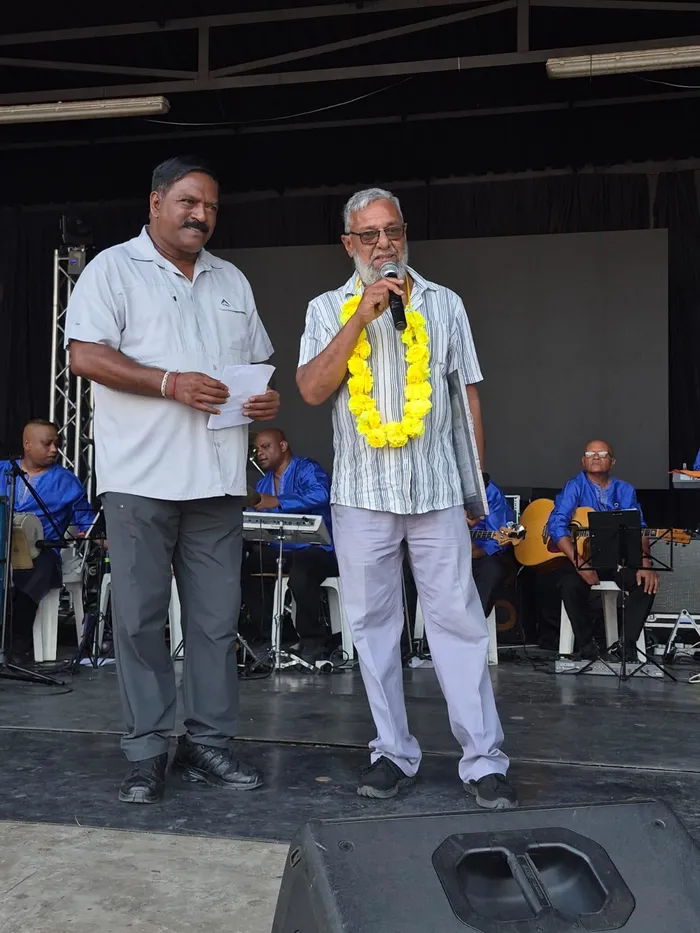
Seelan Achary, the chairperson of the Shri Mariammen Temple, with Sabir Bux of Mayville Bus Service.
Image: Supplied
On August 23, 1963, Bobby’s Coach Works fitted the body, including painting and signwriting, for R3,200. The total price was R10,545. The Moses family paid a deposit and sought the balance from the Credit Corporation of South Africa.
Nalludu was as a vegetable farmer along the Umgeni River near New Germany Road. He transported produce to the Early Morning Market in Warwick Avenue using a horse and cart.
As demand grew, he acquired a Dodge truck, which he then converted into a bus. This marked the family’s entry into the transport sector.
Thontattan and Sadasivan then went their separate ways following the death of their father.
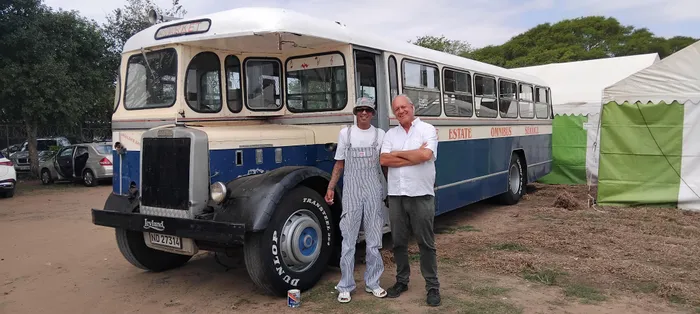
Leon Gounden, former conductor and Phoenix bus driver, with Andries Botha, South African artist. The bus is a Leyland OPS 1963 model at the Shri Mariammen Temple. Gounden had just completed painting the lettering on the tyres, which is part of the Durban bus culture, when Botha visited.
Image: Supplied
At its peak, the Clare Estate Omnibus Service operated three buses, providing essential commuter transport to working-class communities. The main service areas included Sydenham, Clare Estate, Overport, Clairwood and Merebank.
Thontattan acquired additional buses, including a Leyland Albion (1966), and a Leyland Kudu (1972), and by 1978, focused on core routes in Sydenham, Clare Estate and Overport.
After the death of Thontattan in 1982, his son, Sivan Moses, took over the management of the business, and continued the family tradition of hands-on operation and maintenance.
In 2008, Sivan Moses experienced health challenges that affected his ability to continue operations. He retained the Leyland OPS as a tribute to his grandfather's legacy, but sold off the two other buses. Following his death, his family kept the bus. His son, Shalin Moses, assisted by Lakehaven Bus Service, Pra’s Towing and North Coast Tyres, brought the bus to Phoenix for the celebration.
Zainul Aberdeen, author of Phoenix Buses, Social Space and Pride of a Community, said parts of Mount Edgecombe were incorporated into Phoenix during the construction of the houses.
Sugar cane farmer Thomas Watkins named his farming estate, Phoenix, after a fire destroyed his crops, and then they grew back again.
He called this the rise of the Phoenix after the mythological bird – the phoenix - which symbolised death and resurrection.
The Watkins Farm was part of many other estates established by the Natal Sugar Estate. In 1904, Karamchand Mohandas Gandhi purchased Watkins's farm as one of his four communal settlements.
Planning for the establishment of Phoenix as a new public low-cost housing scheme began on August 29, 1966, by the Durban City Council. The first houses in Phoenix were occupied in March 1976. The construction of houses continued in stages over 10 years, and was divided into units.
Ganpath Singh, owner of Glen Anil Transport, provided a bus service from Glen Anil to Mount Edgecombe from the 1950s until he died in 1974. Singh’s buses transported commuters from these estates to the Durban CBD.
Bus owners formed the Mount Edgecombe and Phoenix Bus Owners Association, and provided a bus service to the different units as the area was being developed.
According to documents from the Department of Transport, the area was allocated 175 bus operating permits at its peak in the mid-1980s. Bus companies like Mayville Bus Service, Mayville Coach Lines and Springfield Safari Tours, alongside R&S Transport, dominated the bus services.