

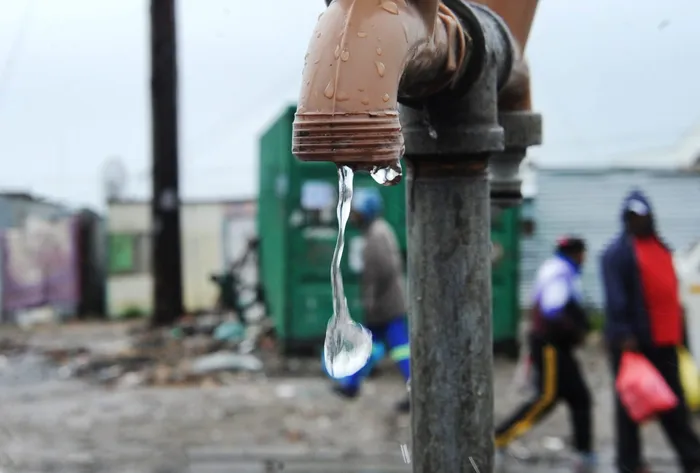
In her introductory remarks during the recent meeting of the Watercom and the National Water Action Plan, Water and Sanitation Minister Pemmy Majodina said the establishment of the National Water Resource Infrastructure Agency was on the cards to enable more finance to be raised for national water resource infrastructure.
Image: Cindy Waxa / Independent Newspapers Archives
Water and Sanitation Minister Pemmy Majodina announced the establishment of a national water crisis committee, as revealed by President Cyril Ramaphosa during his State of the Nation Address
In her introductory remarks during the recent meeting of the Watercom and the National Water Action Plan, Majodina said the establishment of the National Water Resource Infrastructure Agency was on the cards to enable more finance to be raised for national water resource infrastructure.
She said the Water Services Amendment Bill and National Water Amendment Bill are currently before Parliament, and progress with unblocking major national water infrastructure projects was also under way.
“The establishment of the Catchment Management Agencies, to enable local water user involvement in the management and protection of water catchments, is critical for water security,” Majodina stated.
According to the minister, the reform of the metropolitan trading services programme, which included providing a strong financial incentive to metropolitan municipalities to ring-fence revenue from the sale of water for the water function, was one of the most important reforms.
Majodina added that there were efforts to establish her department’s programme to develop community-based boreholes and protected springs in rural areas, as part of providing access to unserved rural communities.
She promised that the implementation of the National Water Action Plan would involve government-wide participation and that there would be regular engagement with civil society, trade unions, business, and water sector experts.
Majodina said the plan identified short, medium, and long-term actions to address the water crisis, with clear responsibilities and timeframes.
Short-term actions included the national government intervening in failing municipalities, intensifying support to struggling municipalities, and supporting municipalities to consider appointing alternative capable water services providers.
In addition, Majodina has undertaken to improve prioritisation of water infrastructure grants to bring water to people’s taps and complete long-delayed projects, for projects which reduce non-revenue water, and for projects which provide access to unserved communities.
The plan will also mobilise additional funds to invest in municipal water infrastructure, including through blended finance and public-private partnerships, and intensify the fight against corruption and criminality in the water sector, including theft of metal parts for sale as scrap metal and the water tanker mafia.
Majodina said various drafts of the plan have already been presented to Watercom meetings as well as to Ramaphosa’s coordinating council, and changes have been made based on the inputs received.
“The intention is to make any further required improvements to the plan based on the inputs received today, before the plan is made public. Once the plan has been released, Watercom will then focus on monitoring and coordinating its implementation,” she said.