

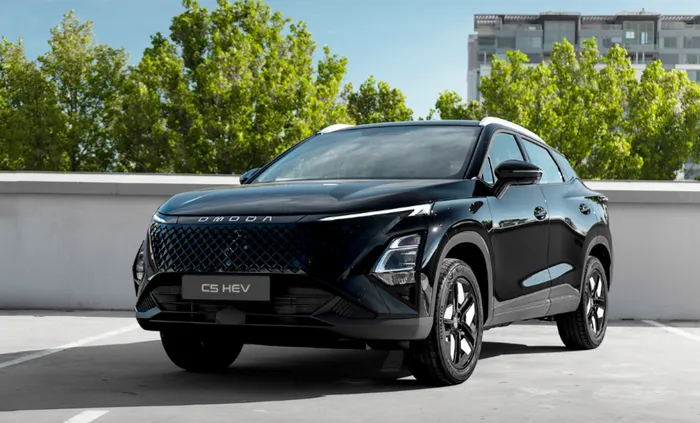
The Omoda.
Image: Supplied
Despite the ongoing war in the Middle East and rising fuel prices, South Africa's new vehicle market demonstrated remarkable resilience in April.
In fact, according to numbers released by Naamsa on Monday, last month’s domestic sales total of 47,979 units made it the best April performance since 2013, and up 13.0% versus the same month in 2025.
The new passenger vehicle sector led the way, growing by 14.3% year-on-year to 34,414 units, while light commercial vehicles and bakkies grew 9.7% to 10,966 units. Medium and heavy commercial vehicle sales grew by 10.5% and 9.9%, respectively.
91.1% of local new vehicle sales took place through dealer channels, followed by the rental industry (5.1%), corporate fleets (2.2%) and government sales (1.6%).
On a more sombre note, vehicle export volumes decreased by 4.0% to 30,939 units as ongoing geopolitical developments weighed on key export markets. However, this was partly influenced by Toyota winding down current Hilux production ahead of the anticipated model changeover later this year, with South Africa’s LCV exports dropping by 42.9%.
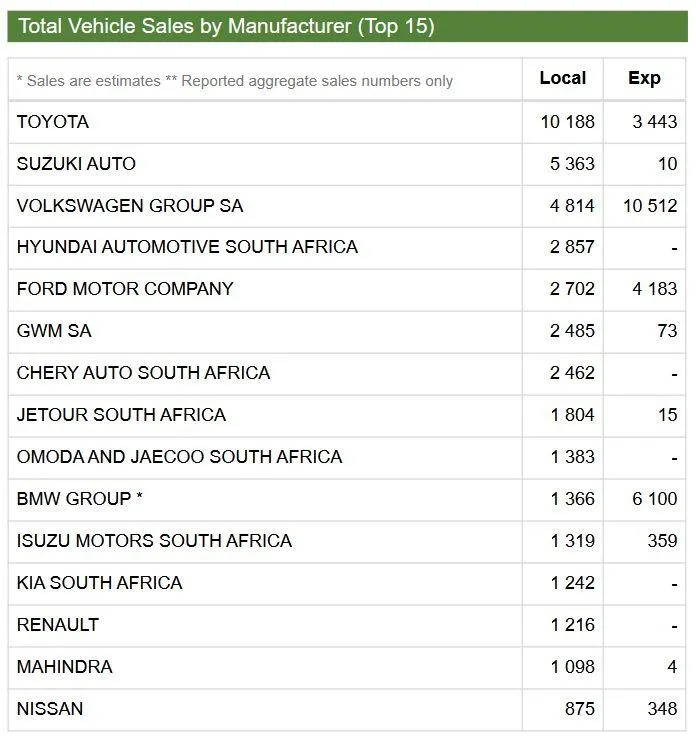
South Africa's top OEMs in April.
Image: Naamsa
On the sales front, Toyota dominated the market once again with a total volume of 10,188 units, followed by Suzuki Auto (5,363) and Volkswagen SA (4,814).
Naamsa said April’s sales performance largely reflected momentum built over preceding months, supported by improved financing conditions and firmer sentiment. However, these factors are now being offset by headwinds such as higher energy prices, looming inflation and a reversal of the interest rate outlook.
“April 2026 marked a clear inflection point in the macroeconomic environment. The escalation of geopolitical tensions in the Middle East triggered a sharp repricing in global energy markets, with oil prices moving structurally higher and introducing a broad-based cost shock across energy-intensive sectors,” Naamsa said.
“For South Africa, where road transport underpins the majority of freight activity, higher fuel prices are directly transmitted into supply chain costs, distribution margins and ultimately consumer prices,” it added.
“In the vehicle market, these pressures feed through to the total cost of ownership, placing additional strain on demand in an environment characterised by tightening credit conditions and increasingly constrained real disposable incomes,” Naamsa said.
“While inflation remained relatively contained at 3.1% year-on-year in March 2026, this reading precedes the full impact of the recent fuel price shock. The April CPI print, due in May 2026, will be the first to reflect these effects more comprehensively. Forward-looking indicators suggest a meaningful acceleration in inflation over the coming quarters, with fuel and transport costs acting as the primary transmission channels,” the organisation said.