

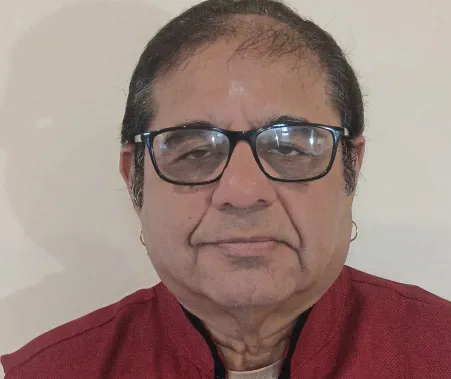
Dr Lokesh Ramnath Maharajh.
Image: File
Religious leaders have weighed in on the death penalty debate. They called for solutions to poverty, unemployment, violence and a lack of moral values, which are believed to be driving crime in South Africa. They said finding a punishment for crime was not the answer.
Lokesh Maharajh, chairperson of the Priests’ Council of the South African Hindu Maha Sabha, acknowledged the emotional weight of the Newark tragedy while cautioning against reactionary policymaking.
“There is no context, grievance, or explanation that can mitigate the brutality of the murder of the family of seven. This kind of violence tears apart the very idea of safety and dignity, and it should shake every South African to the core.”
He noted that the incident was not isolated, referencing similar mass killings, including a 2023 case in Pietermaritzburg where 10 family members were murdered.
“When families are wiped out, it is not only lives that are lost, but futures, memories, and the fragile trust that communities depend on,” he said.
Maharajh described the tragedy as a reflection of deeper systemic issues.
“This is a searing indictment of conditions that allow extreme violence to fester, whether it is the easy availability of weapons, weak law enforcement consequences, or social decay driven by poverty and substance abuse,” he explained.
“Sympathy alone is not enough. Justice must be relentless.”
However, he urged caution in equating justice with execution.
“The Hindu perspective evokes a deep moral tension. It involves balancing the need for justice with the spiritual commitment to non-violence.”
Central to his argument was the principle of Ahimsa, or non-harm.
“Taking a life, even the life of someone who has committed a crime, creates negative consequences for everyone involved. It also removes the possibility of transformation.”
While acknowledging that ancient Hindu teachings permitted punishment to maintain order, Maharajh warned against excess.
“They caution that cruelty and vengeance are spiritually wrong. Justice should aim to encourage a change of heart, which requires that a person remains alive.”
Beyond theological arguments, Maharajh highlighted the broader societal role of religious institutions during times of crisis.
“In times of horrific violence, public discourse is often driven by shock, rage and a desire for retribution. Faith communities exist to remind society of values not determined by the news cycle, the sanctity of life, human dignity, and accountability without cruelty.”
He stressed the importance of providing space for collective grief.
“Rituals of mourning, prayer, and remembrance allow people to express their pain. Without this, anger can easily turn into extreme punitive demands,” he noted.
Maharajh drew a clear distinction between justice and revenge.
“Reacting to violence with more violence often creates a cycle that does not fix the underlying problems. True toughness means ensuring criminals are caught and held accountable, focusing on certainty of punishment rather than severity.”
He also called on the government to address root causes of crime.
“Instead of only debating how to punish after a crime, we must fix the issues that lead to violence: poverty, broken communities, and the erosion of moral values."
Yusuf Patel, secretary general of the United Ulama Council of South Africa, has urged caution amid growing public calls to reinstate the death penalty.
“In light of the tragic killing of the family of seven, we fully understand the deep pain, anger, and sense of insecurity that many South Africans are experiencing.
“However, the question of reinstating the death penalty cannot be viewed in isolation. It must be considered within the broader context of a criminal justice system and security cluster that are currently under significant strain.”
Patel highlighted systemic weaknesses affecting the delivery of justice, including policing capacity, investigative standards, and prosecutorial effectiveness.
“Without addressing these foundational issues, the reintroduction of the death penalty risks becoming a symbolic response rather than a meaningful solution to violent crime,” he said.
He added that capital punishment existed in Islamic law for certain serious crimes.
“It is embedded within a highly stringent and carefully regulated judicial framework. The evidentiary standards are exceptionally high, the rights of the accused are rigorously protected, and there is a strong emphasis on due process, justice, and the prevention of wrongful conviction.”
He further cautioned against drawing direct comparisons between religious legal traditions and modern policy debates.
“It would be inaccurate to draw a direct parallel between the Islamic legal tradition and contemporary calls for capital punishment without acknowledging these fundamental differences,” Patel said.
Emphasising the need for broader reform, he said effective crime prevention required a holistic approach: strengthening law enforcement, improving socio-economic conditions, ensuring swift and fair trials, and rebuilding public trust in institutions.
He said that in times of grief and anger, reactionary responses risked overshadowing balanced discourse.
“Faith communities have an important role to play in moments like these. They must provide moral clarity while also encouraging restraint, justice, and principled reflection. In times of grief and anger, there is a risk of reactionary responses overshadowing balanced discourse,” said Patel.
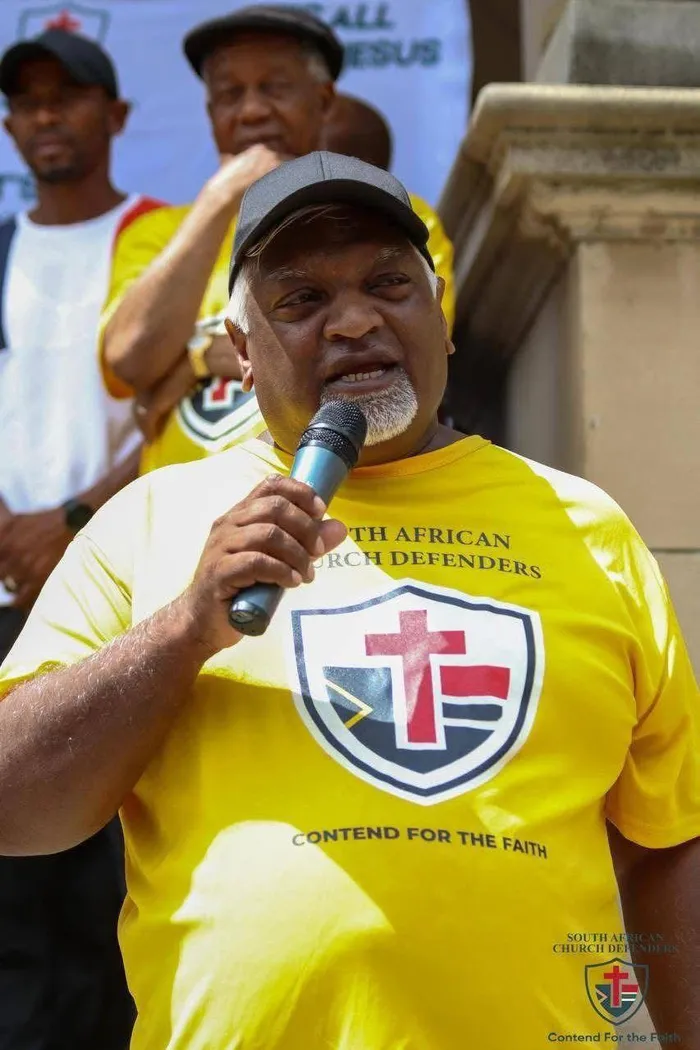
Pastor Aaron Munsamy.
Image: SUPPLIED
Pastor Aaron Munsamy advocates for reconsidering the death penalty, grounding his argument firmly in biblical doctrine.
“We are not called to offer our own opinion on this subject but to teach the Word of God. The Word of God is our final rule in life and faith.”
He emphasised the foundational Christian belief that all human beings were created in God’s image, referencing Genesis 1:26–27.
“Every innocent human being has therefore the inviolable right to life and is of inestimable worth. God abhors violence and the wickedness of man.”
Munsamy pointed to biblical history as evidence of divine justice against violence.
“He purged the earth in Noah’s time, sparing Noah and his family in the ark but cleansing the earth of the violence and the bloodshed. He repeatedly purged the earth of violent empires or peoples.”
Addressing what he described as a common misunderstanding of scripture, Munsamy argued that the Sixth Commandment had been mistranslated.
“It should more correctly be translated, ‘Thou shalt not murder’, not ‘Thou shalt not kill’, murder is the unlawful killing of someone.”
He further cited Old Testament passages where capital punishment was prescribed for grave transgressions, including premeditated murder.
“There is plenty of evidence for the Old Testament application of the death penalty for someone found guilty of unlawful killing,” he noted, adding that due process was always integral.
“The Lord established sanctuary cities to ensure a fair hearing, evidence, and testimony before sentencing.”
Turning to the New Testament, Munsamy argued that the death penalty was not abolished.
“Jesus himself suffered capital punishment on the Cross. The penitent thief acknowledged his just sentence and confessed his sin. God’s forgiveness didn’t obviate his sentence.”
He also referenced Romans 13, asserting that the state retained the authority to enforce justice.
“The State is still to carry the sword and punish the transgressor. These authorities are to exercise their power to restrain evil and administer justice.”
In a closing remark, Munsamy questioned perceived inconsistencies in public moral outrage.
“If people object to the death penalty, why are they silent on the deaths of millions of innocent babies through abortions? This is their contradiction,” he said.