

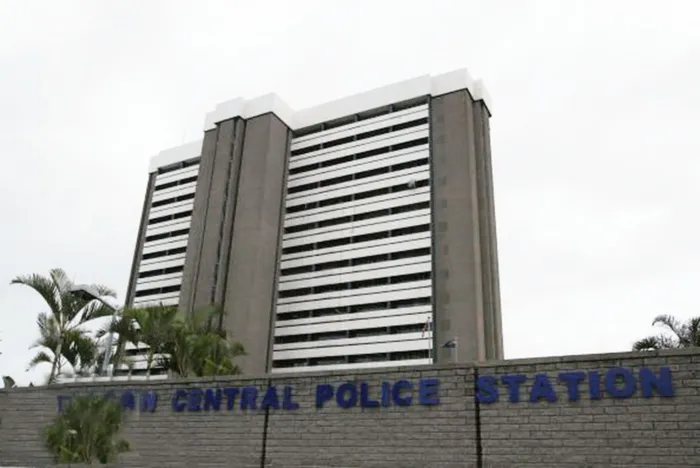
AT ONE of South Africa’s busiest police stations, those expected to keep communities safe are breaking down behind the scenes.
Image: Supplied
AT ONE of South Africa’s busiest police stations, those expected to keep communities safe are breaking down behind the scenes.
Every day, officers stationed at Durban Central Police Station walk into scenes of violence, death, abuse and human suffering. They carry the burden of armed confrontations, grieving families and gruesome investigations. Then they are expected to report for duty again the next morning as though nothing happened.
For many, there is no space to grieve, no meaningful psychological support and no assurance that anyone within the system truly cares whether they are coping.
Dr Thandanani Ngidi uncovered this reality in her doctoral research at the University of KwaZulu-Natal, which examined the support systems available to police officers in the South African Police Service (SAPS).
“Many officers have made peace with the idea that their mental health is not prioritised. Some suffer in silence, while others turn to informal support or unhealthy coping mechanisms,” said Ngidi.
Ngidi, who crossed the graduation stage on Wednesday to receive her PhD in Criminology and Forensic Studies, is a lecturer in the College of Law within the Department of Corrections Management at the University of South Africa (UNISA).
Her research, “An Exploration of the Support Systems Available to South African Police Officers, Visible Policing and the Investigation Division: A study of Durban Central Office, KwaZulu-Natal, South Africa”, found that structures such as Employee Health and Wellness (EHW) programmes technically exist, however officers often experience them as inaccessible, reactive or ineffective.
“Across both divisions, one theme remained constant: limited access to meaningful support. Officers are exposed to trauma daily, yet many feel their mental well-being is not a priority,” Ngidi said.
Compounding the problem is stigma.
Within policing culture, vulnerability is still widely seen as weakness. Officers fear judgment from colleagues, damage to their careers or being viewed as unfit for duty if they admit they are struggling psychologically.
Last month, national police minister Prof Firoz Cachalia said it was not feasible for every police station to have its own psychologist or social worker.
"The South African Police Service has deployed psychology professionals, chaplains and social work professionals at provincial, district and selected local levels, rather than at each individual police station. Due to the limited availability of specialised mental health professionals nationally, it is not feasible to allocate a dedicated psychologist or social worker to every police station. However, all police stations have access to EHW services through their respective district or provincial structures,” he said in a parliamentary reply.
Cachalia said he was aware that police officers were frequently exposed to traumatic incidents such as violent crime scenes, suicides, fatal road accidents and crossfire situations, which may adversely affect their psychological well-being.
“The SAPS addresses the mental health of its members through the Employee Health and Wellness (EHW) programme, which provides continuous support and oversight through service utilisation trends, referrals, and information received from internal structures as well as external stakeholders such as medical aid schemes and the Health Risk Manager.”
“Mental health challenges experienced by members are recognised to be influenced by a combination of factors, including exposure to trauma, relationship challenges, financial strain, substance abuse and coping capacity,” he explained.
He said that while the SAPS had not conducted a comprehensive national assessment in collaboration with the Department of Public Service and Administration over the past five years, ongoing monitoring takes place through the utilisation of available information sources and programme reporting mechanisms.
“The SAPS has a research component that conducts surveys and audits on the use of available EHW services and the satisfaction rates of SAPS members.”
“In respect of suicide-related information, the SAPS head office receives and consolidates reports received from provinces and divisions for trend analysis and management report compilation. Such data is managed with due sensitivity, as it may easily be misinterpreted out of context and may further impact the families of affected members. Accordingly, such information is considered within internal processes to inform support interventions, rather than being treated as standalone indicators,” said Cachalia.