


The legal debate over the possible reinstatement of the death penalty has resurfaced in South Africa following a high-profile family murder case on the KZN north coast.
Image: ChatGPT
WHILE anger, grief, and fear dominate public discourse, several young professionals argue that reintroducing the death penalty would neither address the root causes of violence nor strengthen an already strained justice system.

Aisha Adam.
Image: Supplied
For 24-year-old Johannesburg pharmacist Aisha Adam, the Newark killings triggered both personal anguish and deeper reflection.
“My initial reaction was deep-rooted anger and frustration, not only at the brutality of the incident itself, but also at the unsettling question of why people resort to such violence.”
She emphasised that while this case captured national attention, it represented only a fraction of the violence experienced daily across the country.
“What makes this case especially painful is that it forces us to confront violence through the lives of a family, with names, faces and a story attached to them. At the same time, it also reminds us that this is one devastating example of a much broader crisis of violence in our country.”
Adam raised concerns about selective public empathy, noting that many victims remained invisible.
“While I grieve for the family of seven, I also grieve for every person in South Africa whose life has been lost to violence and whose story may never be carried across our airwaves. It raises uncomfortable questions about whose pain becomes publicly visible, whose deaths become headlines, and whose suffering remains hidden.”
Despite acknowledging the crime's brutality, Adam firmly opposed the death penalty, arguing that it conflicted with both constitutional values and practical realities.
“My first reason is that it conflicts with the South African Constitution, particularly Section 11, which states that everyone has the right to life. This was confirmed in S v Makwanyane, where the Constitutional Court declared the death penalty unconstitutional.”
She warned that reinstating the death penalty would represent a significant moral and legal regression.
“We exist in a post-apartheid state. Dismantling state-sanctioned violence was a result of struggle. Reintroducing the death penalty would not be a simple policy fix; it would be a moral, legal and constitutional reversal.”
Beyond legality, Adam questioned the effectiveness of execution as a deterrent.
“There is no convincing evidence that the death penalty reduces violent crime. It only offers the public a severe symbol of punishment, a punitive spectacle, without addressing the root causes.”
Instead, she pointed to systemic issues such as inequality, trauma, and lack of access to mental health care.
“The death penalty risks distracting us from the real drivers of violence: poverty, unemployment, inequality, trauma, family violence, and substance abuse. It responds after harm has already happened. It does not prevent the conditions that allow that harm to proliferate. The question is not whether perpetrators should be held accountable – they absolutely must be. The question is whether punishment alone can fix a society that is already bleeding,” said Adam.
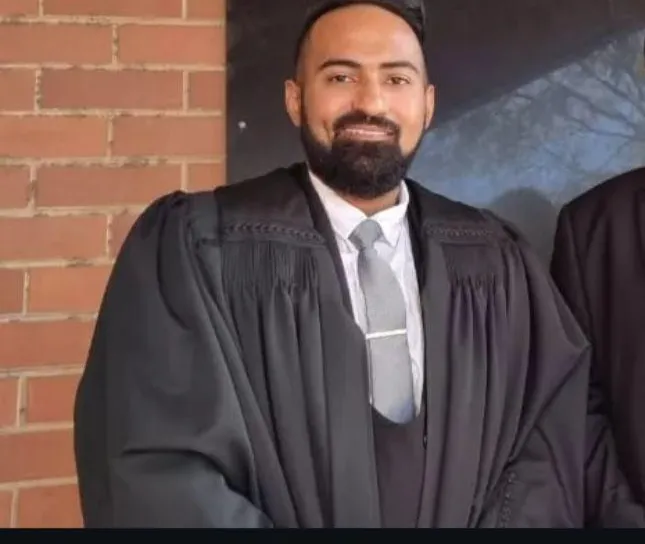
Shekhar Sook.
Image: Supplied
Shekhar Sook, a 30-year-old corporate attorney from uMhlanga and former criminal defence lawyer, echoed the emotional weight of the Newark tragedy.
“My reaction was pure shock and disgust. It felt like something out of a horror movie, especially what was done to the daughter. As someone with a fiancée and a sister, that hit hard.”
Sook acknowledged widespread frustration with the criminal justice system but cautioned against equating harsher punishment with effective justice.
“As a former criminal defence attorney, I can say our criminal justice system is simply not hitting hard enough. This was a premeditated, calculated attack: seven people murdered, a young girl raped, and victims tortured. In a country already battling a gender-based violence crisis, we need a system that is tougher, faster, and far less forgiving to offenders of this nature.”
However, he drew a clear line at the death penalty.
“Our Constitution is clear on the right to life, and cases like S v Makwanyane have settled that debate legally. Executing perpetrators will not undo the damage or bring victims back. It does not fix the system, but rather warps the boundary between justice and vengeance."
Instead, he advocates for improving enforcement and ensuring accountability.
“I do not believe the death penalty will reduce violent crime. South Africa has a deeply rooted culture of violence, particularly against women, and that cannot be solved by harsher punishment alone. Poverty, inequality, and weak enforcement all play a role, until those are addressed, crime will persist.
“What we need is certainty of punishment, not just severity. Harsher sentences for violent and sexual crimes, faster prosecutions, and a justice system that actually delivers consequences. Right now, criminals are not afraid of the law, and that’s the real problem,” said Sook.
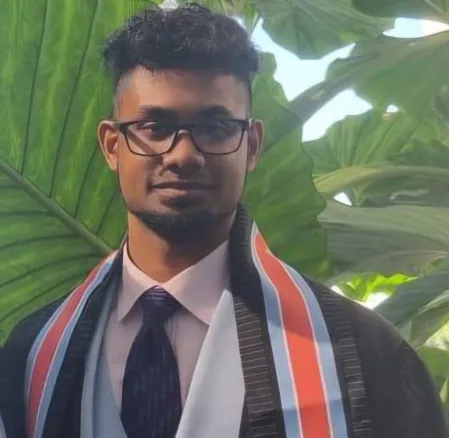
Riley Singh.
Image: Supplied
For 22-year-old journalist and political commentator Riley Singh from Queensburgh, the debate ultimately comes down to trust, or the lack thereof, in state institutions.
“My reaction is one of profound sadness that a family of seven could be killed in such a brutal manner. But my view on crime has remained consistent: we should be tackling the root of crime, not relying on emotionally-driven reactions.”
Singh challenged proponents of the death penalty with a direct question.
“Do you trust the government to have the power to execute its citizens? Because two things can’t exist together. On the one hand, the government is corrupt and the justice system is dysfunctional. On the other hand, we are supposed to trust that same system with the irreversible power of death.”
He also dismissed the argument that the death penalty deterred crime, citing international research.
“The biggest argument for the death penalty is that it serves as an effective deterrence to crime. There have been studies on this. For instance, take states in the US that have the death penalty and compare their crime rate with states that do not have the death penalty. What researchers have found time and time again, is that the punitive measures do not have much effect of influencing the crime rate.
“The reason for this is simple. As stated before, most criminals commit crime as a means to support themselves. That does not just go away when you add the death penalty. All that would happen is people would now find more creative ways to avoid being caught. This would be especially true in a country such as South Africa, which has the greatest inequality gap in the world with millions of people living in poverty. If you do not address these fundamental issues, crime will still remain high.”