

Shoprite reported that members of its Xtra Savings programme saved a remarkable R16.5 billion collectively over the past year.
Image: Meta AI
With food inflation and high interest rates straining household budgets, South African consumers are increasingly turning to retailer rewards programmes, personalised discounts, and banking apps to save on grocery costs.
Retailers and banks have spent heavily on digital loyalty ecosystems in recent years, turning rewards programmes into powerful customer retention and data tools while consumers use them to claw back some savings at the till.
Shoprite reported that members of its Xtra Savings programme saved a remarkable R16.5 billion collectively over the past year.
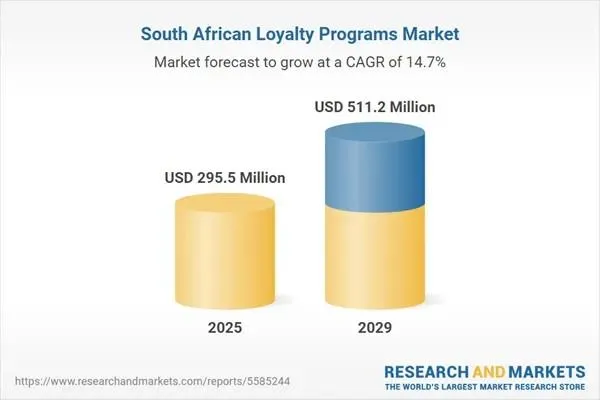
ResearchAndMarkets.com says South Africa's loyalty market was projected to grow 17.1% annually, reaching R511.2 trillion by 2029, with a compound annual growth rate of 14.7% from 2025-2029.
Image: ResearchAndMarkets.com
Online consumer forums and social media discussions increasingly show South Africans comparing weekly specials across retailers, rotating between supermarket chains and combining retailer rewards with banking cashback, fuel discounts and app-only promotions to reduce grocery bills.
“I like cashback programmes more than discount vouchers,” one respondent to a recent YourView Panel survey shared.
“I will always rather go for the cashback options.”
Another said, “those extra savings are so useful when I’m broke - I keep those points till the end of the year and buy something for Christmas.”
These stories highlight the emotional satisfaction that comes from feeling financially smart and rewarded, said KLA, a data interpretation company.
Programmes such as Checkers Xtra Savings, Pick n Pay Smart Shopper, WRewards and Clicks ClubCard have evolved beyond simple points systems into increasingly sophisticated data-driven platforms built around personalised offers and shopping behaviour.
Banks have also expanded their rewards ecosystems through partnerships with retailers, allowing consumers to earn cashback, discounts or points through linked spending.
ResearchAndMarkets.com says South Africa's loyalty market was projected to grow 17.1% annually, reaching R511.2 trillion by 2029, with a compound annual growth rate of 14.7% from 2025-2029.
“The South African loyalty landscape is evolving as consumer preferences shift toward immediate rewards and businesses adapt to regulatory and economic conditions,” says the report.
It adds that “the fuel retail sector has seen a surge in proprietary loyalty programs from brands such as Shell and Sasol, driven by the need to offer alternative incentives due to legislative restrictions on direct fuel discounts”.
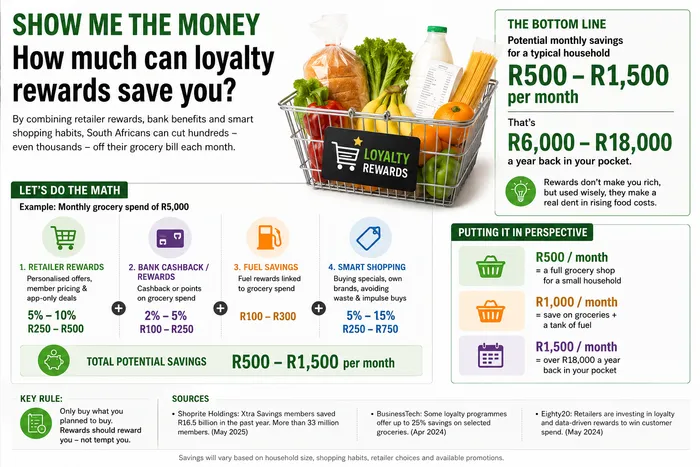
How much rewards cards can save you.
Image: ChatGPT
Some programmes now advertise savings of up to 25% on selected grocery purchases, while premium subscription-based offerings add delivery benefits and member-only pricing.
South African social media and consumer forums are increasingly filled with discussions comparing retailer apps, member pricing and reward strategies, with many consumers sharing methods for stacking discounts and rotating between retailers depending on weekly specials.
Retailers are also competing aggressively to deepen customer engagement through their digital ecosystems.
Checkers has expanded its Xtra Savings Plus subscription offering and Sixty60 ecosystem, while Pick n Pay continues integrating Smart Shopper with banking and health rewards platforms.
According to the latest SpendTrend25 report from Discovery Bank and Visa, the number of credit cards in use in South Africa has jumped by 53% since 2020 - but people aren't simply spending more. They're using credit more strategically and are moving to rewards-driven spending.
The report said that 84% of consumers prioritise rewards and cash back when choosing which credit card to use. People want their spending to do more - and smart rewards are leading the charge.
At the same time, people are embracing best-before products.
In areas such as Cape Town’s Southern Suburbs, Durban North and Johannesburg’s Northern Suburbs, demand for short-dated products has picked up, according to still good, a South African social enterprise that connects retailers and consumers to reduce food waste, lower grocery costs and fight malnutrition.
“These are some of the country’s most affluent areas,” said still good CEO Steffen Burrows.
In its first year, the platform helped shoppers save nearly R6 million through the sale of discounted products, while also allowing retailers to recover value from stock that might otherwise have gone to waste.