

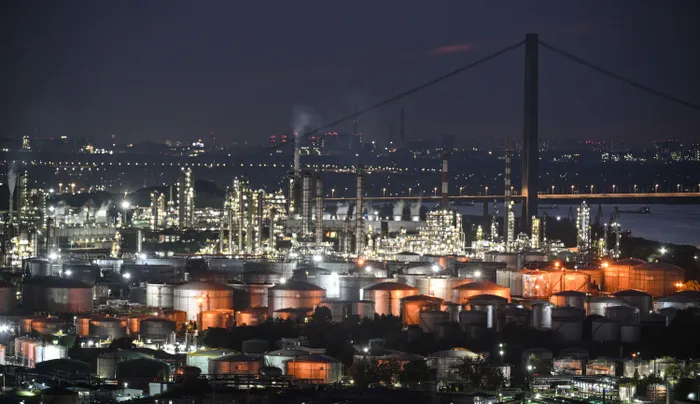
THE Iran war is not only affecting the Gulf region but is having far reaching repercussions around the world.
Image: Hector Retamal / AFP
THE Iran war is not only affecting the Gulf region, but is having far-reaching repercussions around the world.
Iran has blockaded the Gulf of Homutz in retaliation for the attack on it by the US and Israel, which effectively cuts off a fifth of the world's crude oil supply.
Oil prices have skyrocketed and nations are scrambling to get enough supplies to keep their economies going.
Motorists are badly affected as they have to dig deep into their pockets to fill their tanks.
Fortunately many newer model cars are very fuel efficient, unlike the fuel guzzlers of yesteryear. Some can run on a sip of fuel. Jet fuel is in short supply, forcing airlines to merge with other carriers.
Some have even been forced to cancel flights, frustrating and inconveniencing millions of passengers. In May alone, airlines have cancelled 13,000 flights which amounts to two million seats.
But the Iran war is not all gloom and doom. Oil rich countries, especially Russia and the US, are benefitting from the war. It is boom times for their oil industry. Sanction-hit Russia was in dire straits to fund its war in Ukraine. But now the higher oil prices have brought much relief to its depleted state coffers, and it can escalate the war in Ukraine.
As for the US, its oil exports are booming. Trump's inaugural exhortation to the oil companies, "drill, baby, drill", is reaping rewards as the US takes advantage of the global oil shortage. Also thriving in the Qatar volatile times we live in, is the arms industry which is churning out the killing machines which have claimed so many Iives in the Middle East, Sudan and Ukraine.
There you have Russia and the US prospering while death and destruction reign in the Middle East.
THYAGARAJ MARKANDAN
Kloof