

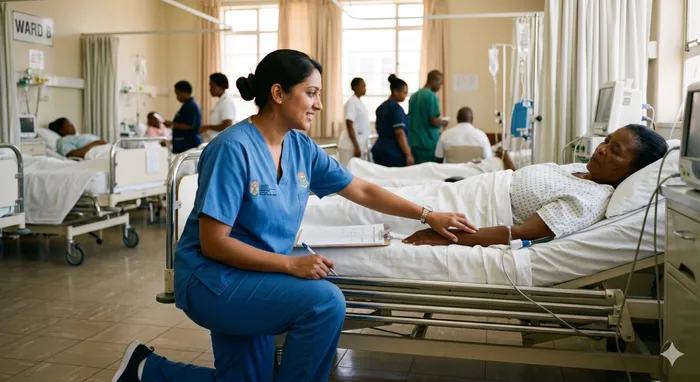
Marking International Nurses Day, healthcare platform Unu Health highlighted the role nurses played beyond clinical care, describing them as key support pillars in an overstretched public healthcare system.
Image: Google Gemini
South African nurses are grappling with the rising challenges posed by chronic diseases and delayed patient care in a strained healthcare system.
Marking International Nurses Day, healthcare platform Unu Health highlighted the role nurses played beyond clinical care, describing them as key support pillars in an overstretched public healthcare system.
The organisation said nurses in public clinics often managed large patient volumes daily, dealing with chronic illnesses, emergencies and ongoing patient care while working with limited resources.
South Africa continues to face a growing burden of chronic diseases, including hypertension, which contributes to cardiovascular illness - one of the leading causes of death in the country.
According to Unu Health, many of these conditions are preventable or manageable, but patients often only seek treatment once symptoms become severe.
“They are often the first point of contact, the ones managing ongoing care, and in many cases, the emotional support for patients navigating difficult diagnoses,” said Luvuyo Maloka from Unu Health.
Maloka said delayed healthcare seeking placed additional pressure on nurses because treatment becomes more complex and time-consuming when patients arrive at clinics with advanced conditions.
The organisation said the country’s healthcare system remained largely reactive, focusing on treating illness instead of prevention, which increased pressure on frontline healthcare workers.
Unu Health said there was a growing shift towards more proactive healthcare through digital health platforms, remote consultations and easier access to health screenings.
The organisation said these tools could help people manage their health earlier by monitoring conditions such as high blood pressure and consulting healthcare professionals before complications develop.
Maloka said technology could support nurses by reducing unnecessary clinic visits and allowing healthcare workers to focus on urgent and complex cases.
“Technology cannot replace the role of nurses,” he said. “But it can play a critical role in reducing the pressure on the system and ultimately improving outcomes for both patients and healthcare workers.”