

While nobody walks down the aisle expecting their marriage to end, the reality is that relationships sometimes run their course.
Image: Meta AI
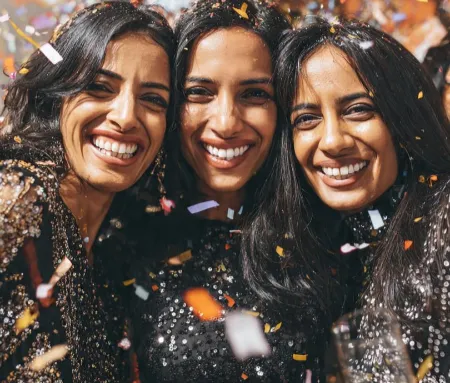
Parties were once reserved for weddings, birthdays and baby showers. Now, almost every life milestone seems to come with a celebration attached to it. And increasingly, divorce is joining the list.
While nobody walks down the aisle expecting their marriage to end, the reality is that relationships sometimes run their course.
People divorce for deeply personal reasons, whether it is growing apart, betrayal, emotional exhaustion, or simply realising they are no longer happy.
For some women, the end of a marriage is devastating. For others, it can feel liberating, like the closing of one difficult chapter and the beginning of another.
Now, that emotional shift is being marked not with tears alone, but with cake, champagne, matching outfits and dance floors.
New data from matchmaking and dating app Sister Wives reveals that searches for divorce parties have reached a five-year high.
Pinterest recorded around 39,000 searches related to divorce parties, while Google searches for divorce party decorations have surged by 60% over the past three months.
Searches for “divorce party ideas” are also climbing rapidly and are expected to spike even further during the Northern Hemisphere summer season.
According to relationship expert Robyn Alesich, the timing is not random.
“January is widely known as divorce month, closely followed by September, and since uncontested divorces typically take several months to finalise, many newly separated individuals are now approaching the end of that process,” she explains.
“It’s a rebirth or reclaiming ritual for divorcees at this time of year.”
Social media has also played a major role in normalising the trend.
TikTok, in particular, has become flooded with “DivorceTok” videos showing everything from themed cakes and revenge dresses to emotional speeches and glamorous celebration dinners. There are millions of views across hundreds of viral videos on DivorceTok showcasing their planning, GRWM and day-of festivities,” says Alesich.
“Nicole Kidman was even rumoured to hold a divorce party this year, while one woman spent more than $30,000 on hers back in 2024.”
The hashtag #DivorceParty currently features thousands of videos online, and Pinterest has become a hub for mood boards filled with black balloons, cheeky slogans and fresh-start inspiration.
Interestingly, the trend appears to be driven mostly by women. Sister Wives found that women account for the overwhelming majority of divorce party-related Pinterest searches, particularly those between the ages of 25 and 34.
Psychologist Dennis Relojo-Howell believes there is a psychological explanation behind the sudden spike in interest.
“People are more likely to leave unhealthy situations, start new routines, or commit to goals when their emotional resources are replenished, and summer does exactly that,” he says.
“The psychological cost of change feels lower when you are not already depleted.”
He explained that warmer weather and increased sunlight could naturally improve mood and emotional resilience by boosting serotonin levels.
“Human beings are wired to feel better when they are around others,” he says.
“This creates a genuine uplift in emotional tone that makes people more open, energised and willing to take action.”
There is also a deeper emotional layer to these celebrations.
For many women, divorce parties are not necessarily about mocking marriage or celebrating pain. Instead, they can represent survival, freedom, and the reclaiming of identity after years of feeling stuck.
The rise of these gatherings also reflects changing attitudes around divorce itself.
Once treated as a taboo subject whispered about behind closed doors, divorce is increasingly being discussed openly and honestly, especially by younger generations who place greater importance on emotional well-being and personal fulfilment.
Of course, not everyone agrees with the trend.
Critics argue that turning divorce into a party can trivialise the emotional and financial toll that separation often brings, particularly when children are involved. Others believe healing should happen privately rather than publicly online.
But for many women, the celebrations are less about revenge and more about release. A symbolic way of saying they made it through something painful and came out the other side.
As Relojo-Howell puts it: “Summer is one of the best times psychologically to mark a major life transition, so it makes sense that the data is showing a spike in popularity.”