

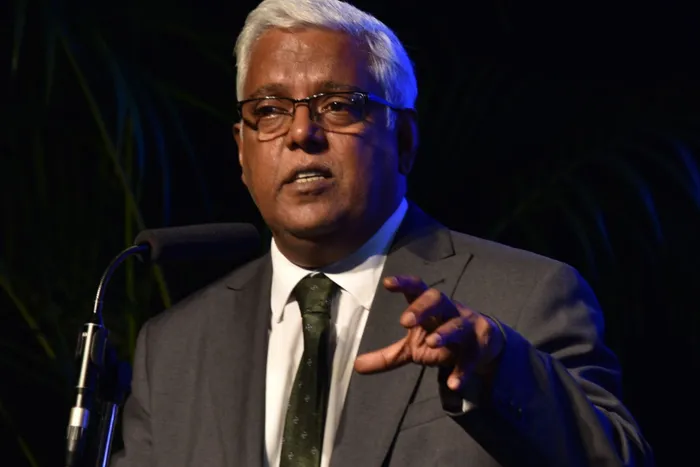
Ravi Pillay.
Image: File
DESPITE a national unemployment rate of 32,7%, KwaZulu-Natal's leaders express cautious optimism over recent economic improvements and the importance of effective local governance ahead of municipal elections.
Former KwaZulu-Natal finance MEC Ravi Pillay said unemployment remained South Africa’s greatest economic threat, despite some positive developments in infrastructure and electricity supply.
“The unemployment rate remains our single biggest challenge and risk. While we welcome the very modest 1,6 % increase in the KZN employment figures, the overall picture remains dire. Unfortunately global dynamics, in particular the US/Israel/Iran conflict, severely impact some commendable progress in relation to electricity supply stability and significant improvement in our ports and rail infrastructure and operations,” Pillay said.
“We must persevere. We need to better understand and build confidence in KZN. Our competitive edges are enormous. The unemployment rate remains our single biggest challenge and risk.”
Pillay said effective local government would be critical to economic growth and job creation ahead of upcoming municipal elections.
“Building confidence requires we show maturity and rise above party political rivalry on this matter. There is increasing recognition that effective local government is a critical factor in the economic growth and job creation equation. This makes the forthcoming local government elections a very important milestone. The manner in which we conduct these elections, the outcome, and post election arrangements must guarantee stability and commitment to address the many challenges associated with local government.
“The first step is to ensure maximum participation to demonstrate belief in our democracy and commitment to making it work for all our people, especially the poor. A combination of effective and qualitative government spending on the one hand, and confidence-driven new private investment on the other hand, can rapidly change our economic fortunes. There are several encouraging indicators of this recovery. KZN is the second largest province both in terms of population and economic activity. If KZN works, South Africa succeeds,” said Pillay.

KWAZULU-NATAL member of the legislature for the Democratic Alliance, Hannah Lidgett
Image: Meta
Hannah Lidgett, DA KZN spokesperson on economic development, tourism and environmental affairs, welcomed KwaZulu-Natal’s quarterly gains but cautioned against overlooking the province’s year-on-year losses.
“The message from these results is that while KZN has potential, the provincial government needs to push far more aggressively to create the right conditions for economic growth, as year-on-year 67,000 jobs were shed in the province,” Lidgett said.
According to her, KwaZulu-Natal’s strongest job gains came from trade, finance and manufacturing sectors.
“These are important sectors for KZN’s economy, and must be supported..
“The DA believes that there must now be a relentless focus on the basics. These include cutting red tape and speeding up investment approvals, supporting small businesses, rebuilding investor confidence, strengthening tourism, protecting our agricultural sector and ensuring that infrastructure and safety are prioritised,” she said.
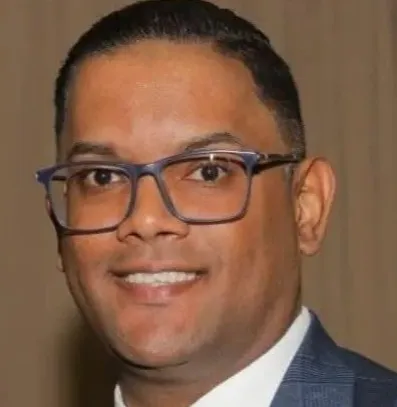
Dr Jonathan Annipen.
Image: File
Jonathan Annipen, IFP councillor, said the province’s modest employment gains showed that targeted interventions could yield results.
“While the national increase in unemployment to 32,7% is deeply concerning, it is important to acknowledge that KwaZulu-Natal has shown some encouraging progress, with unemployment in the province having declined,” Annipen said.
“This demonstrates that with focused leadership, collaboration and deliberate economic interventions, progress is possible.”
Annipen credited KwaZulu-Natal Premier Thami Ntuli for prioritising job creation and investment attraction, but warned that youth unemployment remained a major concern.
“Behind these statistics are young graduates, school leavers and breadwinners who wake up every day to rejection and uncertainty.
“When young people are locked out of economic opportunities, the consequences ripple across society.”
He added that unemployment was fuelling crime, drug abuse, gangsterism and mental health challenges across communities.
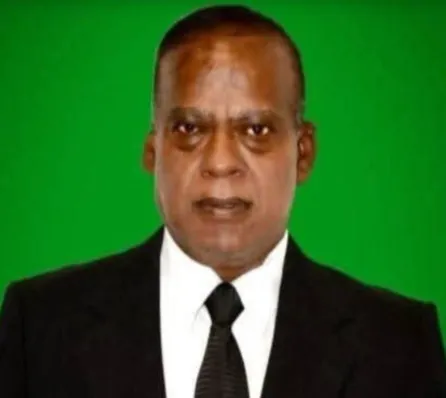
Doeshiee "Gaddafi" Govender.
Image: Supplied
Meanwhile, Doshie “Gaddafi” Govender, an uMkhonto weSizwe (MK) Party councillor for ward 28, KwaDukuza, blamed government policies for failing to prioritise local workers.
“The 32,7% was created by the GNU. They never protect local employment. They allowed foreigners to take over jobs in South Africa. I know of municipalities that gave South African-owned companies tenders worth millions, but the work site has mostly foreigners working with only 30% South Africans. There are restaurants where 95% of the staff are foreigners.”
Govender claimed foreign nationals dominated sectors such as restaurants, hospitality and construction, arguing that stricter employment protections for South Africans would significantly reduce unemployment.
“South Africa’s employment rate is high, but the wrong people are being employed. If you can remove foreigners, 32,7% will drop,” said Govender.