

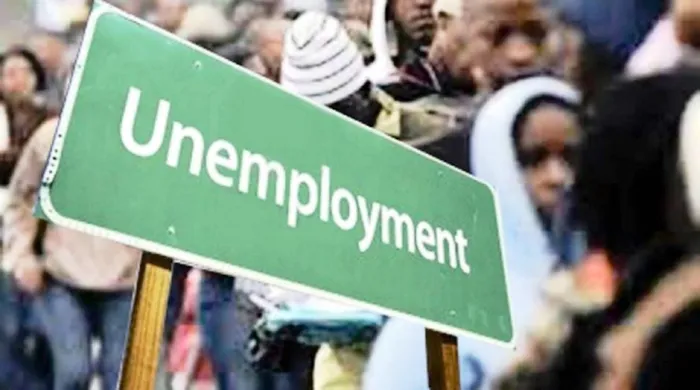
Despite South Africa's escalating unemployment crisis, KwaZulu-Natal stands out as the only province to record job growth in Q1:2026, adding 6,000 jobs.
Image: File
SOUTH Africa faces a deepening unemployment crisis as the official rate climbs to 32,7% following the loss of 345,000 jobs in the first quarter of 2026.
Experts warn of the implications for social stability and economic growth.
According to the latest labour market figures, the number of employed people fell to 16,8 million during the first three months of the year, while the number of unemployed South Africans rose by 301,000 to 8,1 million.
At the same time, the working-age population grew by 121,000 people, highlighting the growing pressure on an already-strained labour market.
The labour force declined by 44,000 between the final quarter of 2025 and the first quarter of 2026, while the number of people outside the labour force rose by 164,000 to 17,3 million.
Employment losses were recorded across the formal, informal and household sectors, which collectively lost 344,000 jobs. The formal sector accounted for the largest decline, shedding 189,000 jobs, followed by the informal sector with 127,000 losses, and household employment with 28,000 losses.
The labour force participation rate dropped to 59%, while the absorption rate, which measures the proportion of the working-age population that is employed, declined to 39,7%.
Seven of the country’s 10 occupational categories reported job losses during the quarter, with the biggest declines seen in sales and services occupations, which lost 145,000 jobs.
Technicians and craft-related trades each lost 91,000 positions, while elementary occupations shed 72,000 jobs, clerical lost 29, 000, domestic workers lost 10,000, and professional occupations lost 2,000.
Provincially, North West recorded the largest employment decline with 80,000 jobs lost, followed by Gauteng with 67,000, and Mpumalanga with 54,000.

Zakhele Ndlovu.
Image: File
KwaZulu-Natal was the only province to record a quarterly employment gain, of 6,000 jobs.
Political analyst Zakhele Ndlovu highlights the governance failures contributing to this issue, while domestic workers also bear the brunt of economic challenges.
He said the worsening employment crisis reflected deeper governance failures.
“Our biggest problem is that we have leaders who are clueless about governance and are scaring away investors. So we have an investment boycott both by domestic and international investors,” Ndlovu said.
“In the public sector, we are seeing massive mismanagement and corruption, and this is killing jobs. For example, state-owned enterprises have been destroyed, and this means more jobs are lost.”
Ndlovu warned that rising youth unemployment posed a growing threat to democracy and social stability.
“Youth unemployment is a ticking time bomb and a threat to social stability. The middle class is shrinking, and more job losses are expected in the medium term to long term. Clueless leadership has presided over corruption, cadre deployment, load shedding, mismanagement of the public sector, and the list is endless.
“Unemployed youth pose a serious threat to social stability. More people have lost confidence in the system and that's why more people no longer vote. That constitutes a serious threat to democracy. Imagine these unemployed young people hijacking social movements such as March and March, and using protests to loot shops and businesses,” he said.

Gloria Kente.
Image: File photo: Jeffrey Abrahams
Domestic workers were also among those affected by deteriorating economic conditions.
Gloria Kente, the general secretary of the South African Domestic Service and Allied Workers Union (SADSAWU), said many households could no longer afford to retain full-time domestic staff.
“The numbers of domestic workers are dropping because of the challenges all South Africans are facing, even those who employ domestic workers,” Kente said.
“The cost of living is high, and many cannot afford to have domestic workers. Even the employers are losing their jobs.”
She said many domestic workers were now forced to take on additional work because employers were cutting their working hours and days.
“This means the domestic workers have to look for jobs elsewhere to make up the deficit in salary,” she said.
Kente also criticised what she described as inadequate protection for domestic workers.
“The Department of Labour does not recognise this as a worthy job that deserves protection. There is no dignity and humanity for domestic workers. They are easily disposed of when not needed,” she said.