

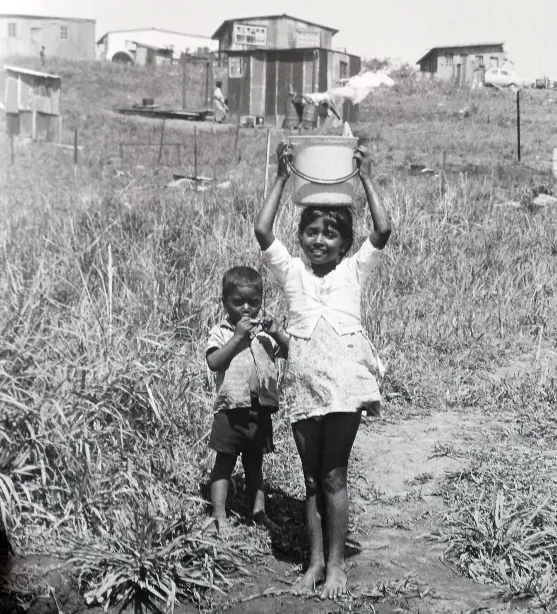
New Farm, Phoenix, 1980s.
Image: 1860 Heritage Centre
FIFTY years ago, Phoenix township was not born of choice, but of compulsion. It rose from the cold calculations of apartheid’s Group Areas Act, a law that uprooted settled Indian families from Durban’s inner suburbs, and cast them into state planned “buffer zones”.
But what began as a ghetto housing scheme on sugar cane lands north of Durban has, through resilience and community spirit, metamorphosed into a proud monument to survival, adaptation, and dignity.g
But we must not forget that Phoenix bears the scars of the wounds of forced removals. The Durban Municipality, acting under apartheid legislation, evicted Indian families from settled places like Cato Manor, Seaview, Rossburgh, Overport, Sydenham, Springfield, Magazine Barracks, and Riverside. First, they were herded into Chatsworth in the south, and later into Phoenix in the north.
Previously, Indians in Durban lived in scattered pockets beyond the city’s municipal boundary, their lives shaped by the legacy of indenture and the rhythms of agriculture. But by the early 1920s, six decades after the first indentured labourers had arrived, the tide began to turn.
Durban’s growing secondary industries demanded a skilled workforce, and Indians, long tied to the land, began moving into semi-skilled and operative jobs. The expansion of municipal boundaries absorbed this labour force, drawing families from the periphery into the city’s industrial heart.
Yet as their economic roles shifted, housing remained a stubborn obstacle. There was a chronic shortage of decent accommodation for Indians in suburban Durban. The middle class, newly confident and ambitious, found themselves hemmed in by overcrowded, unattractive “Indian areas” that had become de facto slums. For families who had worked tirelessly to climb the social ladder, the lack of better housing was not just inconvenient – it was grossly humiliating.
By the early 1940s, ambition and necessity converged. Middle-class Indians began purchasing properties in “white suburbs”, especially those adjacent to predominantly Indian zones. Sydenham, Overport, Clare Estate, and parts of Springfield became the new frontier.
These were the border suburbs, liminal spaces where Indian families sought upward mobility, larger homes, and a chance to live with dignity. For many, it was not simply about bricks and mortar; it was about claiming a place in the city, about refusing to be confined to the margins. But their entry into these suburbs provoked hostility. White residents saw Indian “penetration” as a threat to racial exclusivity. The state responded with laws designed to halt this movement.
The Pegging Act of 1943 froze property transactions between Indians and whites, a blunt instrument to stop suburban integration. Three years later, the Asiatic Land Tenure Act of 1946 required ministerial permits for Indians to buy property from whites, effectively curbing expansion. These measures were not isolated. They were stepping stones toward the Group Areas Act of 1950 – apartheid’s grand design for racial zoning, which would later uproot Indian families en-masse and resettle them in Chatsworth and Phoenix.
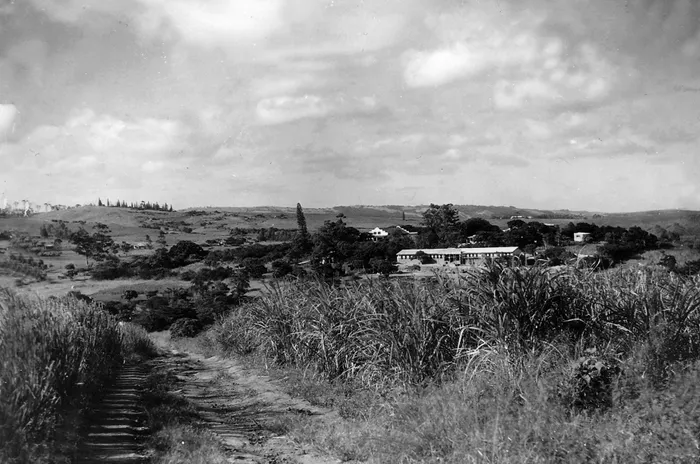
Phoenix Settlement, 1900s.
Image: 1860 Heritage Centre
Behind the legal jargon and municipal maps lay human stories. Families who had saved for years to buy a modest home, suddenly found their dreams pegged, frozen, or denied.
Families were not simply “booted out”; they were torn from the soil of belonging by the iron fist of the Group Areas Act. Homes built with sweat and memory were declared illegal overnight. Streets that echoed with laughter and prayer became forbidden zones. The laws were not just about property; they were about dignity, about who had the right to aspire, to belong, to call a suburb, home.
Durban’s City Council, cowed by the spectre of white backlash, shrank from challenging the Group Areas Act. Instead of defending justice, it became an obedient executor of apartheid’s will. In its reluctance lay complicity: the council went about implementing legislation that was not only discriminatory but openly cruel, uprooting families and dismantling communities with bureaucratic precision. What should have been a municipal authority serving all citizens became an instrument of prejudice, enforcing laws that stripped people of dignity and belonging.
This was not passive compliance; it was active participation in injustice. By bending to the fears of white residents, the council betrayed its duty to fairness and entrenched segregation in Durban’s very fabric. The result was a city scarred by racial zoning, where homes were lost, lives disrupted, and trust in governance shattered.
In the early 1960s, the close-knit humble Chatsworth farming community was flourishing so remarkably that it produced the largest quantity of bananas in South Africa, while many of its children rose to great heights.
When this highly-productive agricultural area of 8,000 acres (about 3,250 hectares) in extent, was expropriated by the Durban City Council to develop Chatsworth, more than 15,000 Indians and 2,000 Africans who primarily lived off the land, lost their livelihoods.
A decade later, in the early 1970s, when Chatsworth had outgrown its size, and families living in two-bedroomed dwellings required larger homes, plans that had been drawn for Phoenix began to be implemented.
Like Chatsworth, about 8,000 acres of land was required for Phoenix. The land was acquired from Natal Estates, one of the largest sugar-growing companies in KwaZulu-Natal.
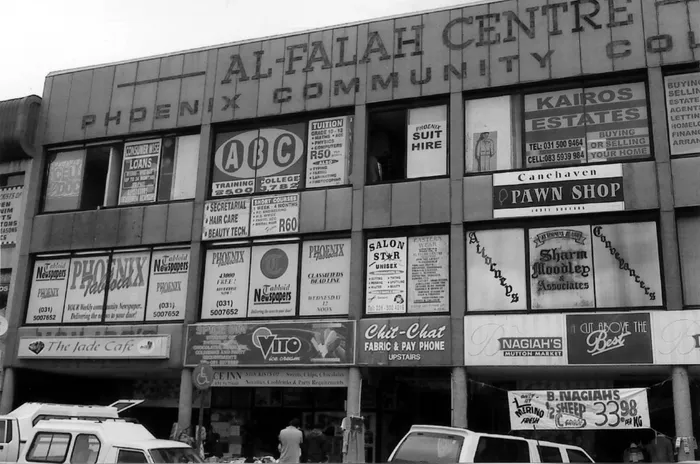
The Al-Falah Centre in Phoenix.
Image: 1860 Heritage Centre
While Chris Saunders of Natal Estates indicated that the lowest price the company would be prepared to consider was R600 per acre, the Durban Municipality valued the land at R350 acre. The price of a 750ml bottle of Jameson Irish Whiskey now sells for R350. The city council wanted to build 15 units per acre. Just imagine that! But after much haggling, the price was settled at about R1,500 per acre, the cost of a mid-range pair of running shoes.
Phoenix was conceived as a sub-economic housing scheme: rows of identical houses, bare amenities, and numbered “units” designed to contain rather than nurture. It was apartheid’s urban engineering – a buffer between African townships like Inanda and the white suburbs further south.
Chatsworth was the Durban City Council’s first great experiment in mass housing, and its planners were still fumbling in the dark. Inexperience clung to their decisions like dust, and when the blueprint for Phoenix was drawn, that same uncertainty bled into its foundations.
The early stages were marked not by clarity, but by desperation which saw officials clutching at straws, improvising where insight was absent. Most damning of all, the town planners stood at a distance from the very people whose lives they were reshaping. They had little feel for the rhythms of Indian social life – the bonds of extended families, the pulse of temples and mosques, the marketplaces alive with chatter.
Instead of listening, they imposed. Instead of inviting participation, they excluded. The housing scheme was planned without the voices of its inhabitants, a silence that spoke volumes.
Phoenix was not simply bricks and mortar; it was a community denied the dignity of shaping its own destiny. What might have been a settlement of shared vision, became a symbol of how bureaucracy, blind to culture, can fracture the soul of a people.
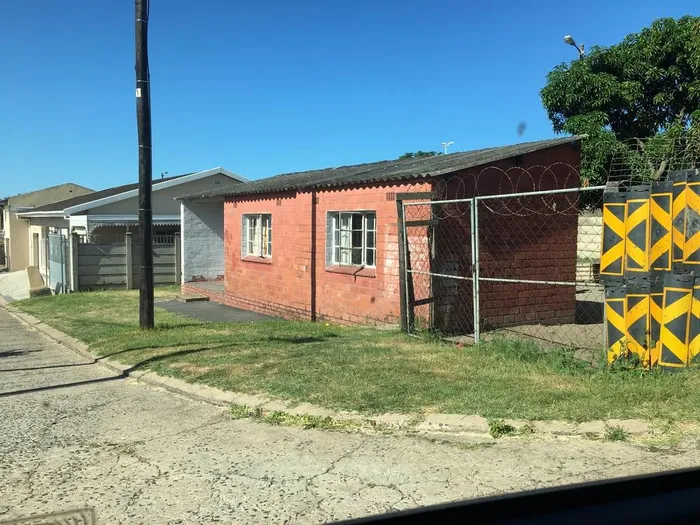
Saccharine Estates homes, Phoenix.
Image: 1860 Heritage Centre
Yet, Phoenix carried a name heavy with meaning. Long before the dormitory township, Mahatma Gandhi founded the Phoenix Settlement in 1904, a communal farm and press. The settlement was named after the phoenix, the mythical bird rising from its ashes, as it reflected Gandhi’s vision of moral rebirth, resilience, and communal renewal; and as a metaphor for the regeneration of society through simplicity, truth, and non-violence.
When the Springfield Flats floods struck on March 21, 1976, Tin Town’s 500 fragile shacks were swept away. Families uprooted by the floods found refuge in Phoenix which became their permanent home. Phoenix was officially opened by Marais Steyn, who was minister of Indian Affairs, community development and tourism in the National Party Cabinet under prime minister John Vorster.
The apartheid planners did not intend it, but the name “Phoenix” evoked rebirth. For displaced families, it became a symbol of endurance.
Dwelling units in Phoenix were small, stark, and uniform. But families worked tirelessly to transform them. Gardens bloomed in front yards. Curtains softened bare windows. Temples, mosques, and churches rose from community effort. Schools, parks, libraries, and shopping centres followed, built through collective will.
What apartheid conceived as containment became, through human labour and love, a thriving township. Phoenix residents refused to be defined by the state’s cruelty; they defined themselves by resilience.
By the 1980s, Phoenix had grown into a bustling working-class hub. Schools became pillars of hope, producing generations of teachers, doctors, and activists. Community halls hosted weddings, religious functions and political meetings. Trading stores and shopping centres flourished, driven by entrepreneurial spirit.
With the dawn of democracy in 1994, Phoenix stood at a crossroads. It remained largely Indian, yet increasingly intertwined with surrounding African communities.
Gandhi’s house at the Phoenix Settlement, burnt in the 1985 Inanda riots, was rebuilt as a heritage site, symbolising reconciliation.
In 2021, Phoenix was thrust into headlines when vigilante violence during the unrest following Jacob Zuma’s imprisonment, left dozens dead, reopening wounds of racial mistrust.
These moments remind us that Phoenix is not only a monument to resilience, but also a mirror of South Africa’s unfinished journey toward non-racialism.
Today Phoenix is a paradox carved into the South African landscape. It is historic, yet modern. Gandhi’s humble settlement now jostles with malls and dense housing blocks. It is resilient, yet wounded – families remain rooted in faith and tradition, even as unemployment and crime gnaw at daily life. It is segregated, yet diverse – still predominantly Indian, yet stitched together with African neighbours in the shared rhythms of survival.
Phoenix was shaped by apartheid’s cruelty, but sustained by community’s creativity. Its 50th anniversary is not a salute to apartheid’s planners, but a salute to human resilience. It stands as living proof that even when people are “dumped” into ghetto housing schemes, they can transform bare walls into homes, empty streets into institutions, and imposed exile into belonging.
Phoenix is both scar and symbol: a scar of racial engineering, etched deep into its foundations; a symbol of a people’s refusal to be broken. It reminds us that dignity is never granted by governments – it is forged by ordinary people, brick by brick, prayer by prayer, struggle by struggle.
Today Phoenix pulses with life – more than 250,000 residents crowd its streets, a community still largely middle-class Indian, yet fractured by pockets of deep poverty and flashes of affluence. What began as scattered families in squalor, has become a neighbourhood where commercialism reigns: smart TVs glow in living rooms, plush furniture fills homes, and shiny new cars line the driveways. The shopping centre hums with national chains, a temple to material desire.
But prosperity has its shadows. Alongside progress lies decline in values: poverty and unemployment breed social ills. Drugs lure the youth, teenage pregnancies rise, family violence and divorce scar households, and alcoholism eats away at dignity. Phoenix is no stranger to hardship, but it must not be allowed to collapse under its own weight.
For every wound, there is healing. Phoenix has produced men and women of calibre in every field, and countless citizens still give freely of their time to care for the poor, the sick, and the forgotten. Religious and cultural organisations sustain the spirit, and the majority remain honest, law abiding, yearning only for harmony. Phoenix is scarred, yes – but it is also steadfast, a township that refuses to surrender its soul.
As South Africa reflects on Phoenix at 50, it must honour this truth: its residents turned oppression into opportunity, segregation into solidarity, and the cold geometry of apartheid housing into the warm geometry of community.
Phoenix is not just a township – it is testimony, a living archive of resilience, and a reminder that even in the harshest designs of injustice, humanity can rise, like its namesake, from the ashes.