

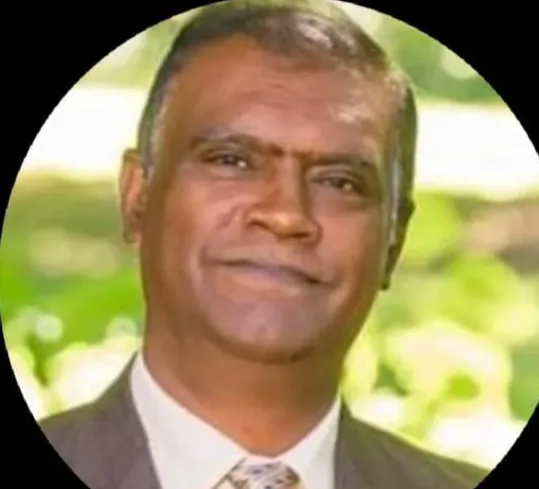
Aiden David, chairperson of the eThekwini district policing board
Image: Supplied
THE Madlanga Commission has uncovered alarming corruption in the SAPS, revealing a culture of fear and complicity among officers.
As the commission prepares its second interim report, community leaders call for accountability and reform to restore public trust.
After eight months of hearings, the commission has exposed high-ranking and senior police officials; resulting in arrests, charges and prosecutions.
This inquiry has now turned into hope for policemen and communities alike.
Speaking anonymously, a high-ranking Durban policeman, told the POST that police officers lived and worked in fear due to corruption.
“It is good to see so many high-ranking officers being held to account. We have noticed over the years that there had been a spike in the number of police who were promoted to generals.
“This was not on merit, but because they knew other high-ranking officials who would promote them; so that they could be used as puppets in those high-ranking positions,” said the officer, who has more than 30 years of service with the police.
He claimed that people with no police or investigation knowledge had high ranks.
“At crime scenes, senior police officers tell us to give the accused a break. During the Madlanga Commission hearings, it also emerged that high-ranking officers were exposed for instructing police officers not to arrest drug dealers or to pursue cases against them.
“When friends are promoted over those with experience, it works well for corruption because it is easy to control a friend, as opposed to someone who knows the job.
“This is a big problem for us working on the ground. These officers are thugs in uniform, using status and power to threaten junior members at crime scenes. The corrupt officers know where we live, our families, our wives' names, where our children go to school, and what we do in our spare time.
“This makes us easy targets. Most officers are afraid for their lives. At work, we carry rifles and our safety is more secure, but at home, we fear for our families and ourselves.
“We know that if we phone the police emergency line, we will get 10 minutes of ringing and we could be dead by then,” he added.
“The rot is deep, and the commission is too little too late. After more than 30 years of democracy, we are still in the same boat with regard to corruption.
“This rot cannot be stopped, not even in the next 10 years. It goes on, deeper and deeper, and the commission has exposed that. What happens after the commission will determine the country’s crime statistics for generations ahead,” he added.
Aiden David, chairperson of the eThekwini district policing board, said the rapid increase in crime was proof that senior police officers had failed in their duties.
“From experience in dealing with police officers, it seems as if they are challenged by their appalling working conditions, and feel that it is not worth doing anything for anyone besides enriching themselves.
“If officers speak out, they become marked for revenge, and payback never has good results, especially from the top-down approach.
“Communities have lost all their respect for the SAPS. Unlike in the past, when we saw an official of the law, a cold shiver ran down our spine. This is due to corruption,” he added.
David said it was time that high-ranking officials were held accountable for their actions.
“We need to have a ‘shape-up or ship-out’ approach with officers who are not performing. Those who are corrupt need to be investigated and removed from the SAPS.
“In 10 years, we will have the security companies becoming the rule of law. In most areas, we will have a lawless society if this rot is not stopped,” David added.
Vishal Lachman, spokesperson for the Chatsworth Community Police Forum (CPF), said the corruption among senior leadership had weakened public trust; and created fear and frustration among ordinary citizens.
“The biggest challenges in addressing these issues are fear and silence. Many honest officers are afraid to speak out because whistle-blowers are often intimidated or sidelined.
“Communities already feel the effects. People lose confidence in the police, crime increases, victims become afraid to report cases, and communities start taking the law into their own hands.
“This allows vigilantism, gangsterism, and lawlessness to grow stronger. To stop the rot, we need decisive action like independent investigations without political interference, stronger vetting and lifestyle audits for officers, and protection for whistle-blowers.
“Honest officers must be supported and encouraged, because not every police officer is corrupt. Many still serve communities faithfully under difficult conditions.
“If nothing is done, the next 10 years could see a serious breakdown in public trust and safety.
“Organised crime may become even more powerful, communities may rely more on private security and vigilantism, and inequality in safety will grow – where only those who can afford protection, feel secure,” Lachman said.
Victor Kupsamy, head of the Merebank Alliance, said the rot in the SAPS “boils down to greed and power struggles”.
He said the risk was too high for whistle-blowers – and with hits being more prevalent, those with information were afraid to speak out, leading to corruption going unreported.
“Money has more value than human life. The police are afraid for their families and themselves, while communities live in fear of crime.
“Crime has hit new levels in our community and we just cannot rely on the police. It seems like the police and criminals are working hand-in-hand. At times, the police refuse to open charges.
“For our country to return to law and order, like which we enjoyed 30 years ago, we need transformation from the top. If not, 10 years from now will just be each man for himself, and a country that will be totally out of control,” Kupsamy said.
On August 31, the commission is expected to submit its final report on the completion of the inquiry.