
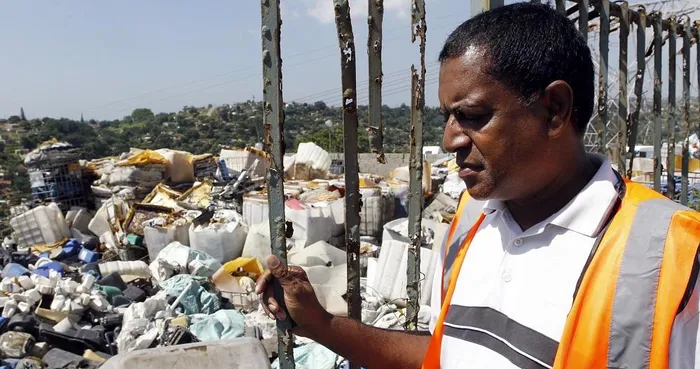
Desmond D’sa at the landfill site, which he had closed in Chatsworth, in 2009.
Image: Supplied
FIRED for speaking out, his house petrol-bombed, and faced with death threats, Desmond D'Sa has spent over three decades fighting environmental injustice in Durban’s polluted South Durban Basin.
This is the story of how one man's refusal to be silenced created a powerful community movement that continues to hold corporate polluters accountable.
D’Sa, 69, the founder of the South Durban Community Environmental Alliance (SDCEA), said his fight for accountability and the environment started in 1968 when he was “forcefully removed” from his home in Cato Manor due to the Group Areas Act, and moved to Wentworth.
His efforts intensified in the early 90s when he started speaking out against pollution and its effect on the health of workers and residents living in the South Durban Basin.
Early life
D’Sa was born on 13 June, 1956, and was the 11th of 13 children born to his parents, Constance D’Sa and Mathew Hardy.
He grew up in Cato Manor, where the community was actively involved in fruit and vegetable farming, and protected the environment.
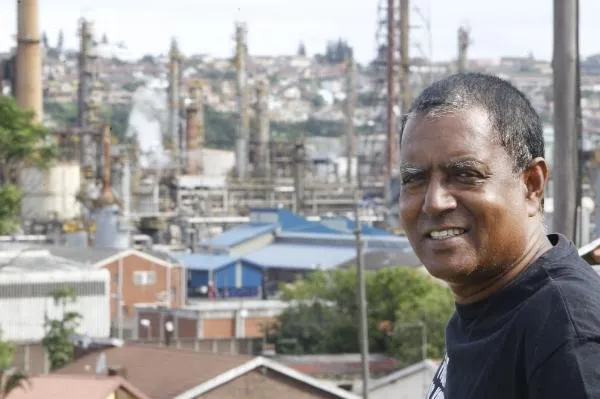
Desmond D'sa moved to Wentworth in 1968
Image: Supplied
“It was clean, fresh air, and green everywhere. We grew our own fruit and vegetables in our yard which was always available to us. Growing up in Cato Manor was very refreshing compared to the harsh reality we faced when we were forcefully removed to Wentworth due to the Group Areas Act. I watched as our crops, trees and homes being destroyed.
“This made me think, and sparked my passion to protect the environment and people from greedy developers and companies who put profits before the people,” he said.
D’Sa first moved to Chatsworth to live with his sister in Montford in 1968, and then moved to Wentworth in 1974.
“I was in high school when we were forcefully removed. We were classed according to our hair and skin colour when those in power decided where we should move to.
“Those who had straight hair were sent to Chatsworth. Those who had straight hair and were fair in complexion were sent to Wentworth. Two of my sisters were sent to Chatsworth with their families, and seven of them were sent to Wentworth.
“I was 13-years-old and a pupil at Bechet Secondary School, in Sydenham, when I dropped out of school. I lived in Chatsworth with one of my sisters until 1974, when I moved to Hime Street in Wentworth,” he added.
He said moving to Wentworth was like living in a concrete jungle.
“There were no trees, or green areas. We were moved to an area that was industrialised and polluted. Over the years, we went on to build six parks and play areas with equipment, soccer fields and green areas.
“We had to create a community,” he said.
The rise of a fighter
“I was about 18 years old when I started to work for a textile company in New Germany. I was paid R12 a week. I took two buses to work. From there, I went on to work for an asbestos company and held several other jobs before starting work at Sasol Fibre in 1993.
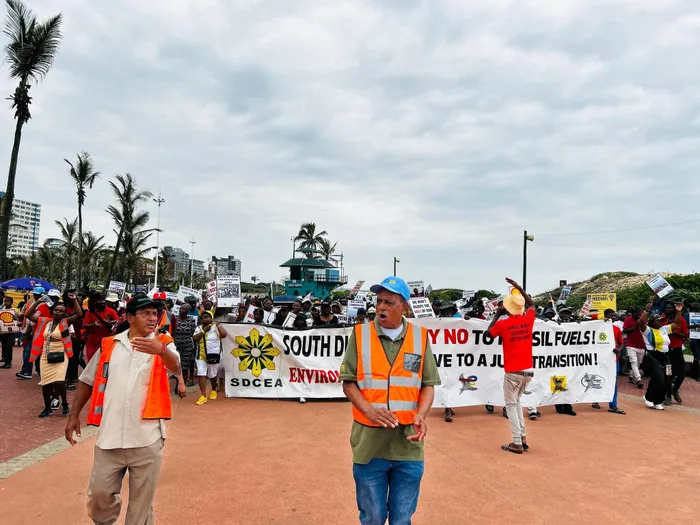
Desmond D'Sa has been at the forefront of the fight against environmental injustices.
Image: Supplied
“I worked for Sasol in Durban from 1993 to 1998. In 1994 I started my first fight against pollution. This was sparked by an incident where toxic chemicals from a chemical factory in Hime Street had spilled into the playground nearby,” D’Sa said.
“There were about 10 children, aged between five and seven, who had entered the area, which was not cordoned off, and they became ill from the toxins. They all had convulsions and had to be hospitalised for many weeks. The Indian-owned chemical recycling company refused to accept responsibility.
“I started advocating for this company to be shut down. I founded the Wentworth Development Forum in 1994 while I was taking on the chemical company, and fighting for them to accept responsibility for the children’s condition.
“The company never gave a report or assist the children or families. When they closed down after a huge uproar from us in 1995, we fought for them to clean up their mess. They pledged a portion of the money from the land they had sold. The money was put into an education trust for schools in the area at the time,” he added.
“It was at this point that I knew that more needed to be done to fight for environmental justice and to demand an end to pollution, while holding companies accountable for the effects of their pollution,” D’Sa said.
Forming an alliance
In 1995, D’Sa had founded the SDCEA, which was dedicated to fighting for environmental justice.
By 1998, he was fired from his job at Sasol Fibres after speaking up against the pollution from the global chemicals and energy company, which had a direct health impact on residents living in the South Durban area.
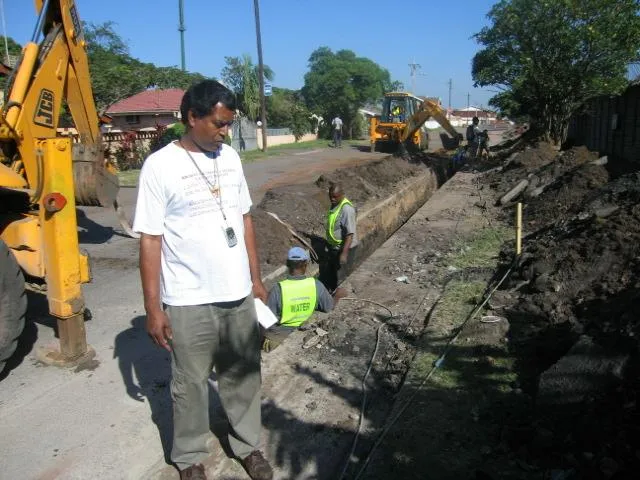
Desmond D'Sa has had a hands-on approach in creating the environmental alliance
Image: Supplied
“People were having hip problems, heart defects, and other illnesses because of the harsh chemicals we worked with. I started speaking about the chemicals and the effects of dangerous chemicals to human health. Sasol had had enough and said they did not need troublemakers at work. I was fired on the spot,” he added.
While working with the Wentworth Development Forum, he built relationships with people in Merebank, Bluff, Isipingo and Umlazi, and found out that those areas were also highly polluted by companies.
“I was one man fighting against the atrocities with a few volunteers. We used the facilities at the rent office building in Clinic Road in Austerville.
“At the time, there were about 150 chemical companies, two refineries, a paper mill, and two sugar refineries in the South Durban Basin area.
“Our first big project was an environmental and health assessment in the area in 1998. That was when we discovered the impact of the pollution and its effects on the community.
“The population was about 38 000. We had hundreds of people with illnesses associated with pollution. After the meeting, we realised that we have uncovered a bigger problem, which was the high number of cases of asthma, chronic asthma, and cancer,” he added.
After finding out about the health hazards and illnesses people experienced due to the pollution, D’Sa said SDCEA began hosting mass meetings and engagements with the community to address their concerns.
“The halls would be filled with capacity. People were sick and they were suffering from the effects of the pollution while the companies were raking in huge profits, ignoring how they were affecting the residents.
“We used the strength of people standing together to fight against the injustices. We embarked on campaigns to educate the people, and we taught them how to collect air bucket samples so that we could send the air for testing, to prove that there were harsh chemicals affecting the residents.
“We fundraised to send air bucket samples to California, which cost about $8 000, until we found a lab in Pretoria to test the air,” he recalled.
D’Sa said while the organisation may have started with just one person, he was proud that it now boasted 14 staff and 22 alliance partners. They also have an office in Richards Bay.
Unsilenced
D’Sa escaped many attempts to silence him.
In 2001, a local company had allegedly paid people to shoot and kill him.
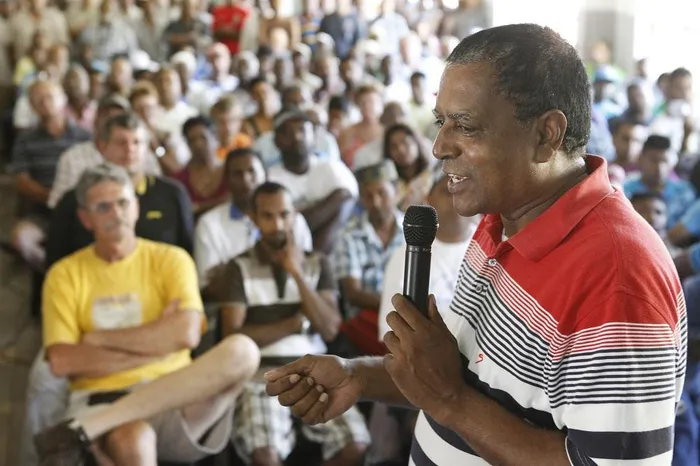
Desmond D’Sa addresses fisherman in Chatsworth, in 2014
Image: Supplied
“They tried to set me up. They sent people to shoot and kill me, but the men who were sent were intercepted and stopped by the community.
“They realised that they could not touch me when there was a whole community behind me. I faced another attack in 2008. I was attending a government meeting in Pretoria when my house was petrol bombed in the middle of the night. By the time emergency personnel could respond, everything was destroyed. This was a message for me to back down. But nothing could silence me.
“I refused to be deterred. The community came together and gave me food, and helped me rebuild my home. I had to start my life from scratch, but I did, and they knew that I would not back down,” he added.
Leaving a legacy
“The people in Wentworth and Merebank are still suffering from the effects of pollution due to Engen and Sapref, and are living with the long term effects of the pollution.
“We are still engaged in the fight for them to clean up their mess and compensate the community for the years of destruction on the environment and people’s health,” he said.
D’Sa sits on five committees, at Engen, Beyer, Sappi, UPL and Sapref, to ensure that they are accountable for the company's effects on the environment and health of residents.
He said he was in the process of succession training to ensure that the work of SDCEA continues.
“I want to make sure that when I am gone, the organisation continues to fight for injustices. We have invested a lot of time, resources and energy to create an organisation that is recognised around the world.

Desmond D'Sa with his family
Image: Supplied
“We have an office that is based in the community, and owned by the community, so that the work can continue for many generations to come.
“We have never looked to gain money. My family and I made many sacrifices in order to fight against environmental injustices, and our work has always been about service to the people.
“I still live in my mother’s house in Hime Street, and although it is a notorious area for crime and shootings, I have the protection of the community due to work that I do.
“My community work is not limited to environmental issues. We also help youth and children in the community. We also work in schools and help problematic children with counselling and programmes. All children are our children,” D’Sa said.
D’Sa has four children and 10 grandchildren. He said he was thankful that his family had given him support in his endeavours, and understood the sacrifices he made over the years was for greater good.