
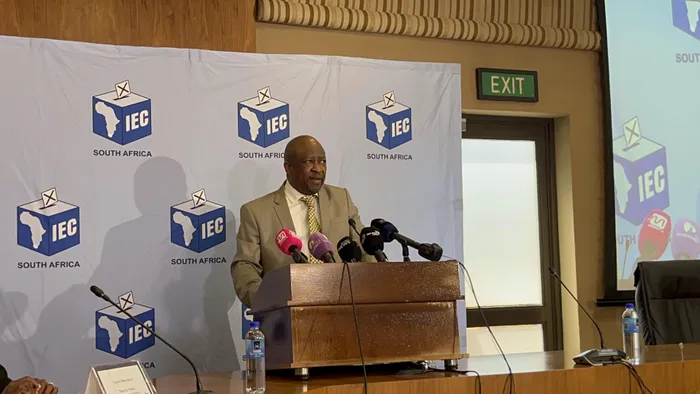
Electoral Commission of South Africa (IEC) CEO, Sy Mamabolo, told a media briefing in Pretoria that preparations for the 2026 local government elections were underway.
Image: Kamogelo Moichela/IOL News
The Electoral Commission of South Africa (IEC) has registered 34 new political parties since the 2024 general elections — pushing the total number of officially registered parties to an unprecedented 472.
This dramatic rise reflects a vibrant and active democracy, yet it also exposes a stark political reality: of the hundreds of parties now on the books, only 18 have secured representation in Parliament.
The gap between registration and electoral success underscores the challenges new parties face in gaining public trust and meaningful influence.
Addressing journalists at a media briefing in Pretoria on Tuesday, IEC Chief Electoral Officer (CEO), Sy Mamabolo, said the surge in registrations points to increasing political engagement.
However, he emphasised the commission’s critical role in upholding electoral stability, transparency, and accuracy as more parties seek to contest elections.
Of the 472 registered political entities, 287 are listed at the national level, while the remaining 185 are registered to operate at provincial, district, or metropolitan levels.
These figures reflect a broadening political arena — one that demands both vigilance and innovation to ensure fair and functional elections in the years ahead.
“13 of the new parties were registered in the period between July 2025 and today,” Mamabolo said.
Despite the situation, he said preparations were underway for the 2026 local government elections.
“Political contestants remain critical in this planning phase. The Commission willconvene a series of information sessions starting in November 2025 with registeredbut unrepresented political parties and aspiring independent candidates in preparation for the upcoming elections,” he said.
Although there’s no specific date for the elections, Mamabola said they were likely to take place between November 2, 2026 to January 31, 2027.
“The authority to set a date and call an election lies with the Minister of CooperativeGovernance and Traditional Affairs following consultation with the Commission.
“Consultations between the Minister and the Commission have commenced, but are yet tobe concluded,” he said.
Meanwhile, Mamabolo warned the public about fake job adverts and fraudulent pages that falsely claim to be linked to the organisation.
“These scams are designed to mislead people into clicking on deceptive links and sharing personal information,” he said.
IOL Politics