
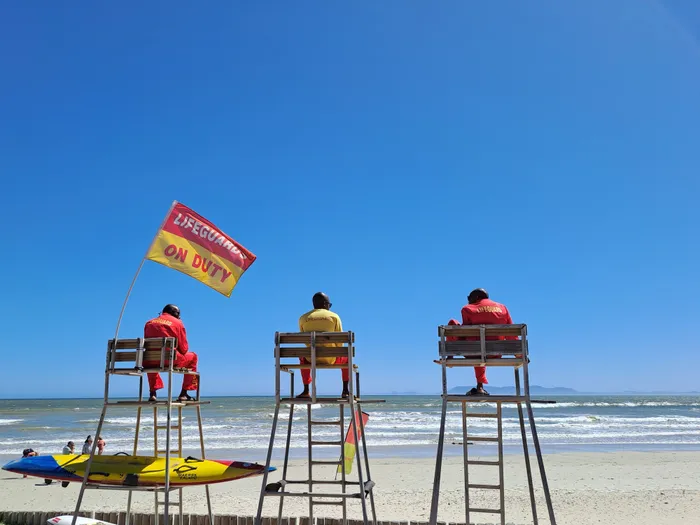
Lifesaving South Africa commended the efforts of professional and volunteer lifesavers who prevented drownings over the long weekend.
Image: File
Lifesavers successfully managed the heavy workload over the long weekend, which lasted from December 25 to 28.
Their commendable performance ensured that no drownings were recorded during their official duty hours. However, a warning has been issued about swimming at non-designated beaches.
Lifesaving South Africa (LSA), during a highly active holiday season, commended the exceptional performance of professional and volunteer lifesavers.
Despite weather and sea conditions that were often unsuitable for beach activities, a significant number of visitors and residents continued to visit the beaches.
LSA management board member, Dhaya Sewduth, commended lifesavers for their exceptional work in ensuring that families and individuals under their watch returned home safely.
Sewduth said most bathers remaining within the designated bathing zones are also encouraging. He also acknowledged the South African Police Service and other security forces for maintaining order on the beaches and for enforcing restrictions on alcohol.
Continued vigilance is encouraged for the final long weekend of the year and beyond.
However, he noted with concern the number of serious rescues at non-bathing beaches during that period.
Sewduth said that on Christmas Day, a rip current at Baggies Beach, a non-bathing beach south of eManzimtoti, swept a family of four swimmers out to sea. Two beachgoers bravely intervened, rescuing two of the people before getting into difficulty while attempting to assist the remaining two.
Lifesavers from Doonside and Toti Main Beach quickly launched inflatable rescue boats. They successfully brought all four back to shore. After assessment by paramedics, the family was advised to seek further medical care at the hospital.
On December 28, off-duty lifeguard Saadiq Parker performed a dramatic rescue at Millers Point, a non-bathing beach in Cape Town. Alerted to children on a floatation device being blown out to sea, Parker grabbed a pink rescue buoy and swam out. Two bystanders who tried to help had problems.
Parker first threw the torpedo buoy to the adults, then rescued the struggling children, bringing them safely ashore. He then returned to assist the adults and, along with emergency responders, revived the children using multiple cycles of CPR. They were taken to the hospital for further treatment.
In other incidents, Sewduth said a drowning was reported at Fish Hoek Beach on December 24, where a swimmer went missing.
In Scottburgh on December 26, lifeguards rescued a swimmer in a rip current.
On December 29, the body of an adult male was washed ashore. Police are currently conducting an inquest, and a formal report is awaited.
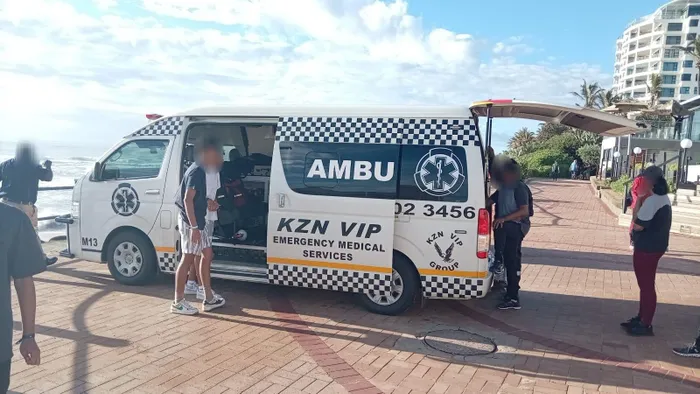
Medics from KZN VIP and Netcare 911 successfully resuscitated a 17-year-old boy at Umhlanga Beach after a near-drowning incident.
Image: KZN VIP Protection Services
Also on December 29, a 17-year-old boy was successfully resuscitated at Umhlanga Beach by medics from KZN VIP and Netcare 911.
KZN VIP Protection Services spokesperson Gareth Naidoo reported that medics were dispatched to a drowning incident. The boy, who got into difficulty while swimming with friends, was quickly rescued.
“At the time, the patient was unresponsive. KZN VIP Medics, working alongside Netcare 911, initiated advanced life-saving interventions and successfully resuscitated the patient,” Naidoo said.
“Following stabilisation on scene, the patient was transported to a nearby medical facility for further treatment.”
Sewduth added that the incidents at Baggies Beach and Millers Point are a potent reminder that swimming should be avoided at all non-designated bathing beaches.
He said the lucky outcome for those rescued is credited to the timely intervention of lifesavers and skilled bystanders. Although the LSA appreciates the involvement of bystander rescuers, the organisation strongly recommends that only competent swimmers with a clear understanding of ocean conditions attempt rescues.
“Swimming should only take place at beaches where and when lifesavers are on duty. One may not always be fortunate enough to have lifesavers or good Samaritans reach you in time,” Sewduth said.
He also warned against using inflatable devices in the ocean.
“Any floatable aid that can be blown up should only be used in pools. If you can blow it up, you can be blown away — and possibly drown,” Sewduth said.