

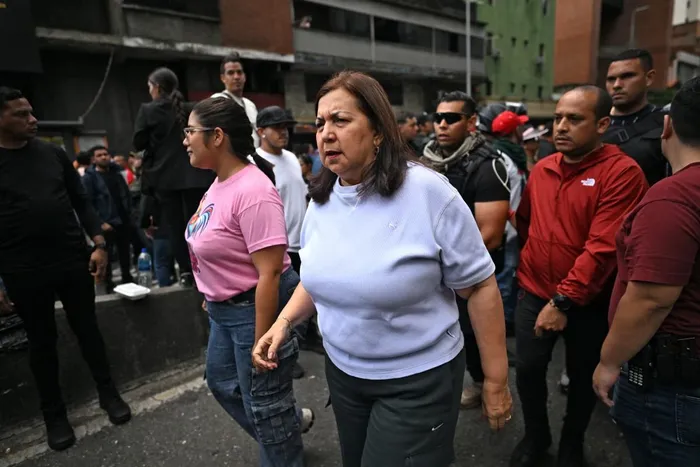
Caracas' Mayor Carmen Melendez (C) is seen during a demonstration in support of ousted Venezuela's President Nicolas Maduro in Caracas on January 4, 2026, a day after he was captured in a US strike. The Venezuelan military recognised Delcy Rodriguez, Maduro's VP, as acting president Sunday.
Image: Juan Barreto / AFP
Venezuela's deposed president Nicolas Maduro is scheduled to appear before a federal judge in New York at noon Monday, to be formally notified about the charges against him, the court said.
Maduro and his wife, Cilia Flores, were seized by US forces during a pre-dawn raid Saturday in Caracas and brought to New York to face charges of "narcoterrorism" tied to alleged trafficking of tons of cocaine into the United States.
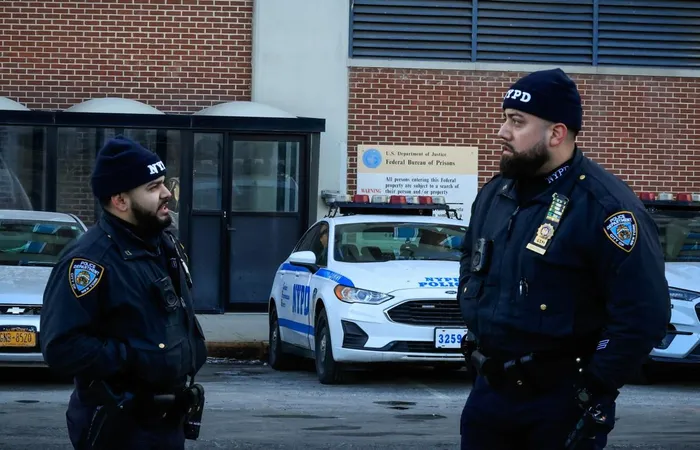
NYPD officers stand outside the Metropolitan Detention Center, where ousted Venezuelan President Nicolas Maduro is being held, in the Brooklyn borough of New York City, on January 4, 2026. Venezuelan President Nicolas Maduro was in a New York jail January 3, hours after American special forces seized and flew him out of his country — which Donald Trump said would come under effective US control. The US president's announcement followed a lightning pre-dawn attack in which commandos grabbed Maduro and his wife while air strikes pounded sites in and around Caracas.
Image: Kena Betancur / AFP
President Donald Trump threatened Sunday that Venezuela's new leader will pay a "big price" if she does not cooperate with the United States, after US forces seized and jailed her former boss Nicolas Maduro.
If interim president Delcy Rodriguez "doesn't do what's right, she is going to pay a very big price, probably bigger than Maduro," Trump told The Atlantic in a telephone interview.
US forces attacked Caracas in the early hours of Saturday, bombing military targets and spiriting away Maduro and his wife to face federal narco-trafficking charges in New York.
The Trump administration says it is willing to work with the remainder of Maduro's government as long as Washington's goals, particularly opening access to US investment in Venezuela's enormous crude oil reserves, are met.
The streets of Caracas were calm in the wake of the stunning raid, in which US commandos swooped into Caracas on helicopters, backed by attack jets and naval forces, to capture Maduro.
Residents queued up to buy food in grocery stores, and the masked and heavily armed police visible the previous day were gone, AFP correspondents said.
The Venezuelan military announced it recognised Rodriguez – previously Maduro's vice president – as acting president, and urged people to resume normal life.
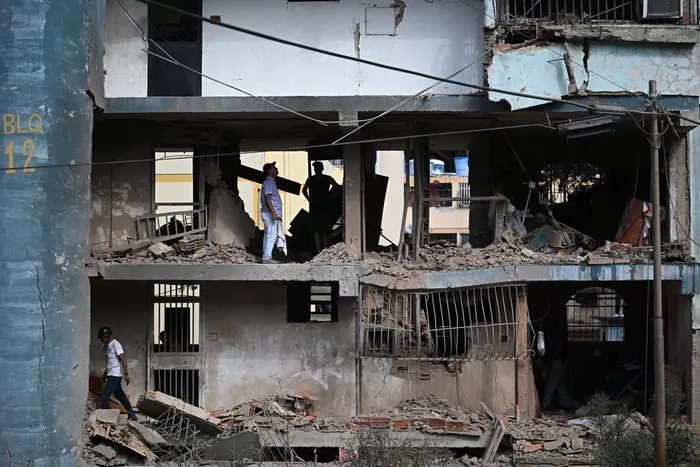
Cesar Diaz (top), son of the owner of a damaged apartment, is seen during its cleaning in Catia La Mar, La Guaira State, Venezuela, on January 4, 2026, a day after Venezuela's leader Nicolas Maduro was captured in a US strike. Venezuela's military on Sunday recognised Delcy Rodriguez, deputy to ousted president Nicolas Maduro, as the country's acting leader, after US forces extracted the former head of state to face trial.
Image: Federico Parra / AFP
Despite the success of the initial US operation, questions mounted over Trump's strategy.
The Senate's top Democrat, Chuck Schumer, told ABC News that Americans were left "scratching their heads in wonderment and in fear".
Trump said Saturday that the United States will "run" Venezuela.
And he told The Atlantic that "rebuilding there and regime change – anything you want to call it – is better than what you have right now."
But Secretary of State Marco Rubio stressed Sunday that Washington is not seeking complete regime change in the South American country of about 30 million people, or elections to restore democracy there.
Rather than seek to topple the entire Maduro government, "we're going to make an assessment on the basis of what they do," he told CBS News.
The United States is fighting drug traffickers, "not a war against Venezuela," Rubio told NBC's "Meet the Press."
However, he said a large US naval presence would remain in the Caribbean to enforce a blockade of Venezuelan oil exports for "tremendous leverage."
Trump has made clear that Washington intends to call the shots in Venezuela, with a focus on securing access to the world's largest proven oil reserves.
"We're going to run the country" until a transition can be made, he said Saturday, also insisting that military "boots on the ground" remained a possibility.
In her first remarks since the US attack, Rodriguez struck a defiant note, saying Maduro was the country's sole legitimate leader and that "we're ready to defend our natural resources."
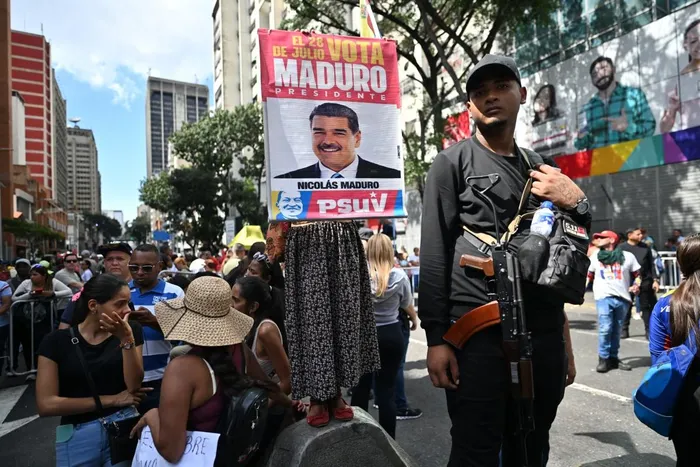
An armed supporter of ousted Venezuela's President Nicolas Maduro stands next to another one holding a poster of him during a demonstration in Caracas on January 4, 2026, a day after he was captured in a US strike. The Venezuelan military recognised Delcy Rodriguez, Maduro's VP, as acting president Sunday.
Image: Juan Barreto / AFP
The deposed Venezuelan leader was in a New York detention centre ahead of his court hearing.
Handcuffed and in sandals, Maduro was escorted by federal agents through a Manhattan US Drug Enforcement Administration facility late Saturday, a video posted by the White House on social media showed.
"Good night, happy new year," the 63-year-old leftist was heard saying in English.
Earlier, he was photographed aboard a US naval ship blindfolded and handcuffed, with noise-canceling ear protectors.
Maduro, a self-described socialist, led Venezuela with an iron fist for more than a decade through a series of elections widely considered rigged. He came to power after the death of his charismatic mentor, Hugo Chavez.
As news of Maduro's capture rippled out, exiled Venezuelans waved flags and celebrated in plazas from Madrid to Santiago. About eight million Venezuelans have fled the grinding poverty and political suppression of their homeland.
Brazil, Chile, Colombia, Mexico, Uruguay and Spain in a joint statement expressed their "rejection" of the US operation and "concern about any attempt at governmental control or administration or outside appropriation of natural or strategic resources."
The UN Security Council was to meet Monday on the crisis.
AFP