

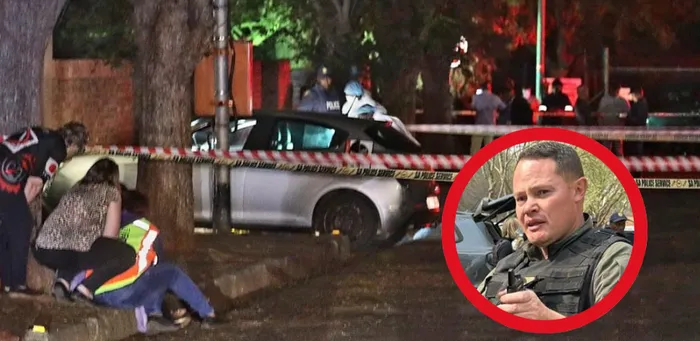
The Madlanga Commission witness gunned down in Brakpan has been identified as Marius 'Vlam' van der Merwe
Image: Timothy Bernard / Independent Newspapers/IOL Graphics
Recent revelations expose a dangerous collusion between South African law enforcement officials and criminal syndicates, endangering whistleblowers who expose corruption. ADVOCATE TSELISO THIPANYANE examines how this unholy alliance undermines democracy and what must be done to protect those who risk everything to uphold justice.
IN ANY democratic society rooted in respect for the rule of law and the protection and promotion of human rights, law enforcement officials, especially the police, play an important role in upholding and enforcing the law in order to protect society from harm and wrongdoing and bring to account, those who break the law and harm society and the people.
On the role of the police in protecting society, the court in AK v Minister of Safety and Security and Others referred to the role of the police to efficiently execute their constitutional obligations to prevent, combat and investigate crime, protect and secure the inhabitants of society and their property and uphold and enforce the law.
Notwithstanding the important and vital role of the police in society, their track record in protecting whistleblowers in the fight against high levels of corruption, wrongdoing and abuse of public funds and powers, and in upholding and enforcing the law against those who harm whistleblowers and their property has not really been covered in glory.
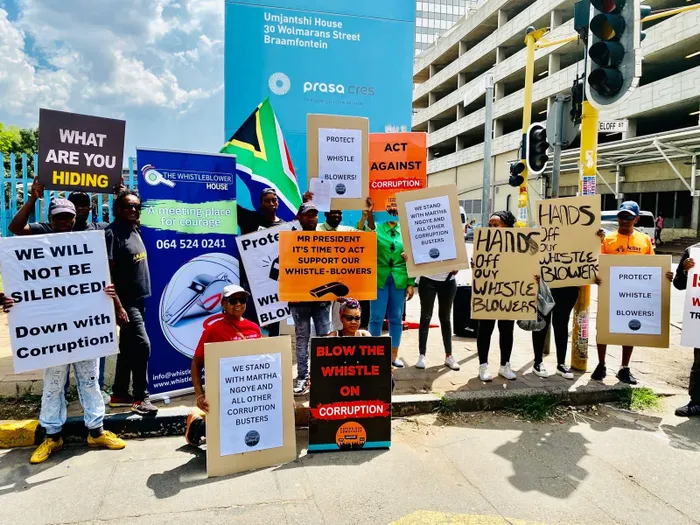
For a long time, the unsatisfactory conduct of the police in protecting whistleblowers and investigating acts of violence and killings of whistleblowers has been difficult to understand and explain in our society.The poor and inept investigation of the killing of Babita Deokaran and many other unresolved killings of whistleblowers are examples of this ineptness.
Image: SUPPLIED
The unacceptable delays and failures to bring to book those who contracted the killers of whistleblowers such Babita Deokaran, Jimmy Mohlala, Moses Phakoe and many others, are clear examples of this conduct.
For a long time, the unsatisfactory conduct of the police in protecting whistleblowers and investigating acts of violence and killings of whistleblowers has been difficult to understand and explain in our society.
The poor and inept investigation of the killing of Babita Deokaran and many other unresolved killings of whistleblowers are examples of this ineptness.
However, the revelations by General Nhlanhla Mkwanazi, the provincial commissioner of the police in the KwaZulu-Natal province, that led to the Madlanga Commission Inquiry (the Judicial Commission of Inquiry into Criminality, Political Interference and Corruption in the Criminal Justice System) and the Ad Hoc Committee Inquiry, and the evidence led in these two inquiries have thrown light on the conduct of the police in relation to the protection of whistleblowers and many other incidents of wrongdoing by the police.
What these revelations and much of the preliminary evidence led so far in these two inquiries show is that key sections of the police, including senior levels thereof, have not only been protecting corrupt people and criminal syndicates against exposure by whistleblowers through inept investigations, but have, in many instances, colluded with these unsavory characters in acts of corruption and crime and have, in many instances, even served as hired guns to kill and intimidate people including whistleblowers.
The evidence against the now suspended Lieutenant-General Shadrack Sibiya, the deputy national commissioner of the SAPS and head of police investigations division, and suspended Brigadier Mkwhanazi, the deputy commissioner of the Ekurhuleni Metro Police(EMPD), and their association with the likes of Vusimusi Cat Matlala, linked by the SIU to corruption and looting of public resources at the Tembisa Hospital exposed by Babita Deokaran is an example of this connection between the police and corrupt people who are linked to the plight of many whistleblowers.
The allegations and evidence against the Minister of Police, Senzo Mchunu, and the former Municipal Manager of the Ekurhuleni Metro, Dr Imogen Mashazi, also highlight the involvement of some politicians and senior government officials in corruption and collusion with criminal syndicates to the detriment of the effectiveness of the criminal justice system including the protection of whistleblowers, though not a new phenomenon in South Africa even in the post-apartheid South Africa.
The involvement of Jackie Selebi, a national commissioner of police in the democratic South Africa, head of Interpol and a Director-General of the then Department of Foreign Affairs amongst other achievements with what the court referred as one of the country’s biggest drug cartel/syndicates then, is an unfortunate example.
Jackie Selebi received thousands of rands in cash and gifts from an Andre Agliotti to turn a blind eye on his many criminal activities, including drug trafficking and was convicted and sentenced to 15 years in prison.
The British government had expressed its concerns to the South African government that Agliotti and others were involved in the trafficking of large quantities of cocaine into the UK which had been transported from Venezuela to South Africa via Angola before being smuggled to the UK.
What was probably not done effectively following this incident was an assessment of how deep the relationship between Commissioner Selebi and the criminal syndicates was and the extent of the impact on the effectiveness of the police in fighting crime and their ability to protect whistleblowers exposing corruption and wrongdoing of this relationship.
It would also have been useful to draw a link between criminal syndicates and top echelon of the police and other criminal justice system agencies and their continuation after the Selebi matter. Sadly, 14 years later, these relations between the police and other agencies of the criminal justice system and the criminal syndicates have continued and are resurfacing with more deadly and with greater impact that has now captured the attention of the whole country and beyond.
The increasing and expanding levels of organised crime as reported in various reports such as the Global Organised Crime Index and their impact on human rights and democracy in our society, including the plight of whistleblowers, is of great concern. Sadly, our nation ranks in the top ten in the Global Organised Crime Index and this must be fought and addressed.
While the revelations of the many whistle-blowers and witnesses in the two inquiries, such as General Mkwhanazi and Lieutenant Colonel Kelebogile Thepa of the Ekurhuleni Metro Police and others must be commended, many whilstleblowers unfortunately still find themselves caught in a deadly and vicious triangle of victimisation at the hands of elements of the state acting in collusion with criminal syndicates and corrupt businesses.
Developments at the Tembisa Hospital pertaining to the killing of Babita Deokaran and the recent killing of witness D, Marius van der Merwe, who testified in the Madlanga Commission against Brigadier Mkwanazi and other members of the Ekurhuleni Metro Police are examples in this regard.
What needs to be done, which the Madlanga Commission and the Ad hoc Committee of Parliament will hopefully address and assist towards, is to obtain a deeper and clearer understanding of relations between law enforcement agencies, criminal syndicates, and corrupt corporate entities, and how best the deadly impact of this relation on whistleblowers, can be combatted and prevented.
The fight against corruption and the deadly relation between state agencies, criminal syndicates and corrupt corporate entities will not make much impact without the role of whistleblowers and their support and protection. The two inquiries that have so far exposed much wrongdoing, including the collusion of sections of our criminal justice system would not have happened had it not been for the role of many courageous whistleblowers, some of whom have unfortunately lost their lives and livelihoods.
The disclosures made in the two inquiries should enhance better appreciation of the role of whistleblowers and spur the government and other stakeholders to do more to protect and support whistleblowers.
Whistleblowers are indeed modern defenders of our constitutional order and a sharp and mighty sword society can use to deal a severe blow against corruption and criminal syndicates threatening our democracy and nation. They should be supported and protected and not killed.

ADVOCATE TSELISO THIPANYANE
Image: SUPPLIED
Advocate Tseliso Thipanyane is a member of the Active Citizens Movement but writes in his personal capacity.
** The views expressed do not necessarily reflect the views of IOL or Independent Media.