

The acting chief financial officer (CFO), Babita Deokaran, from the Department of Health, was killed after she blew the whistle about massive corruption at Tembisa Hospital.
Image: Supplied
THE South African government’s law enforcement agencies are becoming notorious for their failure, sheer incompetence, and carelessness in protecting vulnerable citizens.
This includes witnesses, whistleblowers, victims of widespread extortion, and - wait for it - the 144 psychiatric patients who were neglected at Gauteng health facilities and ultimately died.
The Life Esidemeni incident remains a poignant reminder of the government’s inability to care for its most vulnerable citizens. The worst part about it is that those responsible for the loss of innocent lives were not held accountable.
Just last week, a witness who appeared before the Madlanga commission of inquiry was brutally gunned down.
The implications of this latest and brazen killing of a whistleblower who gave evidence at the commission are likely to scare future whistleblowers and discourage them from volunteering useful information needed to fight the scourge of corruption and wrongdoing.
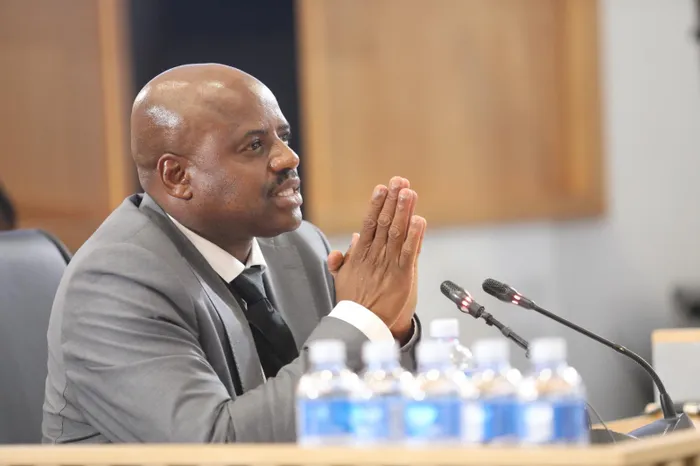
Suspended Ekurhuleni Metro Police Department Deputy Commissioner Julius Mkhwanazi admitted to having a close relationship with controversial businessman Vusimuzi "Cat" Matlala.
Image: Oupa Mokoena / Independent Newspapers
As the manhunt for the killer(s) of one of the key witnesses at the Madlanga Commission of Inquiry gains momentum, the pressure is piling up on the law enforcement agencies to apprehend suspects without further delays.
What is ironic is that law enforcement agents who are supposed to protect citizens are themselves implicated in criminal activity involving defeating the ends of justice and even murders.
There is now prima facie evidence that senior officials in the law enforcement agencies are dirty cops.
This includes high-ranking officials such as Lieutenant-General Shadrack Sibiya, the suspended Minister’s Chief of Staff, Cedric Nkabinde, and Brigadier General Julius Mkhwanazi.
It is said that the fish rots from the head. Just ask any South African who has been caught on the wrong side of the law. As long as one has got "cooldrink" money or a bribe then one escapes facing the full might of the law.
President Cyril Ramaphosa established the Madlanga Commission of Inquiry after the KwaZulu-Natal provincial Police Commissioner, Lieutenant-General Nhlanhla Mkhwanazi, made shocking claims of political interference in the police’s work.
Mkhwanazi cited the example of the Minister of Police, the now-suspended Senzo Mchunu, who made the unilateral decision to disband the Political Killings Task Team (PKTT) without consulting other members of the security cluster.
That unilateral decision was seen by some as an attempt by Mchunu to shield certain politicians from facing criminal prosecution.
In his July 6, 2025, press briefing, Mkhwanazi went further, alleging that members of the criminal justice system are themselves involved in crime and some are in cahoots with criminal syndicates. Mkhwanazi’s allegations echoed those of Advocate Shamila Batohi.
Earlier this year, the National Director of Public Prosecutions (NDPP), Batohi, made similar allegations about the National Prosecutions Authority (NPA) being infiltrated by criminal syndicates.
After Ramaphosa appointed retired Judge Mbuyiseni Madlanga to head the commission of inquiry, Parliament also established an ad hoc committee to conduct a parallel investigation into Mkhwanazi’s claims. These parallel investigations are unprecedented.
What is also unprecedented is the brutal murder of a witness after appearing before the commission of inquiry.
South Africa has had many commissions of inquiry since the Truth and Reconciliation Commission (TRC). However, no witness has feared for their lives for testifying, let alone losing their lives.
Marius van der Merwe, known as witness D when he testified before the Madlanga commission, was murdered in cold blood in front of his family in Brakpan, Gauteng province.
It suffices to say that this was not a robbery since nothing was taken from him. His valuables, such as his firearm, wallet, and cellphone, remained in his possession after the murder.
It turns out that van der Merwe had survived two previous attempts on his life. This raises the question: why did law enforcement agencies not prioritise his security? After all, this is a hero who sacrificed his life in the pursuit of exposing the deep rot within the criminal justice system.
Van der Merwe had also confided in Enca’s anti-crime activist, Yusuf Abramjee, that he feared for his life after implicating law enforcement agents in the murder of a suspect.
His killing raises questions about the protection of witnesses and whistleblowers in a country where there is widespread corruption and culprits often get away with wrongdoing.
The Ekurhuleni metro appears to be the hotspot of murders involving whistleblowers.
Ekurhuleni’s head of corporate and forensic audits, Mpho Mafole, who investigated corruption in the metro, was mysteriously killed, and his killers remain at large.
Then there is the case of the acting chief financial officer (CFO), Babita Deokaran, from the Department of Health, who blew the whistle about massive corruption at Tembisa Hospital.
She was shot multiple times in cold blood and left behind a 12-year-old daughter at the time of her assassination.
Van der Merwe gave explosive evidence that implicated law enforcement agents, including Brigadier Julius Mkhwanazi of the Ekurhuleni Metro Police Department (EPMD).
Julius Mkhwanazi has been struggling to provide coherent answers during cross-examination at the commission.
Van der Merwe testified on November 14, 2025, about an operation that went horribly wrong in a Brakpan warehouse in April 2022. The operation involved the EMPD, the South African Police Service (SAPS), and private security personnel.
Even though Mkhwanazi was not present when the suspect was killed, van der Merwe testified that he was called, and he arrived at the crime scene. According to van der Merwe, Mkhwanazi was the one who came up with the idea and plan of dumping the suspect’s body in a Nigel Dam.
Another province that was notorious for the murders of whistleblowers was Mpumalanga. Jimmy Mohlala, the Speaker of the Mbombela Municipality, was murdered in front of his home after he exposed tender irregularities related to the construction of the Mbombela stadium in Nelspruit for the 2010 FIFA World Cup.
Then there was the murder of an ANC counselor, Moss Phakoe, who was killed in cold blood after he compiled a dossier that exposed corruption in the Bojanala Platinum District Municipality.
There are growing calls for more to be done to protect whistleblowers and witnesses. There was a law, the Protected Disclosures Act No. 26 of 2000, amended by the Protected Disclosures Act No. 5 of 2017, to ensure that whistleblowers receive adequate protection. This law was designed to protect individuals who expose wrongdoing. Yet, the law has offered inadequate protection to whistleblowers
The ball remains in the state’s court to protect its citizens. South African whistleblowers continue to be subjected to reprisals overwhelmingly. The failure of the state to protect its citizens, particularly the most vulnerable, would suggest that South Africa is on the verge of becoming a failed state
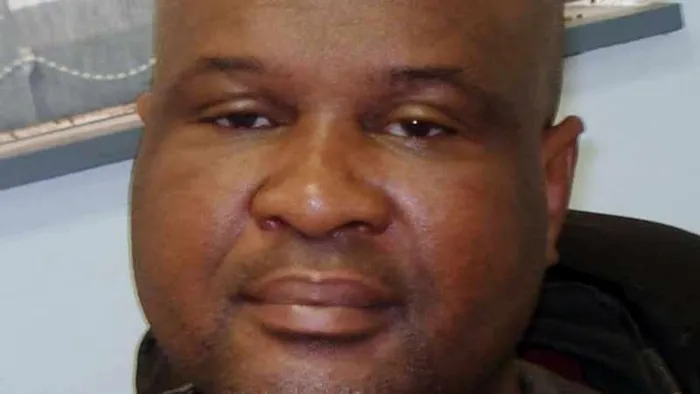
Zakhele Collison Ndlovu.
Image: File
Zakhele Collison Ndlovu is a political analyst at the University of KwaZulu-Natal.
** The views expressed do not necessarily reflect the views of IOL or Independent Media.