
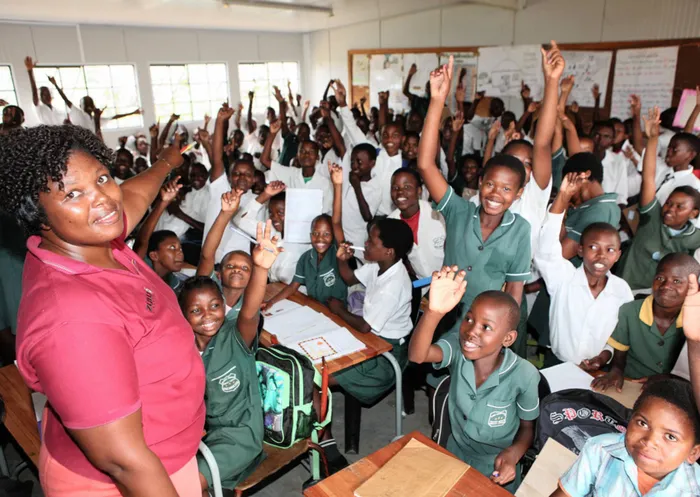
Classrooms in many township and rural schools are severely overcrowded, often holding 50 to 70 pupils under the supervision of one overworked teacher.
Image: Zanele Zulu / Independent Newspapers
SOUTH Africa’s renewed call to raise the matric pass mark from 30% to 50% has reignited a national conversation about educational standards and expectations.
At first glance, the proposal seems both logical and admirable. In a country striving to compete in a global economy where skills, competence and knowledge are paramount, a higher pass benchmark appears to signal seriousness about quality.
Advocates argue that the current 30% pass level sets the bar too low, encouraging complacency and failing to equip pupils for the demands of higher education and the job market.
But beneath the surface, this proposal reveals a deep disconnect between aspiration and reality.
Raising the pass mark sounds progressive only if one assumes that all pupils have equal access to resources, equal levels of support, and equal opportunities for academic achievement.
South Africa, unfortunately, is far from such equality.
The education system remains profoundly divided, and the pupils who struggle the most are those who stand to lose the most from an abrupt change in policy.
For millions of children in poverty-stricken communities, just getting through the school gate each morning is a triumph.
Classrooms in many township and rural schools are severely overcrowded, often holding 50 to 70 pupils under the supervision of one overworked teacher.
In such settings, personalised attention is nearly impossible. A child who is falling behind cannot easily be identified, supported or redirected.
Teachers must focus on managing large groups, maintaining discipline and covering the curriculum as best they can, leaving little space for one-on-one intervention.
Compounding this is the pervasive shortage of essential learning materials.
Textbook deficits remain common; in some schools two or three learners share a single book, while in others, lessons depend entirely on written notes because resources are simply not available.
Basic infrastructure - desks, functioning toilets, safe classrooms, electricity - cannot be assumed.
When pupils lack something as simple as a chair, their capacity to concentrate naturally erodes.
These environmental inequities create an academic disadvantage long before a pupil sits for any examination.
Outside of the classroom, the picture is even more sobering.
Many children living in impoverished areas attend school on empty stomachs. Hunger is not an abstract idea; it is a daily companion that directly affects mental clarity, concentration, memory and mood.
A child who spends the morning battling hunger is hardly in a position to absorb complex academic content. And yet, these same children are expected to perform at the same level as pupils from wealthier communities who arrive at school well-fed, rested and emotionally stable.
Another overlooked inequality - and one of the most significant - is the lack of access to medical care and psychological assessment.
In affluent communities, children who display symptoms of learning challenges such as ADHD, dyslexia, auditory processing disorders or emotional difficulties are quickly referred to specialists.
They receive assessments, diagnoses, tailored learning plans and often medication or therapeutic support.
In poorer communities, the situation is markedly different. Most families cannot afford private specialists, and public health systems are overburdened and under-resourced. As a result, countless children remain undiagnosed, misunderstood and unsupported.
Their academic struggles are often mistaken for laziness, indiscipline or lack of intelligence, when in reality they are battling conditions that could have been managed or treated if only they had access to proper healthcare.
The cumulative effect of these inequalities is devastating. Pupils in affluent schools are well-positioned to exceed a 50% benchmark - they enjoy stable home environments, smaller classes, modern facilities, secure learning spaces, accessible transport, extracurricular support and sometimes private tutoring.
Their schools offer enrichment programmes, specialised teachers and supportive parents who can navigate the education system with ease.
Meanwhile, disadvantaged pupils must climb an academic mountain without shoes, training or a map - yet they are to be judged by the same standards. The inequity is blatant.
This is why calling for a 50% pass rate without first addressing the deeply entrenched structural inequalities are not only unrealistic - it borders on unjust.
Raising the bar does not magically raise pupils. It raises the risk of failure. Many pupils are not performing below their potential; they are performing below what their environment allows.
South Africa’s current matric system purposely includes tiered passes - Bachelor’s, Diploma and Higher Certificate - to offer a range of post-school opportunities suited to different ability levels.
This structure acknowledges that academic outcomes vary based on both aptitude and context. A pupil who obtains a Higher Certificate pass may not qualify for university, but at least they leave school with a legitimate qualification that opens doors to vocational training and entry-level employment.
Removing this possibility by imposing a strict 50% pass requirement would push many pupils out of the system altogether, stripping them of even the limited opportunities they currently have.
Raising the matric pass mark may one day make sense. But that day must follow, not precede, meaningful transformation. Until every pupil - regardless of race, class or geography - has a fair chance to reach higher standards, increasing the pass mark risks becoming an exercise in idealism rather than impact.
South Africa should indeed aim high, but it must first level the ground beneath every child’s feet. Only then can raising the bar serve as a catalyst for excellence rather than a barrier to opportunity.
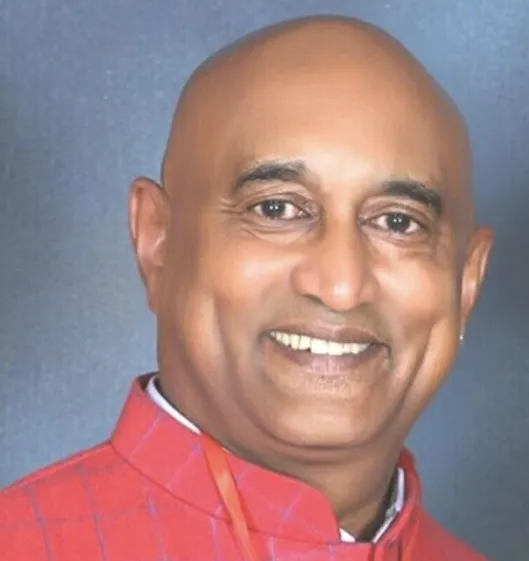
Dr Rajendran Govender
Image: File
Dr Rajendran Govender is a social anthropologist and researcher; Commissioner in the Cultural, Religious and Linguistic Rights Commission; and Board Member of the Pan South African Language Board. He writes in his personal capacity.
** The views expressed do not necessarily reflect the views of IOL or Independent Media.