

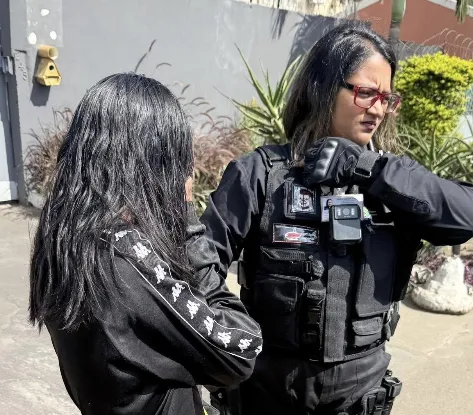
A 13 year old, left, who recently fled with an adult boyfriend, was located last week. She is with an officer from Reaction Unit South Africa.
Image: Rusa/Facebook
CHILDREN rarely disappear without reason - yet when a child goes missing in the company of an adult, society often frames it as rebellion, misbehaviour, or a conscious choice. But the truth is far more troubling. While it is not common practice for children to “run away” with adults, the cases that do occur reveal deep vulnerabilities in the environments meant to protect them. These incidents are seldom spontaneous acts of adventure; they are almost always rooted in emotional manipulation, unmet needs, and systemic failures.
Children do not run toward danger. They run toward what feels like safety. In South Africa especially - where many children navigate complex realities such as violence, instability, and fractured family structures - an adult who offers attention, validation, or understanding becomes a magnet. Grooming, both online and offline, plays a significant role. Adults who intend harm know exactly how to build trust: they listen, they praise, they empathise. Before long, a child forms an emotional attachment that is easily exploited.
This is not a reflection of poor parenting alone, nor is it evidence of deliberate risk-taking by the child. It is a reflection of vulnerability - a vulnerability that thrives in silence, secrecy, and emotional neglect. As a society, we cannot ignore the truth: children who go missing with adults are often fleeing emotional conflict at home or seeking the affection they feel they lack.
Parents, then, are left navigating a painful paradox. When a child disappears, urgency demands that the public be alerted immediately. Photographs are circulated across social media platforms, messaging groups, and news outlets. These images can mean the difference between life and death. But they also create a permanent digital footprint that the child must carry long after she is found.
The internet does not forget. A missing-child poster can resurface years later, shaping how peers, teachers, and the community perceive her. Even when she was manipulated or coerced, the stigma may stick. Children who return after highly publicised disappearances often struggle with shame, fear of judgement, and anxiety about how others will treat them. Their most vulnerable moment becomes public property.
This is a heavy burden for any child to carry.
For parents hoping to prevent such situations, the solution lies in a combination of emotional connection, awareness, and proactive communication. The most powerful protective factor is a strong, trusting relationship. When children feel safe to talk about their fears, friendships, and online interactions, they are less susceptible to manipulation. But this level of connection requires intentional effort - regular check-ins, shared routines, and consistent emotional support.
Parents must also understand the digital spaces their children inhabit. Online grooming rarely begins with obvious danger. It starts with friendliness. It begins with compliments, empathy, or a shared interest. Predators exploit the very gaps children experience at home: loneliness, low self-esteem, or a need for belonging. Knowing who your child interacts with online is not surveillance - it is safety.
Behaviour changes are also important warning signs. A child who becomes secretive, withdrawn, or unusually attached to their phone may be signalling distress. These behaviours should not be met with punishment, but with conversation and compassion. “Is everything okay?” can be a lifesaving question.
Beyond the home, communities must step into their protective role. Teachers, relatives, neighbours, and social workers form a crucial safety network. When children feel supported by multiple adults, they are far less likely to turn to unsafe individuals. Seeking professional help should never be a source of shame; it is an investment in a child’s emotional resilience.
But we must not overlook the psychological consequences for a child who has been found after a widely publicised search. The trauma of the event is only the beginning. Many children return feeling confused, guilty, or ashamed - even when they were victims of manipulation. In some cases, they may even defend or feel loyalty toward the adult involved. This is the nature of grooming: it entangles the child emotionally, making the situation appear consensual when it is anything but.
Public exposure adds another layer of distress. Knowing that thousands of strangers have seen your face, speculated about your motives, and shared your story is overwhelming. Some children fear returning to school. Others struggle with insomnia or nightmares. Many internalise shame, believing they caused their family embarrassment or public concern.
This is why post-recovery support is vital. Counselling, therapeutic debriefing, and ongoing emotional care are not optional - they are essential. Parents too need guidance on how to navigate the complex aftermath, ensuring they do not blame the child or minimise her experiences.
Ultimately, when a child runs away with an adult, it is not a random accident - it is a societal alarm bell. It signals that a child felt unseen, unheard, or unprotected. It exposes the cracks in our homes, our communities, and our digital landscape. We cannot afford to treat these incidents as isolated or sensational. We must treat them as symptoms of a problem we share responsibility for solving.
Yes, the priority will always be to bring missing children home safely. But once they return, the real work begins. The question is not only Where was she? or Why did she leave? but How do we ensure she never feels compelled to leave again?
If we are to protect our children from adults who seek to exploit their vulnerabilities, we must create environments where they feel safe enough to stay. Homes where they are valued. Communities where they are supported. Systems that prioritise their emotional well-being, not only their physical safety.
A child who feels loved, connected, and understood is a child far less likely to disappear.
And when society steps up - collectively, consistently, compassionately - we do more than prevent children from running away with adults. We create a country where every child knows they belong.
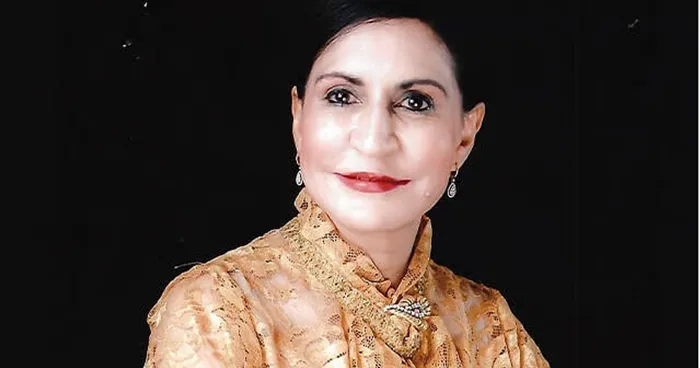
Dr Shaheda Omar
Image: File
Dr Shaheda Omar is a child-protection specialist and advocate for victim and survivor rights.
** The views expressed do not necessarily reflect the views of IOL or Independent Media.