

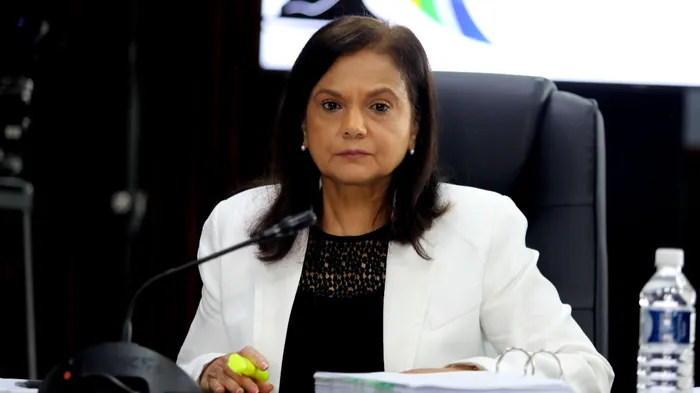
National Director of Public Prosecutions Shamila Batohi faced tough questioning in Parliament over the NPA's handling of political killings, appearing unprepared with statistics and drawing criticism from analysts.
Image: Oupa Mokoena/Independent Newspapers
AS 2025 draws to a close, South Africa confronts a complex and often grim criminal landscape. While minor improvements in some headline numbers coexist with escalating gang violence in urban centres, shocking mass attacks, renewed public outrage at gender-based violence (GBV) and a high-profile judicial inquiry, the Madlanga Commission is, by virtue of its mandate, exposing alleged political interference and criminal infiltration of the criminal justice system.
Anecdotally, the country, although aware of this infiltration, was silenced through inaction by the very system that, through its constitutional mandate, promises to protect it. However, the rot had to come to light eventually.
Throughout the year, the government released a series of crime statistics updates that presented a mixed picture. Official quarterly releases in 2025 showed fluctuations across categories. Some headline measures of murder edged down in parts of the reporting period, while attempted murders, violent assaults, carjackings and contact crimes remained stubbornly high in many provinces.
Analysts and civil-society researchers repeatedly warned that even where aggregate murder totals dipped marginally, the scale of violent offending and its human impact remained severe, with pockets of disproportionately high fatalities in several townships and informal settlements. Two problems complicate any reasonable reading of the numbers. First, under-reporting and uneven reporting practices mean statistics understate many crimes, specifically sexual offences and domestic violence. Second, pockets of extreme, organised violence (gang wars, heavily armed taxi-related disputes, and targeted hits) can make everyday life feel far more dangerous than national averages suggest, a reality borne out by repeated on-the-ground reporting.
2025 was the year GBV became impossible for the national government to ignore. Mass mobilisations, pressure campaigns and a high-profile “women’s shutdown” campaign forced political leaders to act; in late November, the government formally classified GBV and femicide as a national disaster, a designation intended to unlock extraordinary coordination and resources to tackle what activists call a systemic crisis.
The declaration reflected months of public outrage and targeted advocacy, following sustained attention from NGOs and the international community. What the declaration will deliver in practice remains to be seen. Engaged and concerned citizens, as well as activists, point to chronic weaknesses in prosecution, support services, and policing capacity. Officials say the declaration will enable faster budget allocations and cross-sector coordination. For many survivors, the hoped-for changes are less about bureaucratic labels than a tangible increase in arrests, convictions and survivor services.
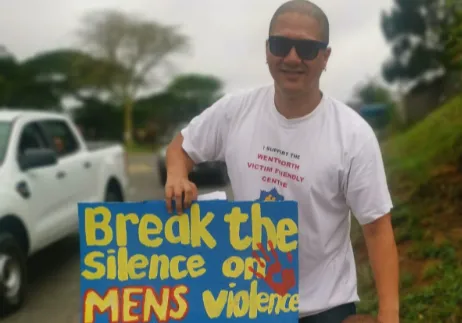
Darian Smith, a community leader in Wentworth, along with fellow community leaders and residents have had enough of gang-related shootings and launched a campaign to demand an end to the violence. The Wentworth Rise Against Violence campaign will be launched at the Women of Wentworth (WOW) Centre in Austerville.
Image: Supplied
One of the most evident and most alarming trends of 2025 has been the intensification of gang warfare, especially around the Cape Flats and parts of Durban. Longstanding territorial battles have escalated in both scale and brazenness. Drive-by shootings, attacks at courts and assaults on community infrastructure were reported repeatedly, and journalists documented children as young as nine being drawn into violent gang activity.
Observers point to the spread of untraceable and illegally obtained firearms, alleged collusion or tip-offs from some police members, and the entrenchment of extortion economies as drivers. The human toll is high and immediate. Several weeks in 2025 saw multiple fatal shootings affecting bystanders and children, and the fear these attacks generate has worsened social breakdown in many neighbourhoods. Local and national authorities announced targeted anti-gang operations during the year. Still, experts caution that blunt force policing without sustained social interventions is unlikely to break recruitment pipelines or the illegal gun flows that feed this violence.
2025’s headlines included ruthless incidents that re-shaped public debate about policing and prevention. In early December, a mass shooting at a Pretoria hostel left more than a dozen people dead, including children, a stark example of how criminal groups and illegal drinking spots (so-called shebeens) can produce sudden mass violence with devastating collateral damage. Incidents such as this one drove renewed calls for targeted operations against illicit firearms, better licensing and policing of informal economies, and improved forensic and ballistic capacity.
These incidents also highlighted logistical and institutional constraints within the South African Police Service (SAPS). Investigators and analysts repeatedly noted that detection and conviction rates remain too low for many violent crimes, and that resource constraints, corruption and political interference undermine public confidence. All of these require decisive action to transform the status quo.
Perhaps the most consequential institutional story of 2025 was the establishment and hearings of the judicial inquiry widely referred to as the Madlanga Commission. Instituted after public allegations of political interference and criminality within the police were made earlier in the year, the judicial commission was charged with investigating claims of political meddling, the infiltration of organised crime into the criminal justice system, and failures that have allowed high-profile killings and corruption to persist.
The commission’s terms were formalised in July 2025. Public hearings, which began in the second half of the year, have produced dramatic testimony, including allegations by senior officers about instructions to stand down or redirect operations, as well as claims that elements of the state have been co-opted or intimidated by criminal networks. Dangers have also marred the commission’s public phase. At least one witness linked to the inquiry was reported killed, underscoring the risks facing those who step forward.
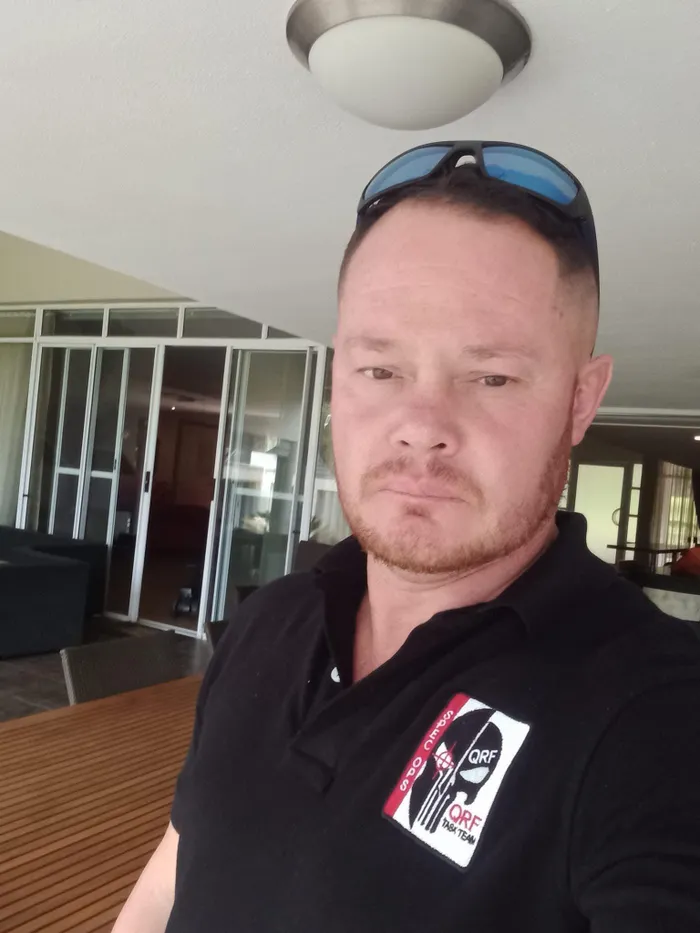
Marius “Vlam” van der Merwe was gunned down in Brakpan. He was revealed as Witness D who testified at the Madlanga Commission.
Image: X
The Madlanga Commission’s unfolding evidence has helped explain how political interference and organised crime can mutually reinforce each other, and it has raised the political stakes for police reform. How far the commission’s work will translate into prosecutions, institutional overhaul, or legislation is an open question. Commissions can provide path-clearing evidence but often lack direct enforcement power. Their impact depends on follow-through by prosecutors, anti-corruption bodies and political leaders willing to act on uncomfortable findings.
Nevertheless, the hearings shifted public expectations: 2026 will be measured in large part by whether the Madlanga Commission’s recommendations are implemented and whether accountability flows from testimony to criminal or disciplinary outcomes.
Independent studies and reporting in 2025 identified South Africa as a regional hub for organised criminal networks involved in drug trafficking, illegal mining (zama-zama activity), smuggling, and arms flows. Analysts flagged a worrying trend: heavily armed groups have access to increasingly untraceable weapons, and there are recurring allegations of collusion between some police elements and criminal actors - a toxic combination that fuels violent crime and undermines the rule of law. International and regional cooperation on firearms tracing, border control, and money laundering investigations emerged as policy priorities late in the year.
- Madlanga Commission findings: the final report from the commission will influence political discussions. We can expect specific calls for prosecutions, the resignation of senior officials, and new laws to prevent politics from influencing policing. However, making fundamental changes will face challenges and may not be consistent. True reform will need strong support from prosecutors and a commitment from political leaders.
- An intensifying urban gang landscape: unless guns are curbed Cape Town and parts of KwaZulu-Natal are likely to see more gang violence unless there is a significant improvement in tracking and stopping illegal firearms. Police operations may achieve short-term success, but reducing gang violence in the long run will depend on cutting off the supply of weapons and disrupting the illegal businesses that support the gangs.
- Implementation tests on GBV response: the national-disaster designation creates space for resources and coordination; 2026 will serve as a laboratory to determine whether that translates into tangible outcomes, including faster forensic turnaround for sexual-offence cases, better survivor services, and improved conviction rates, or whether it becomes a largely symbolic move. Civil society must be a key watchdog.
- More public scrutiny and witness protection pressures: witness killings during 2025, in addition to being unprecedented numerically, exposed weaknesses in protection measures. Expect greater public pressure for an expanded, better-funded witness-protection regime and for stronger safeguards for whistleblowers and serving officers who testify to wrongdoing. The safety of witnesses will determine how much more evidence surfaces.
- Greater international cooperation on organised crime: given the transnational nature of arms and drug flows, 2026 will likely see intensified collaboration with regional partners and international agencies on tracing weapons and following financial flows tied to criminal networks. Success here could constrain the most violent, heavily armed groups.
If 2025 showed anything, it was that South Africa’s crime challenge is both structural and episodic: structural in the sense of systemic GBV, endemic impunity, and organised criminal economies; episodic in the shocks of mass shootings and gang flare-ups that rupture communities. The Madlanga Commission has brought institutional vulnerability and possible complicity into the spotlight. Undoubtedly, this is a necessary step toward accountability, but not a sufficient one by itself. In 2026, we will implement a plan that ensures court decisions result in prosecutions. Disaster declarations and promises for operations will result in ongoing policing improvements, better community safety, and clear reductions in the violence that affects many lives.
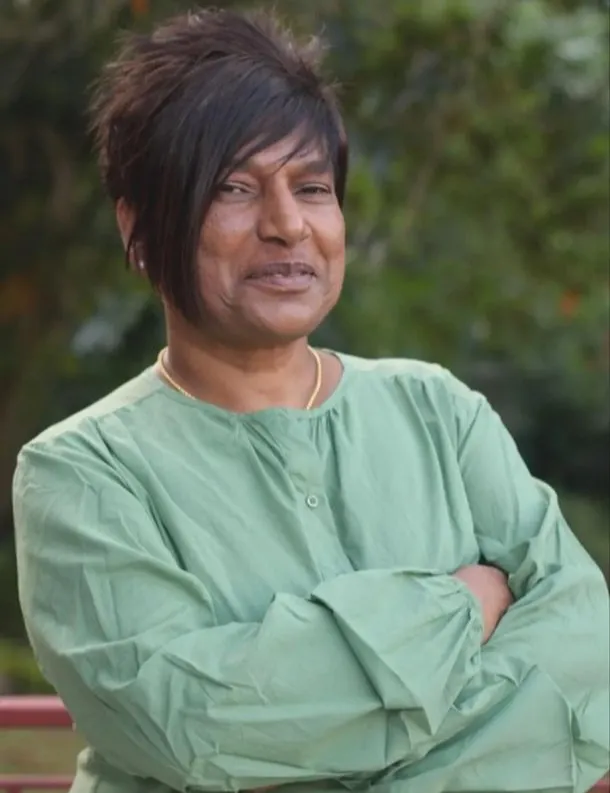
Professor Nirmala Gopal.
Image: File
Professor Nirmala Gopal is an academic leader: School of Applied Human Science at the University of KwaZulu-Natal.
** The views expressed do not necessarily reflect the views of IOL or Independent Media.