


Tamil survives powerfully in ritual and performance, even as its use as an everyday spoken language steadily declines, says the writer.
Image: Meta AI
Tamil is still alive - but mostly in performance
Tamils are found today in more than 50 countries, reflecting a long history of migration rather than a recent global movement. From the Sangam period onward, Tamils travelled beyond their ho
meland for trade, diplomacy, conquest, and livelihood. Across centuries - through maritime links with Southeast Asia and later through colonial labour migrations - Tamils carried with them their language, religious beliefs, and cultural traditions.
In South Africa, the Tamil presence is closely linked to the British colonial system of indentured labour. Between 1860 and 1911, Tamils were brought to work on sugar cane plantations in the Natal region. For several generations, Tamil remained an important language of family and community life. Over time, however, English increasingly dominated everyday communication, shaped by colonial administration, formal education, and the realities of living as a small minority within a multiracial society.
Indian languages in South Africa: colonial legacy and language shift
South Africa is home to several Indian languages, including Tamil, Telugu, Hindi, Gujarati, and Urdu. Colonial rule and later apartheid policies profoundly shaped the linguistic lives of these communities. English became associated with education, progress, and social mobility, while ancestral languages were gradually marginalised.
The Group Areas Act further disrupted language maintenance by dispersing communities and separating speakers of the same language. As a result, opportunities for regular use of Indian languages outside the home became limited. In this context, the home emerged as the primary site for language transmission. Where heritage languages were actively spoken within families, continuity was possible; where this practice weakened, language shift accelerated. This broader Indian experience provides an essential framework for understanding the Tamil case in South Africa.
Culture strong, conversation weak: a language heard but rarely spoken at home
Although spoken Tamil has become increasingly difficult to sustain across generations, Tamil culture continues to thrive in South Africa. Hindu religious practices remain strong in temples and homes, while Thevaram hymns, Carnatic music, classical dance, and religious festivals are performed with pride and devotion.
Tamil thus survives powerfully in ritual and performance, even as its use as an everyday spoken language steadily declines. During my visits to Durban - from my student days to my current role as a university professor in Malaysia - I engaged closely with the Tamil community through home visits, community service centres, schools, temples, and cultural programmes. I was especially fortunate to be guided by the late Mr PI Devan, a respected community leader and former Superintendent of the KwaZulu-Natal Department of Education, whose mentorship provided deep insight into the community’s social and educational life.
These engagements revealed a consistent pattern: while most Tamils understand Tamil well, fluent spoken use at home is uncommon. English dominates daily interaction, and Tamil is often retained in limited or code-mixed forms, particularly within cultural and religious contexts - highlighting a shift where Tamil remains emotionally significant but increasingly absent from everyday conversation.
The generational gap and community response: from decline to intervention
A clear generational divide characterises Tamil language use in South Africa. Grandparents are often fluent speakers who preserve oral traditions and cultural memory, while parents commonly mix Tamil with English. Children, in turn, tend to be passive speakers - able to understand Tamil but hesitant to speak it confidently.
As a minority language, Tamil faces strong pressure from English-dominated schools, workplaces, and social environments. Historical migration patterns and the demands of social integration have reinforced English as the language of opportunity. Although cultural participation continues through temples and festivals, the decline of spoken Tamil risks weakening intergenerational intimacy and everyday cultural expression. Recognising these challenges, Tamil community organisations and teachers in South Africa have initiated language classes and conversational activities to revive spoken Tamil.
For instance, the community organisation MTSS conducts afternoon Tamil classes, enabling pupils to attend after formal school hours. These initiatives represent meaningful and proactive efforts to strengthen spoken Tamil. However, their impact remains uneven, constrained by limited teaching resources, pupil motivation, and access. At this point, new technological approaches - particularly Artificial Intelligence - emerge as a potentially valuable means of supporting and extending these community-based efforts.
What AI really means - in simple terms
Artificial Intelligence, or AI, is often misunderstood as robots or futuristic machines. In reality, AI is already part of our daily lives through voice apps, chat tools, and pronunciation helpers. During my visits to the Durban Tamil community, I have seen how these simple AI tools can make learning Tamil easier and more interactive, especially for children and youth who struggle to use the language confidently in everyday life.
How AI can help rebuild spoken Tamil
AI provides practical ways to revive spoken Tamil in diaspora communities like Durban. By listening to natural Tamil speech, pupils can master correct pronunciation and intonation. AI allows practice without fear or embarrassment, enabling both children and adults to gain confidence in speaking. Its flexibility means learning can happen anytime and anywhere, even at home. I have encouraged parents and children in Durban to use AI together, fostering family based learning and helping bridge generational gaps in Tamil fluency.
AI as a bridge, not a replacement
AI should complement, not replace, human interaction. In online spoken Tamil classes, pupils can use apps that pronounce Tamil correctly, repeat words as often as needed, and then practice with facilitators. My experience with the Durban Tamil community shows that AI materials, when guided by teachers or cultural leaders, can help pupils acquire spoken Tamil correctly while preserving cultural context and community connection.
Conclusion
Based on my experience with the Durban Tamil community, I am committed to supporting the revival of spoken Tamil using AI tools. By combining modern technology with traditional learning, we can help pupils practice confidently, bridge generational gaps, and ensure that the Tamil language continues to thrive in Durban. AI will serve as a practical, accessible, and encouraging tool, allowing both children and adults to engage with Tamil anytime, anywhere, while preserving the rich cultural heritage of our community.
A hopeful future: from songs back to speech
This is a call to families, temples, and youth groups to use AI wisely, transforming the way we teach, learn, and celebrate spoken Tamil, ensuring that our language lives on in daily conversation - not only in song or ritual.
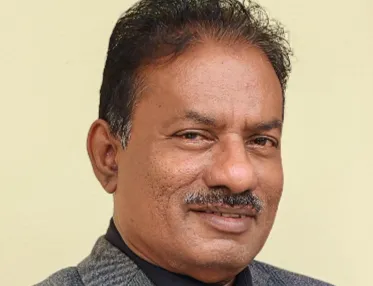
Paramasivam Muthusamy
Image: Supplied
Dr Paramasivam Muthusamy: Inti International University, Nilai, Malaysia. Email: [email protected]
** The views expressed do not necessarily reflect the views of IOL or Independent Media.