


Advocate Shamila Batohi’s term of office as the National Director of Public Prosecutions (NDPP) at the National Prosecutions Authority (NPA) is coming to an end. The writer asks, with the NPA severely weakened and ineffective, will the new NDPP be able to turn it around as Batohi promised when she took over?
Image: File
AS WE WELCOME the new year, South Africa finds itself at a crossroads yet again. More than 30 years after the first democratic elections, racial divisions continue to hamper our efforts to build our beloved country together. What does 2026 have in store for South Africa?
This year promises to be busy as South Africans prepare to vote in local government elections (LGE). South Africans also expect the Madlanga Commission of Inquiry, together with Parliament’s ad hoc committee investigating the rot in the criminal justice system, to release their findings. Unlike the previous commissions, South Africans expect those fingered at the Madlanga commission to face the music expeditiously.
In international relations, South Africa and the US continue to exchange jabs, leaving South Africans uncertain about what to expect in 2026. Just this past weekend, the US attacked Venezuela and took its president, Nicolas Maduro, into custody.
As expected, the South African government has condemned the attack on Venezuela and called on the United Nations (UN) to intervene. There is a nagging mutual hostility between South Africa and the US that needs to be addressed. The question that the ANC-led South African government needs to address is whether it is in the country’s interest to maintain unfriendly relations with the US, one of its major trading partners.
Earlier last year, our country was left shocked when the Trump administration declared Ebrahim Rasool, South Africa’s ambassador to the US, persona non grata. In another escalation of tensions, the Trump administration snubbed the G20 summit in Johannesburg last month. This was a clear signal that the Trump administration does not view South Africa in a positive light.
This raises the question: why does the ANC leadership continue to conflate its interests with those of the country? Broadly speaking, the actions of our leaders expose our leadership as the weakest link. The chaotic and wild scenes that recently unfolded at the KZN provincial legislature should remind us as a nation that it is time to reflect on our leadership.
Likewise, coalition partners in the GNU are struggling to put aside their differences, compromise, and cooperate in the pursuit of the national interest.
The era of a coalition government at the national level began when the once-dominant ANC lost its outright majority in the watershed 2024 elections. The ANC-led coalition government has remained unstable, with the ANC’s main coalition partner, the DA, making an unprecedented move. The DA, as a coalition partner, took the GNU to court over substantive disagreements. This has posed a major concern for South Africans, who worry about its fragility, which hinders effective governance.
As if this was not bad enough for South Africa, Lt.-General Nhlanhla Mkhwanazi dropped a bombshell in early July, leaving the nation reeling. In many ways, Mkhwanazi’s claims strongly suggested that the state lacked the political will to address wrongdoing and unlawful acts, as South Africa had gradually become a Mafia state.
The state's failure, even by its own admission, to address rampant crime and lawlessness decisively may lend credence to Mkhwanazi’s claims of deep-seated rot in state institutions, in general, and in the criminal justice system, in particular.
This has left many South Africans wondering what to expect in 2026. Will 2026 be business as usual, or will we see a sense of urgency in going after those who were implicated in the Zondo and Madlanga commissions?
South Africans are desperately hoping that our leaders get on the same page regarding how best to address South Africa’s numerous problems and start moving the country in the right direction.
However, if the constant bickering of coalition partners over domestic issues and foreign affairs are anything to go by, there is little hope that they will make compromises and work together to move the country in the right direction.
The country’s problems are many. These include rampant crime, which has left many people living in constant fear, poor delivery of basic services such as water and electricity, widespread corruption, mismanagement of state-owned enterprises (SOEs), high levels of poverty, and intolerably high levels of unemployment.
These problems can be addressed if there is a political will to tackle them. The lack of political will was in full display after the state spent more than a R1 billion on the Zondo Commission of Inquiry, but dragged its feet when it came to holding accountable those who were fingered as having participated in wrongdoing. Questions abound as to what is going to happen to those fingered at the Madlanga commission and parliament’s ad hoc committee.
Following 30 years of the ANC’s electoral dominance, South Africa is still adjusting to the era of coalition governments in various spheres. In 2025, blatant partisanship marred the country's governance as the main partners in the government of national unity (GNU) continually prioritised their own interests over those of the nation. This became evident when the ANC bulldozed the BELA Bill, the NHI Bill, and the Expropriation Bill without the support of its main coalition partner, the DA.
The job of governing the country is made more complicated by political realignments and the presence of ideologically different political parties serving in coalition governments. From the government of national unity (GNU) to the governments of provincial unity (GPU) and local governments, there are constant power struggles and a lack of willingness to set aside differences.
On more than one occasion, the coalition government at the national level almost collapsed, leaving many South Africans wondering if it would finish its term of office in 2029
Another interesting development in late 2025 was the MK Party’s motion of no confidence in KZN Premier, Thami Ntuli. The MKP and the EFF wanted the vote to be a secret ballot, while the GPU partners supported an open ballot. Since political parties deploy members to serve in government, it never made sense to have a secret ballot. Members of parliament (MPs) are accountable to their party, and a secret ballot prevents political parties from knowing how their members vote.
Local government is the sphere of our government that is closest to the people and is directly involved in delivering services. One of the primary challenges in local government is that it often attracts individuals with limited skills. Former Finance Minister Trevor Manual once observed that the majority of councilors are illiterate. These are the individuals who vote on budgets without any understanding of budgeting principles.
Interestingly, it is at the local government level where we began to see coalitions and the instability that comes with co-governance in South Africa.
The ANC’s electoral support started to dwindle in local government elections before it suffered a humiliating defeat in the 2024 general elections. The ANC failed to win an outright majority in the metros of Johannesburg, Tshwane, and Nelson Mandela Bay. By the time of the last local elections, the ANC had failed to secure an outright majority in the eThekwini metro.
What are the chances of the new kid on the block, the uMkhonto Wesizwe or MK Party in the KZN municipalities? After the stunning electoral performance of the MK Party in the 2024 elections, there are expectations that it will continue where it left off in KZN.
Another big concern as the 2026 LGEs approach is that political killings will escalate as politicians jostle for positions of councilors. In the last two LGEs, the country witnessed many political killings of candidates. It would not come as a surprise if the majority of the cases that the Political Killings Task Team (PKTT) is investigating involve the assassination of councilors or those aspiring to serve as councilors.
Advocate Shamila Batohi’s term of office as the National Director of Public Prosecutions (NDPP) at the National Prosecutions Authority (NPA) is coming to an end. This means that a new NDPP will be appointed soon. The NPA faces numerous challenges and has failed to meet expectations. Batohi complained about the shortage of skilled prosecutors. Another issue Batohi raised is that the NPA was "infiltrated". With the NPA severely weakened and ineffective, will the new NDPP be able to turn it around as Batohi promised when she took over?
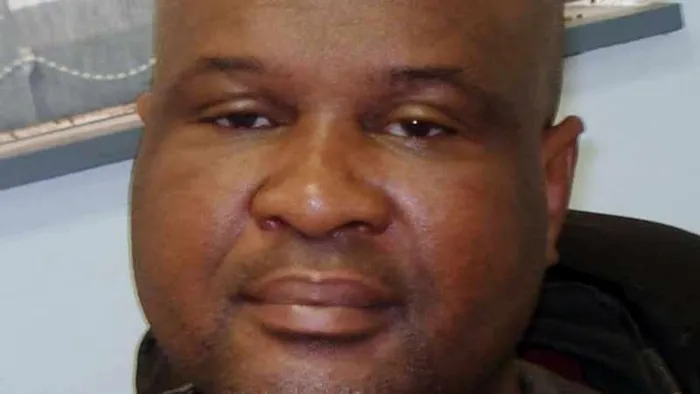
Zakhele Collison Ndlovu.
Image: File
Zakhele Collison Ndlovu is a political analyst at the University of KwaZulu-Natal.
** The views expressed do not necessarily reflect the views of IOL or Independent Media.