

Special Investigating Unit head Andy Mothibi has been appointed to replace outgoing National Director of Public Prosecutions Shamila Batohi.
Image: Itumeleng English/ Independent Newspapers
President Cyril Ramaphosa's appointment of advocate Lekgoa (Andy) Mothibi as the new National Director of Public Prosecutions has sparked controversy following Shamila Batohi's problematic tenure. SHAMLA PATHER examines the challenges Mothibi faces in restoring the NPA's credibility and prosecutorial effectiveness amid institutional dysfunction, resource shortages, and concerns about political interference.
IN DECEMBER 2018, Shamila Batohi was appointed as the new National Director of Public Prosecutions (NDPP), making history in that it was the first female in SA to be appointed to this position.
In her acceptance, Batohi acknowledged President Cyril Ramaphosa’s recognition of women of South Africa in the pursuit of an equal, just and fair society. It was publicly announced that Batohi’s appointment was a response to “the state of dysfunctionality and deficiencies in the NPA, that were identified by the Constitutional Court”.
Fast forward to 2025, Batohi’s exit into retirement is one that can only be described as sensational, choppy and wildly concerning regarding the integrity of the NPA. Batohi regretfully leaves a legacy that questions her integrity, her professional decorum, her promises to the nation when she took office, and the erosion of public confidence in the NPA.
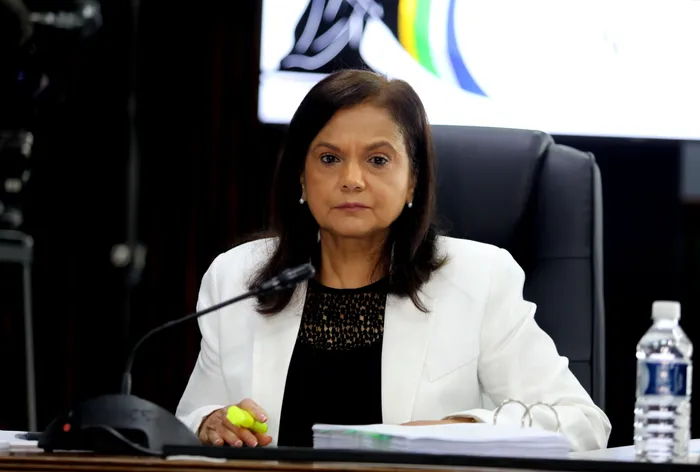
Shamila Batohi
Image: Oupa Mokoena/Independent Newspapers
The president then has the unenviable task of appointing a new “boss” of the NPA, advocate Lekgoa (Andy) Mothibi. The appointment has been widely criticised, met with mixed reactions, and with the president being called out for his unilateral power to make the appointment. It was said to be unprecedented that the president bypassed shortlisted candidates by appointing Mothibi.
Mothibi was appointed in 2016 by the then President Jacob Zuma to lead the Special Investigations Unit and to investigate maladministration and corruption within the State institutions, and the private sector. The end game was to recover assets lost by the State, investigate and prosecute perpetrators, and refer state officials found to be responsible to disciplinary action.
While Batohi was a trailblazer, a hard worker and dynamic, she clearly did not receive the support that was needed to effectively carry out her job. She was left to her own devices, there existed no succession plan for her exit and like she was called as a pinch hitter to clean up a mess, the same position is again in play with Mothibi.
Under Batohi, the NPA has been criticised due to not being able to successfully prosecute major state capture and corruption cases. This is however the tip of the iceberg.
Being in private practice and dealing with criminal matters, the State is overworked, unprepared, and justice is not done in many cases. Criminals walk due to poor investigations and complainants have to pay large sums of money to get outside assistance to assist with the prosecution of perpetrators. Often there have been years of investigations that have resulted in zero prosecution.
The public are outraged by this lack of delivery. Batohi’s reign was plagued with institutional dysfunction that remains. It is with merit that analysts have questioned political interference that would allow prosecutorial independence.
So Mothibi has an uphill climb. He has inherited an NPA that is riddled with scrutiny, resource shortages, talent gaps, and procedural inefficiencies that pre-exist his tenure. These are indeed weaknesses within the NPA, and if Mothibi is to succeed in eradicating the issues, he will need to plan strategically, get the necessary support and be accountable with the deliverables that he is tasked with. There will have to be checks and balances in place so that the shortcomings are identified early, as opposed to years later on when Mothibi would have already exited the post.
Opposing political parties have raised their concerns about Mothibi’s appointment, and I have no doubt that he will have watchdogs keeping an eye on his progress. This role is an important one for governance, stability and instead of political parties trying to score points to gain political advantage, there should be a joint effort to work together to irradicate so as crime.
There has been widespread criticism on the manner in which Mothibi was appointed - he was handpicked with all the remaining candidates left standing. This has been done and instead of spending millions on a commission of inquiry, the job needs to be done.
Mothibi is 63-years-old. Retirement is imminent in the next 30 months. What is the succession plan? Will government wait for a crisis and then act? Surely the deliverables must be monitored so that the plan post Mothibi is under way. He seems to be what the US politicians refer to as a “transitional candidate”.
Despite this, he will have to do the job.
Mothibi’s experience and experience will allow him to be decisive and handle the state of affairs with confidence. This is perhaps why Batohi has supported his appointment.
Mothibi would have to show the results that will restore confidence in the public, achieve prosecutorial results, and he is to achieve all of this without political interference.
He would have to demonstrate independence if his authority is to be respected.
Batohi claimed interference and sabotage in the NPA but at the same time she denied any crisis.
My research has shown that the NPA is in a crisis and the various high profile cases that remained unresolved is a red flag.
Outstanding cases that were never finalised or prosecuted range from the Estina Dairy Farm State Capture Case involving R280 million corruption matter with The Gupta Family, and the Nulene matter saw the charges against Iqbal Sharma discharged.
The Matshela Koko tender fraud case involving R2.2 billion - the matter was struck of the roll due to unreasonable delays by the State.
Timothy Omotoso was accused of rape and human trafficking was acquitted and the NPA did nothing to appeal the outcome. There was a failed extradition in the Moroadi Cholota case where a procedural error resulted in the dismissal of the case which was linked to R250 million asbestos corruption.
Ultimately it is Section 179 of the Constitution that must be honoured.
Mothibi has been appointed. The nation should give him a chance, but hold him to account to his constitutional obligations and oath of office.
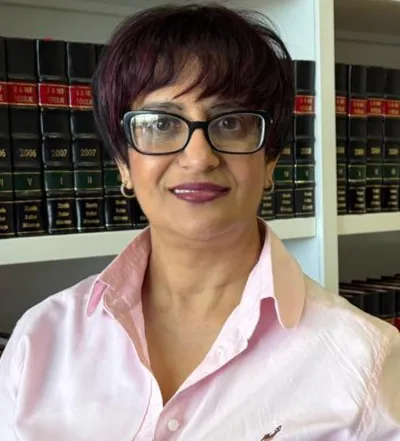
Shamla Pather
Image: Supplied
Shamla Pather is director at Shamla Pather Attorneys Inc. She has been in practice for over 26 years and a member of several local and international organisations.
** The views expressed do not necessarily reflect the views of IOL or Independent Media.