
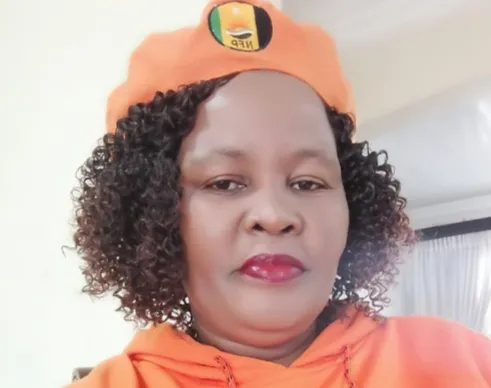
The NFP’s sole deployee, Mbasli Shinga, who serves as the Social Development MEC, is refusing to step down, and some NFP structures support her
Image: Independent Newspapers Archives
THE KwaZulu-Natal government appears headed for a stalemate after the National Freedom Party (NFP) announced its decision to withdraw from the Government of Provincial Unit (GPU) and join the opposition, comprising the Umkhonto Wesizwe Party (MK Party) and the Economic Freedom Fighters (EFF). The KZN coalition, or GPU, controls 41 seats, while the opposition holds 39.
This raises the question: does the NFP’s withdrawal signal the imminent collapse of the KZN GPU and its replacement by the MK Party-led coalition?
Just last month, the MK Party introduced a motion of no confidence on the KZN Premier, Thami Ntuli, which did not succeed in removing him. So, what does the law say in the case of a stalemate?
As with voting on a motion of no confidence, the law is vague and open to multiple interpretations.
As we saw in the December 2025 vote on the motion of no confidence on the KZN Premier, the law allows both secret and open ballots.
The Speaker of the KZN legislature used her powers to impose an open ballot.
This allowed the NFP to know that its deployed member of parliament (MP) voted against the motion the party instructed her to support. As the debate over secret and open ballots rages, South Africans should note that MPs are political party deployees rather than free agents. Should the secret ballot on the MK Party’s December 2025 motion prevailed, it would have deprived the NFP of knowing how its deployed MP voted, thereby preventing its deployee from being held accountable.
In essence, all elected representatives are responsible to voters or political parties in a party-list electoral system. Despite holding just one seat in the 80-seat KZN legislature, the NFP enabled the formation of the KZN coalition government.
Since no political party won an outright majority, the IFP-ANC-DA grouping needed one seat to form the GPU.
The IFP won 15 seats, the ANC secured 14, and the DA won 11, falling short of the 41 seats needed to form a coalition government. Thus, the NFP’s single seat is pivotal to the GPU's sustainability. Should the NFP join the MK Party-EFF grouping, which holds 39 seats, then there would be a stalemate, with each grouping holding 40 seats. What this means is that the KZN will have a minority government or executive branch that will no longer enjoy the legitimacy to govern.
This would then force political parties to negotiate among themselves. If negotiations fail to produce an outright majority, then an early election would be required to break the deadlock. However, it appears that the NFP’s internal divisions are complicating matters and giving the GPU a chance to continue.
The NFP’s sole deployee, Mbasli Shinga, who serves as the Social Development MEC, is refusing to step down, and some NFP structures support her. This includes the NFP’s women’s leaders, provincial leaders, and the national chairperson of the party, who have distanced themselves from the party’s decision to withdraw from the GPU.
Those opposed to the NFP’s withdrawal from the GPU argue that the party’s structures were not consulted. This means the NFP cannot officially join the MK Party-EFF grouping while internal divisions remain unresolved. These divisions could end up in court, thus dragging on for months and even years.
So, this begs the question: who speaks for the NFP when opposing factions within the party pull in different directions?
For example, it remains confusing why the NFP joined the IFP-ANC-DA grouping if it subscribes to the principle that coalition governments should be led by a political party that wins the largest share of the vote. Could it be that the faction led by NFP leader Ivan Barnes had been severely weakened or marginalised when the GPU was formed, or is this a classic case of a flip-flopping political party? Granted, in all provinces with coalition governments and in the national government, the principle is that a political party with the largest share of the vote leads the coalition.
Ironically, the MK Party, which won the largest share of the vote at 45% and 37 seats in KZN, was left out of the GPU. In the main, the NFP’s argument for withdrawing from the GPU was advanced by its leader, Barnes, who stated that the GPU, as presently constituted, ignored and defied the will of the people of KZN.
Barnes argued that the party with the largest share of the vote should lead the GPU in KZN, as is the case in Gauteng, the Northern Cape, and in the Government of National Unity (GNU), where the ANC leads. Since the watershed 2024 elections, coalition governments have been in place at the national level and in the three provincial governments of KZN, Gauteng, and the Northern Cape. The GNU and the KZN GPU appear to be the most fragile compared to the GPUs in Gauteng and the Northern Cape.
As partners in the KZN GPU hold their breath after the NFP announced its decision to withdraw from it, the MK Party hopes its chance to lead the GPU will materialise soon. Lest we forget, the MK Party needs support from either the IFP or the ANC to form the coalition government in KZN. Since the IFP and the ANC already have a working arrangement in the GNU, it is highly unlikely that they will collaborate with the MK Party. To make matters worse, if the divisions within the NFP are anything to go by, the chances of an MK Party-led coalition are slim.
There is also a possibility that the NFP wants to have it both ways by one faction appeasing the MK Party, while the Shinga faction keeps the GPU partners happy by staying. As we watch the NFP drama unfold, let us remember that the country is preparing for the local government elections this year.
The NFP is likely to benefit from its ongoing drama, as it is getting the publicity it desperately needs ahead of the elections.
For a political party that holds just one seat in the 80-seat provincial legislature, the NFP is successfully exploiting its kingmaker role.

Zakhele Collison Ndlovu.
Image: File
Zakhele Collison Ndlovu is a political analyst at the University of KwaZulu-Natal.
** The views expressed do not necessarily reflect the views of IOL or Independent Media.