

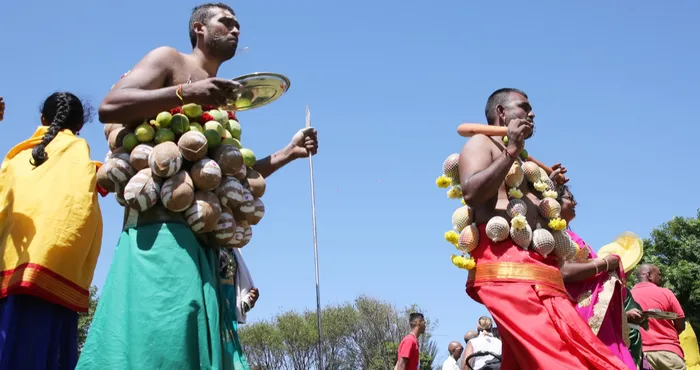
Devotees Marcus Naidoo and Shailendra Parthab during a Kavady.
Image: File Picture
AS THE sacred period of Thaipoosum Kavady unfolds and builds toward its main day on February 1, thousands of devotees will converge at temples across South Africa and throughout the world. This is not merely a seasonal religious observance. It is one of the most powerful expressions of Hindu devotion - an event that continues to grow in relevance and resonance in modern times. It speaks to faith, sacrifice, inner strength, and the preservation of a spiritual identity that remains deeply rooted despite the rapid changes of contemporary society.
In recent days, what has been visibly evident is that temples have been filled to capacity, with devotees attending in large numbers for prayer, fasting, worship, and spiritual preparation. This is a clear indication that there is a reawakening of spirituality in our communities. Even more encouraging is the noticeable presence of many young people who have been participating with dedication and sincerity. Their involvement sends a strong and hopeful message: Hinduism is not diminishing - it is being embraced, revitalised, and carried forward by a new generation.
Thaipoosum is observed in honour of Lord Murugan, revered as the embodiment of divine courage, discipline, wisdom, and victory over ignorance and negativity. Murugan worship is significant not only within South Africa’s Hindu community, but across the world - particularly among Tamil-speaking Hindus. It has grown into a globally recognised spiritual phenomenon, drawing attention for its depth, symbolism, and the intensity of devotion displayed by devotees.
At the heart of Thaipoosum Kavady lies a profound spiritual message: the journey of the devotee toward purification and transformation. Kavady represents the willingness of the individual to practise restraint, endure hardship, and surrender the ego in pursuit of divine grace. In a world often characterised by anxiety, moral uncertainty, social instability, and increasing distractions, Kavady offers something deeply needed - spiritual discipline and inner resilience.
The main Kavady day is a sacred culmination of days, and often weeks, of spiritual preparation. Many devotees observe strict discipline during this time through fasting, abstinence, prayer, and personal sacrifice. It is common for devotees to adopt a vegetarian diet, refrain from harmful habits, increase devotional practices, and dedicate themselves to acts of humility and service. On the day itself, devotees gather at temples and participate in vibrant processions, offering prayers and making sacred offerings to Lord Murugan. These offerings may include Paal Kudam (milk pots) carried reverently on the head, symbolising purity, devotion, and gratitude. Some carry the Kavady structure, often richly decorated, borne on the shoulders as an outward expression of a vow fulfilled and blessings sought.
Many devotees also pull beautifully constructed and colourfully decorated chariots, using ropes that are sometimes attached to pins inserted on their backs, an intense act of devotion and sacrifice performed with reverence and discipline. For some devotees, Kavady also involves acts of spiritual endurance, including piercings, which are understood not as spectacle, but as a sacred commitment of penance and devotion. Throughout the procession, the air is filled with chanting, drums, devotional songs, and prayer, creating an atmosphere of intense spiritual energy and unity.
While the physical rituals can be striking and deeply symbolic, the true essence of Kavady is internal. It represents the devotee carrying personal burdens, overcoming struggles, and seeking divine strength to rise above life’s challenges. In this sense, Kavady is not only a ritual - it is a lived spiritual experience and a personal transformation. In modern times, Murugan worship continues to serve as a beacon of strength and direction. It inspires devotion that is grounded in values such as discipline, humility, resilience, respect, and service to others. As society faces increasing challenges - family instability, crime, substance abuse, mental health pressures, and loss of moral grounding - Thaipoosum Kavady provides a pathway back to spiritual focus and community stability.
It teaches timeless lessons that remain essential today: self-discipline over indulgence, humility over ego, faith over fear, unity over division, and purpose over despair. This is why Thaipoosum Kavady remains not only spiritually significant, but socially relevant. It strengthens communities from within by nurturing values that produce moral and responsible citizens.
One of the most inspiring realities of this year’s observances has been the active and increasing participation of young people. Temples across South Africa have seen youth attending in large numbers - not merely as observers, but as participants who fast, pray, volunteer, and show genuine reverence for the tradition. This is extremely encouraging. It demonstrates that young people are searching for meaning, belonging, identity, and spiritual grounding beyond the pressures of modern life.
Their participation affirms that Hindu festivals remain relevant, and that traditions such as Kavady are not simply inherited rituals, but living systems of faith that inspire devotion and discipline. In a democratic South Africa built on constitutional values, the right to practise religion freely is a fundamental right. Hindu traditions, including Thaipoosum Kavady, must therefore be promoted and preserved without interference, within the bounds of the law and human dignity. The work of the Cultural, Religious and Linguistic Rights Commission (CRL Commission) is aligned to this principle, ensuring that communities are supported in the preservation and promotion of their cultural and religious heritage.
Religious festivals are not merely private expressions of faith - they are also public affirmations of identity, belonging, and constitutional freedom in a diverse society. A particularly commendable development during this period is the publication of a resource book for young children titled A Journey Through Thaipoosam, produced by Diveshnee Moodley, a local graphic artist. This noble initiative is not only creative and educational, but also socially valuable. It seeks to explain the meaning and beauty of Kavady in a simple and appealing manner, accessible to both Hindus and non-Hindus.
In doing so, it contributes meaningfully toward ensuring that cultural heritage is not only practised, but also understood. Educational resources like these play an important role in ensuring that traditions are carried forward with knowledge, pride, and clarity.
Thaipoosum Kavady is far more than a ritual observance. It is a living heritage of devotion, sacrifice, and spiritual renewal. It is also a social and cultural force that strengthens community unity, deepens moral consciousness, and inspires future generations to remain rooted in values that shape responsible lives. As we approach the main Kavady day, may the blessings of Lord Murugan bring peace and discipline to our homes, unity to our communities, and spiritual strength to all devotees observing this sacred festival. The packed temples and the presence of so many young people remind us that spirituality is alive- and that Hindu traditions remain a powerful and meaningful part of our identity in modern South Africa.
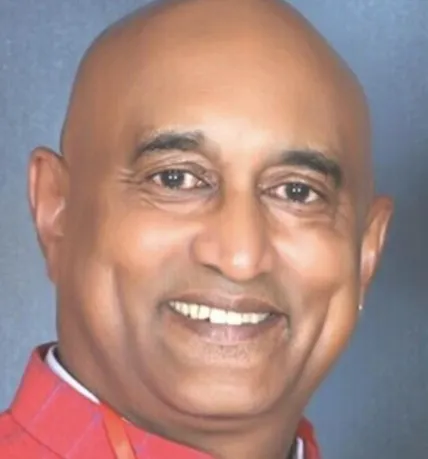
Dr Rajendran Govender
Image: File
Dr Rajendran Govender is a Social Anthropologist and a Researcher; Social Cohesion Advocate; Commissioner in the Cultural, Religious and Linguistic Rights Commission; Board Member of the Pan South African Language Board; and Global Coordinator of the Global Repository of Ancient Cultural Endeavours.
** The views expressed do not necessarily reflect the views of IOL or Independent Media.