

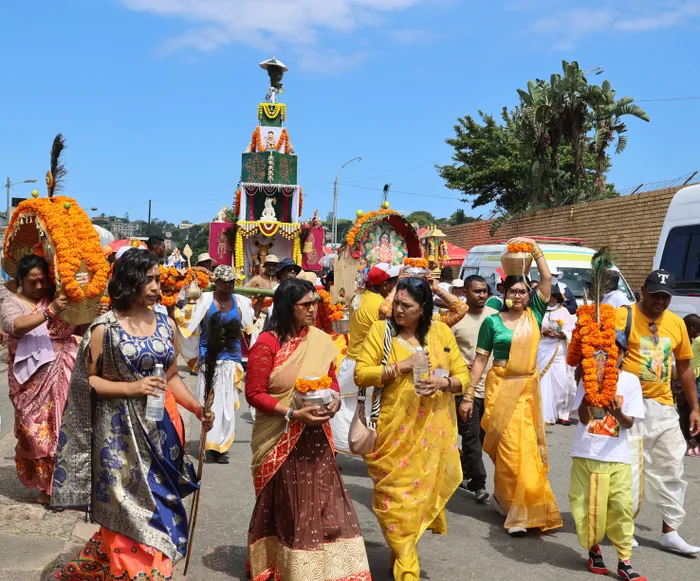
THE Clairwood Shree Siva Soobramoniar Temple's decision to ban jazz drums during this year's Thaipoosam kavady celebrations has been welcomed by devotees who felt the increasing noise was detracting from the spiritual essence of bhajans.
Image: TUMI PAKKIES
THE Clairwood Shree Siva Soobramoniar Temple's decision to ban jazz drums during this year's Thaipoosam kavady celebrations has been welcomed by devotees who felt the increasing noise was detracting from the spiritual essence of bhajans.
Council members reported a more peaceful and reflective atmosphere following the controversial but deliberate change.
No jazz drums were permitted within the temple grounds, on surrounding roads, or in and around the temple precinct.
Bhajan groups which did not comply with the council’s directive were asked to leave the area.
According to temple officials, the move followed years of growing concern from devotees who felt that the increasing use of jazz drums was detracting from the spiritual essence of bhajans.
Long-time devotee Desmond Pillay, 50, originally from Umkomaas and now residing in Johannesburg, welcomed the decision, saying it marked a return to the traditional atmosphere he remembered.
“I have been a long-time devotee of this temple for the past 50 years. In the last six years bhajans had changed with the groups adding the jazz drums. My question was always: do you come to make noise or enjoy the bhajans?”
Pillay said the overpowering sound of the drums made it difficult to hear the singing and understand the words, which he believed was central to devotional music.
“The essence of bhajans is lost because you cannot hear the singing. It is absolutely unbearable. You cannot even hear each other speak. Bhajans and devotional music are about hearing the words and understanding the music, but how can you understand the words if you cannot hear them?”
Pillay, who pulls a chariot and attends the kavady annually, said the drums added no value to his spiritual experience.
“It is just noisy and uncomfortable, especially when everyone is in close proximity to each other,” he said.
Reflecting on this year’s kavady, Pillay described a noticeable difference.
“This year’s kavady was much better. It was serene. There were fewer bhajan groups, but it was lovely. You could hear yourself think, especially since you always want your prayers to be heard.”
He added that despite living in Johannesburg, he made the journey to Durban every year for the kavady.
“This year kavady took us back to the old days as devotees,” he said, noting that he had previously written to the temple chairman about the noise issue.
Council member Siva Naidoo confirmed that the decision to ban jazz drums was not taken lightly but was driven by repeated complaints from devotees over several years.
“Banning the jazz drums was because of the noise. It deflected from the culture of bhajans. Bhajans are about the words and not the sounds. The jazz drums started overpowering the vocals and became unruly.”
Naidoo said the situation had progressively worsened, prompting the council to act.
“We received many complaints over the years, and it just got worse. We knew that we would be under fire, but we were happy to have a positive outcome at this year’s kavady.”
He added that the council was particularly concerned about younger devotees.
“Imagine an 80-year-old trying to observe his prayer and losing the whole purpose because the jazz drums are so loud next to him,” he said.
According to Naidoo, the competitive nature that had developed among some bhajan groups was also a concern.
“It started feeling like the jazz drums from the bhajan groups were in competition with each other. It is not about the sound but the singing of the words instead.”
Both devotees and council members described this year’s Thaipoosam kavady as peaceful and reflective, with many hoping the change would help preserve the spiritual focus of future celebrations.