

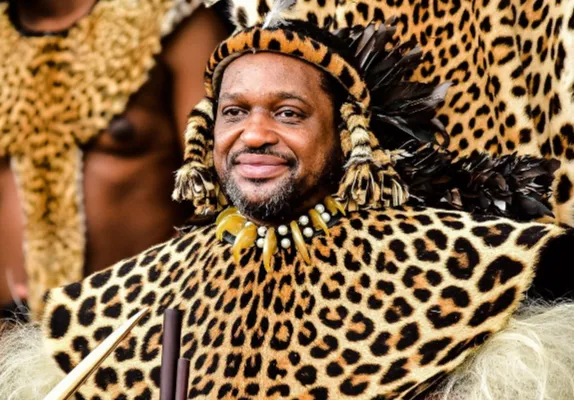
King Misuzulu kaZwelithini advocates for the renaming of KwaZulu-Natal, receiving strong support from the IFP during the 147th commemoration of the Battle of Isandlwana.
Image: Sigciniwe
IN HIS recent speech commemorating the 147th anniversary of the Battle of Isandlwana, the reigning Zulu king, Misuzulu, sparked controversy by stating that the province of KwaZulu-Natal (KZN) should be renamed KwaZulu, meaning "place of the Zulus". The king’s reasoning behind the name change is that colonialism distorted the province's history.
The Zulu king’s decision to rename KZN is likely to receive endorsement from political parties that draw mainly on Zulu-speaking support. The Inkatha Freedom Party (IFP) has already expressed its support for the idea. This does not come as a surprise, as the IFP has always insisted on the name "KwaZulu" for the province. Lest we forget, the traditional Prime Minister of the Zulu King had been the long-time leader of the IFP, Prince Mangosuthu Buthelezi.
For those who oppose the idea, the argument is that dropping Natal seeks to erase the province's history, and such attempts would make non-Zulus feel like second-class citizens in what would amount to a Zulu kingdom. Even more controversial is the name "Zulu".
Is Zulu just a family name/surname, or is it a cultural identity? Is there a language named after a surname anywhere in the world? What language(s) were spoken by the Mkhizes, Ngcobos, and Mthethwas before King Shaka annexed these clans? Were Shaka’s exploits colonisation? If colonisation is so offensive, why are the Nxumalos, Mhlongos, and Zumas proud Zulus?
The Zulu king’s call to rename KZN does not only amount to opening Pandora’s box, but its timing is awkward. The timing of the name change comes as the KZN province is still in the process of converting city-based license plates to province-based plates. Let us assume KZN eventually becomes Kwa-Zulu: does this mean the new vehicle plates, ZN, will have to be changed to Kwa-Zulu province (KZP/ZP)? Similarly, would the University of KwaZulu-Natal (UKZN) have to change its name to the University of KwaZulu (UKZ)? What about the change of addresses, electronic mail (e-mail) addresses, and letterheads? At what cost would these changes come, and who would foot the bill for institutions such as UKZN?
So, "what is in a name?"
This famous phrase from Shakespeare’s Romeo and Juliet (Act II, Scene II) suggests that the name of a person or object does not define its true essence, value, or character. This begs the question: would changing the province's name, for instance, to KwaZulu, address the existential threat posed by Zulu women giving birth out of wedlock? In recent decades, an increasing number of infants in KZN are born out of wedlock with either absent or unknown fathers. The reality is that the nuclear family, the foundation of any cultural nation, has been gradually eroding. This evaporation of a nuclear family undermines ethnic-nation-building and, by extension, corrodes Zulu nationhood.
Some would argue that, instead of prioritising the province's name change, the king should address cultural issues, such as lobola. Over the past half-century, lobola, which is supposed to be a custom that binds families, has become a scam for enrichment. Should a woman’s lobola price, who is a chartered accountant or engineer, be more than that of a cleaner or a security guard? The Zulu king also needs to figure out why the divorce rate, as studies show, is higher among people of African descent compared to other races.
There is no denying that poverty levels remain stubbornly high among the king’s subjects. The question the king should be contemplating is how he can play a role in empowering his subjects through initiatives such as the Ingonyama Trust. It is worth noting that name changes have coincided with the decay of places like the cities of eThekwini and Umgungundlovu, as well as the worsening of the quality of life.
Another issue is that KwaZulu is a name that indicates legal ownership. This poses the question: just how far did the Zulu kingdom extend? Granted, the neighbouring countries of Lesotho and Eswatini are ruled by the Sotho and Swati kingdoms, respectively. Is the Zulu monarch’s endgame to establish the Zulu kingdom across KZN? The province of KZN, as presently constituted, straddles places such as Kokstad that were not previously under the Zulu kingdom. Could it then be that this a subtle attempt by the Zulu monarch to expand his monarchy beyond his jurisdiction?
What does this obsession with name changes say about both elected and traditional leadership in the post-apartheid? The Zulu king seeks a name change to, in his view, correct colonial distortions and restore the Zulu people's lost pride and dignity.
There have been mixed reactions to the king’s call for the renaming of KZN. Those who support the king’s idea of a name change argue that Natal should be dropped because it was imposed on the "indigenous" people and represents the dark and painful colonial past. Proponents of name changes cite the renaming of newly independent states in the post-colonial world, such as southern Rhodesia becoming Zimbabwe, the Gold Coast becoming Ghana, and Ceylon becoming Sri Lanka.
In this context, the king’s call is both in line and resonates with the advocates of the decolonisation project who seek to reverse and remove the colonial legacy and its vestiges. About a decade ago, we saw students at the University of Cape Town (UCT) vandalise the statue of Cecil John Rhodes in protest of the imposition of "colonial statues".
These student protests spread across South Africa, with the statue of King George on the Howard College campus of the University of KwaZulu-Natal (UKZN) also vandalised. After a few weeks of protests, the noise about colonial statues must fall subsided. What was puzzling was that the students’ knee-jerk reaction to colonialism never questioned or challenged the other colonial aspects of the education they were receiving.
In the rush to rename countries, cities, and airports, proponents of the decolonisation project have neglected and ignored the elephant in the room – the selective nature of the decolonisation project. In other words, where does, or should, decolonisation start and end to be meaningful and impactful?
Does the decolonisation project extend to sports such as tennis, soccer, rugby, and cricket that were inherited from the British? South Africa even named its highest soccer league the Premier Soccer League (PSL), similar to the English Premier League (EPL). Former colonial states such as Nigeria, Senegal, and Algeria enthusiastically participate in international sporting events, including the FIFA World Cup and the Olympic Games. If the statues of Rhodes and King George are offensive to the natives, then how come the beloved sport of soccer is not as offensive?
After colonial rule ended, countries such as South Africa continued to use political systems they inherited from their colonial masters, such as the Westminster system. South Africa even joined the Commonwealth of Nations, an organisation made up of former British colonies and headed by the British monarch.
It is worth noting that the constitution, which serves as the foundation of the South African state, spells out the state's and government's duties and functions, as well as the relationship between the state and civil society. This foundation is based on Roman-Dutch law, which supersedes customary law. Why is this foundation important to establish in this discussion? In a nutshell, traditional leaders play second fiddle to democratically elected leaders.
Traditional leaders are also not maintained and sustained by their subjects, but it is the state that does so at the expense of taxpayers. The case of the reigning Zulu monarch is interesting because his legitimacy was decided by the colonial institution, the court, after his brother, Prince Smakade, also laid claim to the throne.
The renaming of a province in post-apartheid South Africa would not be a new exercise, though. The ethnically diverse Northern Province was renamed Limpopo, a river of a river. What is interesting is why leaders in post-apartheid South Africa are obsessed with renaming streets, cities, airports, buildings, and other public spaces. Are the renaming of these entities merely superficial changes to mask the slow pace of progress in improving the country's standard of living?
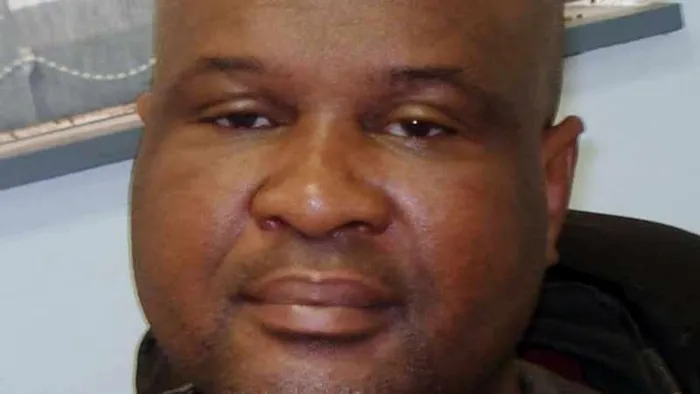
Zakhele Collison Ndlovu.
Image: File
Zakhele Collison Ndlovu is a political analyst at the University of KwaZulu-Natal.
** The views expressed do not necessarily reflect the views of IOL or Independent Media.