The Hindu Maha Sabha's failed attempt to regulate foreign priests
DIVIDED AUTHORITY

THE South African Hindu Maha Sabha’s wants to become a vetting agency to licence Hindu priests from abroad
Image: REUTERS/Kamal Kishore
THE South African Hindu Maha Sabha’s new push to become a vetting agency to licenceHindu priests from abroad has collapsed before it has even begun.
And it’s not because of resistance to reform, but because it exposes a far deeper crisis of legitimacy within Hindu leadership in this country.
In a religion that has survived for millennia without central authority, the Sabha’s eagerness to licence Hindu priests is not reform but a crass contradiction.
Priests traditionally derive legitimacy from community recognition, lineage, or spiritual training - not from a governing body. A few years ago, the Sabha took on the role of vetting priests.
Yet if it had fulfilled this responsibility effectively, why then are so many foreign priests still criticised by the public for their lack of knowledge, dishonesty, and other shortcomings?
While there is deafening silence on important matters by Sabha president Rajiv Nirghin, after he replaced Ashwin Trikamjee, Brij Maharaj, deputy president of the Sabha, has put himself forward to take the bullets on the contentious priest licensing issue.
In a statement, Maharaj said the Sabha had proposed becoming the reviewing authority for visas for foreign Hindu priests to combat fraud, protect local employment and ensure that only legitimate and qualified appointments proceed to the Department of Home Affairs.
Local employment protection? What is the Sabha doing about the influx of Pakistani barbers?
Or IT professionals from India. While incorrectly stating that the Sabha “is a nationally-recognised umbrella body representing Hindu religious institutions in South Africa”, because it is truly not so, Maharaj has said visas should be issued only after a rigorous, standardised vetting process led by the Sabha in partnership with the relevant temple boards to ensure integrity, compliance, and protection of national interests.
Several South Indian religious and language bodies as well as Mervin Govender of the People’s Progressive Power party have voiced opposition to the granting of authority to a single body to assess the religious needs of all Hindu institutions, especially the licensing ofHindu priests from abroad.
The Sabha, which clearly has an overwhelming North Indian ethos, with the Hindi language dominating its attention and activities, does not enjoy recognition and support from the masses within the South Indian communities, even though some Tamil and Telugu language bodies are affiliates of the Sabha.
While the Sabha was formed in 1912 by Swami Shankaranandji Sannyasi, a visiting Hindu missionary from Punjab, to unite various Hindu organisations and address the community's cultural and religious needs, it has failed to do this in any meaningful way.
There is still a clear North-South divide in most Hindu religious organisations, especially temples.
The Sabha, despite its noble vision of preserving and promoting culture which also encompasses Indian languages, has struggled to counter the dominance of English, the fragmentation of linguistic identities, and the pressures of modernisation. Its efforts have remained symbolic rather than transformative, leaving Indian languages vulnerable to decline in public and intellectual life.
The Sabha’s proposal to vet the licensing of Hindu priests from abroad has laid bare aquestion that can no longer be avoided: by what authority does the Sabha claim the right to regulate Hindu priesthood at all?
Is the licensing of priests an activity to keep the Sabha occupied until it is time for it to declare the official Diwali date?
Legitimacy in religious leadership does not arise from titles or organisational longevity; it flows from representation, scholarship, lineage and consent. On this measure, the Sabha stands on precarious ground.
The Sabha does not meaningfully represent the full spectrum of Hindu faith-based bodies in South Africa, nor does it command the confidence of large sections of the Hindu community, particularly South Indians, many of whom do not recognise it as their mouthpiece.
An institution that does not speak for Hindu communities cannot credibly claim the right to speak over them. Moreso, is the Sabha’s desire to be the exclusive gatekeeper for work permits for foreign priests a subtle move to arm-twist or coerce South Indian religious bodies to re-affiliate to the Sabha?
After all, it is mainly Tamil temples that want priests from India and Sri Lanka.
Hindi temples mostly use local priests. More fundamentally, Hinduism is not a faith that has ever been governed through centralised authority. There is no single ecclesiastical structure, no universal licensing body, no theological mechanism through which a national organisation can confer or withdraw spiritual legitimacy.
Authority in Hindu tradition has always been decentralised, rooted in religious teachings being transmitted from teacher to pupil, scriptural mastery, discipline and the recognition of one’s own community.
To impose a licensing framework on priests, particularly those trained abroad in long-established traditions, is not merely administratively clumsy; it is philosophically incoherent.
This incoherence becomes even starker when one asks what problem licensing is meant to solve. Hinduism proudly describes itself as pluralistic, tolerant and non-dogmatic, a civilisation tradition that accommodates multiple paths, rituals, languages and theologies.
In such a framework, who decides which priest is “qualified enough”? And according to whose scripture, whose ritual code, whose tradition?
I bet even Nirghin and Maharaj do not possess the religious competence to pronounce on the suitability of foreign Hindu priests, other than vetting criminal records which, in any case, is the duty of Home Affairs.
The irony is that while attention is directed towards priests from India and Sri Lanka, far more serious issues at home remain largely unaddressed.A growing number of local priests operate with alarmingly limited spiritual and scriptural knowledge. Many have little familiarity with the Agamas - the Hindu religious doctrines that govern temple worship – and scant grounding in the Vedas, Upanishads or DharmaShastras, that transmit Hindu philosophy and ethics. Ritual is performed, but meaning is absent. Form survives; substance withers.
In practice, the role of priesthood in some temples has been reduced to caretaking: opening and closing temple doors, maintaining the shrine, conducting ceremonies by rote, and taking money from devotees - lots of it and often unreceipted.
Yet in the absence of providing spiritual leadership, many priests are elevated, venerated and indulged. Devotees - many themselves under significant financial pressure - shower priests with expensive gifts, mobile phones, smart TVs, cars, luxury accommodation and unquestioning reverence, confusing ritual proximity with spiritual authority.
What should be marked by humility, tapasya (austerity) and learning has, in some spaces, drifted towards spectacle. There is an uncomfortable conversation that many devotees are having quietly but are reluctant to voice publicly.
They are concerned that increasingly, priesthood in some temples appears to prioritise theatrical presence over spiritual substance. Excessive ornamentation, gaudy costumes and conspicuous display are dominating environments meant for inward reflection and discipline.
Some priests wear so much gold jewellery, you’d think they were given a free day pass through Ashok Sewnarain’s International Bank Vault at Durban's Gateway.
This is not a critique of personal identity or expression; Hindu civilisation has historically accommodated diversity with remarkable nuance. It is, rather, a warning about what happens when appearance eclipses knowledge, and performance replaces wisdom.
A priest weighed down by gold but unburdened by scripture represents a profound inversion of Hindu values. When material accumulation becomes a proxy for spiritual stature, devotion is quietly hollowed out.
And when communities are encouraged to revere without questioning, they surrender the very agency Hinduism has always insisted upon: the responsibility to seek knowledge for oneself.
For many devotees, the sanctity of a priest is not determined by a stamp of approval from a national body, but by training under recognised teachers in the scriptures and temple worship traditions, and acceptance by the temple and community he or she serves.
A Tamil Saivite temple, a Telugu Vaishnavite institution and a North Indian Sanatan mandir do not draw from identical theological wells and nor should they be forced into a single regulatory mould.
If the South African Hindu Maha Sabha is genuinely concerned about protecting Hinduism, then this is where reform must begin. Not with licensing priests trained abroad, but with honest introspection about local standards, ethical conduct, spiritual education and accountability. Across the country, devotees quietly acknowledge a troubling reality: some locally operating priests routinely fleece the public, perform rituals with little transparency, and display only a superficial understanding of the very traditions they claim to uphold.
Regulation without representation is not leadership; it is presumption. And reform that targets the periphery while ignoring the centre is not reform at all.
Regulating priests from abroad while turning a blind eye to local malpractice is not reform - it is deflection. And unless the Sabha is willing to confront uncomfortable truths within its own backyard, its calls for licensing will continue to ring hollow.
At stake here is more than priestly paperwork. It is the right of Hindu communities to define their own spiritual boundaries, to honour their own traditions, and to resist the creeping corporatisation of faith.
If Hinduism is to remain what it claims to be - fluid, inclusive and rooted in lived practice - then it must be wary of structures that seek to centralise authority in the name of order, while eroding diversity in the process.
The question, then, is not whether Hindu priests need licences. The real question is whether Hinduism can remain true to itself when institutions without broad mandate attempt to govern a faith that has survived precisely because it refused to be governed.
Hinduism has endured for millennia not through control, but through knowledge; not through bureaucracy, but through wisdom.
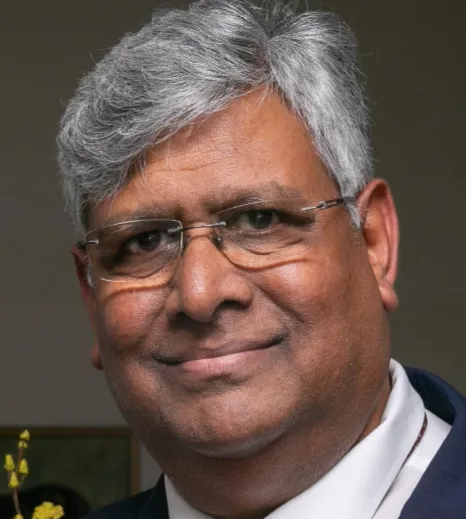
Yogin Devan
Image: File
Yogin Devan is a media consultant and social commentator. Reach him on: [email protected]
** The views expressed do not necessarily reflect the views of IOL or Independent Media.