

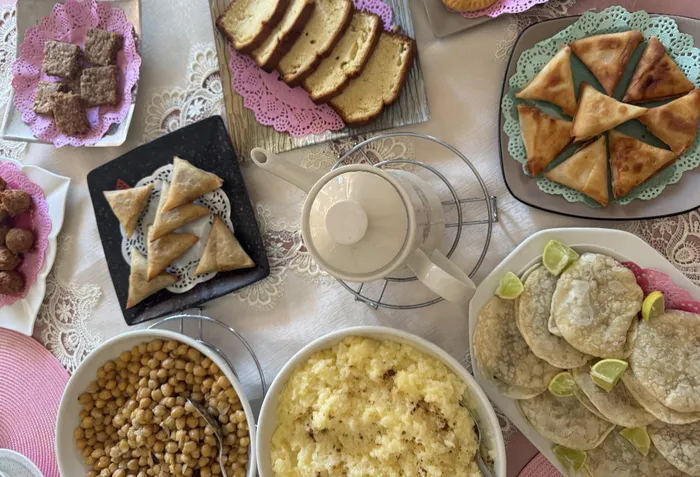
I was brought up learning you never go to someone’s house empty-handed. It doesn’t matter if it is a crispy, long French loaf, a packet of biscuits or freshly baked scones – just carry something, says the writer.
Image: Supplied
I WRITE this column after having just returned to Cape Town after spending eight weeks of the summer break with my parents in my home city. I came back the way many of us do - suitcase half clothes, half Durban goodies. My cooler bag was stocked with sweet idli, unfried samoosas, vade, goolgoola, chevda (specially purchased in Pietermaritzburg) and loads of jalebi. But truth be told, most of these snacks are not for just one person - they are for the friends and family I will entertain over the coming weeks; the inevitable visits, the long chats, the “just popping in” moments that somehow stretch into hours.
Food, for me, has always travelled ahead of conversation. It says, I thought of you before I arrived, something instilled in me not only by my parents but my grandparents. I was brought up learning you never go to someone’s house empty-handed. It doesn’t matter if it is a crispy, long French loaf, a packet of biscuits or freshly baked scones – just carry something. Not because the host needs it, but because the act itself says: “I value, you, your home and your time.”
It is etiquette, yes, but also care disguised as habit. Somewhere along the way, we have started to lose these small, gentle rituals of hospitality that were once so common-place. There was a time when, even if you didn’t own Royal Doulton fine china crockery, you would unpack the shop-bought cake and biscuits from their plastic containers and arrange them on side plates. It was never about pretending - it was about presentation as respect. That extra minute taken in the kitchen quietly said: “You are not an interruption. You are an occasion.”
In Sanskrit, there’s a saying “Atithi Devo Bhava” which means “The guest is God”. It’s a principle of Hindu tradition that emphasises treating visitors with utmost respect and care. Given my Tamil upbringing, I am reminded that the most common way to say goodbye in Tamil is "poyittu varēn" which means "I will go and come back". This phrase implies the real possibility of a future meeting – and all because of the kind hospitality that was offered.
I have lost count the number of times I heard relatives relate how when they visited my paternal grandmother, she would whip up hot chilli bites, pumpkin fritters, or to-die-for vermicelli, within just a few minutes of the guest’s arrival. My mother is no different. Ma never asks guests if they will have tea or coffee. She always ensures that the table is laid out with many goodies, hot tea, serviettes neatly placed in a holder and that no one leaves our simple home without filling mouth and belly - and taking a little something back home.
When visitors came home, you would wipe the table quickly before they sat down. You would straighten the cushions. You might even change out of your “house” clothes, not into anything fancy, but just into something that says: “I am ready to receive you”. These were not performances. They were signals of attentiveness. Even the way we offer refreshments has changed. True hospitality was never about forcing a second cup of tea or insisting until someone felt awkward. It was about ensuring that no visitor left your home without at least being offered something- water, juice, tea, a small bite.
The offer itself was a gesture. It said: “May you leave my home a little more nourished than when you entered.” I am old-fashioned. I don’t ask visitors if they will have tea. I was taught to switch on the kettle as soon as the doorbell rang. There is also an art to noticing. The good host sees when a guest’s glass is empty and quietly refills it. They notice who takes sugar and who doesn’t. They remember who is vegetarian. Such attentiveness says: “You have been here before. You matter enough to be remembered.”
Entertaining is also in the unseen effort. Marinating meat the night before. Freezing samoosas “just in case”. Keeping an extra packet of biscuits in the cupboard for unexpected visitors. These preparations say something profound about a person: My home is not only for me. And yes, the way we entertain is, in many ways, a judgement of character, not in a way that measures wealth or perfection, but in the way that reveals generosity of spirit. A person who shares what little he or she has without embarrassment shows true sense of hospitality. A person who makes space at the table, even when the house is not all spruced up, or even if the meal is simple, shows emotional openness.
Hospitality reveals whether we see people as burdens or blessings. You learn quickly who is truly warm. It’s the home where you are told “sit, please sit”, even if the host was planning to go out shortly. It is where the host eats with you instead of hovering anxiously. Where conversation flows because you feel wanted, not accommodated. There is something indescribable about sharing a cup of tea and feeling the love around that table. In contrast, there are homes where you feel like you are overstaying after 15 minutes; where nothing is offered unless you ask; where the television is louder than the conversation - these places remind you that entertaining is not about resources; It is about willingness.
Entertaining was never meant to be extravagant. It was not about themed dinner parties or perfectly styled tablescapes. It lived in the ordinary, in steel plates laid out with pride, in mismatched cups filled with sweet tea, in the quick frying of samoosas because someone dropped by unexpectedly. Sadly, we now live in an era when even after giving the host a day’s notice of the intended visit, nothing is done to make you feel welcome. True entertaining is about making space for people in both your home and your attention.
Reviving the art of entertaining does not require more money, time, or skill. It only asks for intention. To take the cake out the plastic box. To carry a little something when you visit. To offer even a glass of water. To walk guests to the gate when they leave. To send them home with leftovers of naan katai that they so enjoyed, wrapped in foil.Because in the end, people may not remember what you served. But they will always remember how your home made them feel and what your welcome revealed about your heart.

Saranya Devan.
Image: Supplied
Saranya Devan is a theatre-maker, dance performer, academic and proud Tamilian. She holds an MA in dance from UCT, and a MA in Bharatha Natyam from the University of Madras.