

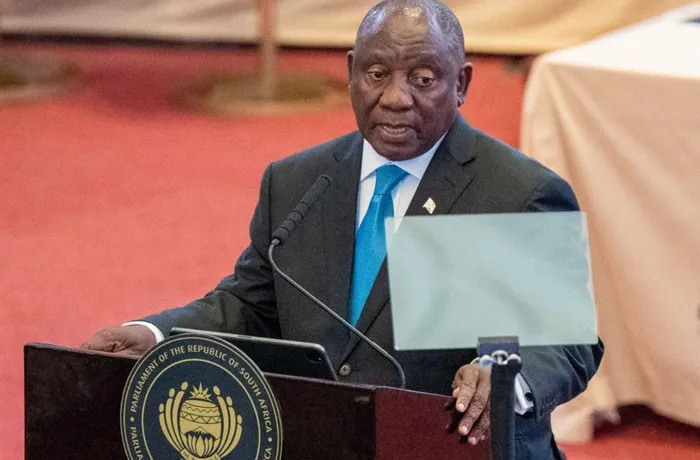
President Cyril Ramaphosa delivered the 2026 State of the Nation Address at the Cape Town City Hall on Thursday night.
Image: Image: Henk Kruger / Independent Newspapers
THE Active Citizens Movement (ACM) expresses its deep concern that matters concerning whistleblowers were not addressed with the urgency, detail, and specificity required during the 2026 State of the Nation Address (SONA) delivered on Thursday.
In the 2025 SONA, President Cyril Ramaphosa committed to finalising the whistleblower protection framework and introducing the Whistleblower Protections Bill in Parliament during that financial year. In the 2026 SONA, the president again committed that the Whistle-Blower Protection Bill would be introduced in Parliament, including provisions to criminalise retaliation and provide psychosocial, legal and financial support to whistle-blowers.
While these commitments are welcomed in principle, the 2026 address failed to provide a clear timeline for the tabling of the Bill. The absence of a definitive timeframe raises serious concerns about continued delays in reforming the country’s whistleblower protection regime.
South Africa continues to face high levels of corruption, abuse of public power, and misuse of state resources. Many courageous citizens, motivated by love for the country and commitment to constitutional democracy, have exposed wrongdoing at great personal cost. Many continue to face retaliation, dismissal, prolonged unemployment, financial ruin, psychological trauma, health challenges, blacklisting, intimidation, and threats to their lives.
More than two decades after the enactment of the Protected Disclosures Act (2000), whistleblowers and civil society organisations have consistently raised concerns about gaps in protection and the absence of meaningful support mechanisms, including financial assistance and psychosocial care.
The assassination of Babita Deokaran on 23 August 2021 marked a turning point regarding the risks faced by whistleblowers. Nearly five years later, systemic reform remains incomplete.
ACM notes with serious concern that civil society organisations have not been afforded sight of a draft Whistleblower Protection Bill, despite extensive engagement and the submission of a draft model law in 2022. In January 2025, ACM wrote to the Minister of Justice and Constitutional Development requesting an update on progress regarding the draft Bill.
To date, no substantive response has been received from the Minister beyond an acknowledgement of receipt. The continued lack of transparency undermines collaborative governance and weakens trust between government and civil society on this critical matter.
While legislation must follow parliamentary processes, whistleblowers cannot wait for procedural timelines while their livelihoods and well-being deteriorate.
ACM calls for immediate interim measures, including:
- Emergency financial relief mechanisms
- Dedicated legal support structures
- Accessible psychosocial services
- Clear executive directives prohibiting retaliation
- Enforcement mechanisms against officials who victimise whistleblowers using public resources
Whistleblowers and whistleblowing cannot survive on empty promises. Accountability cannot be rhetorical; it must be practical, immediate, and enforceable. ACM calls on the President to provide a clear and public timeline for the introduction and processing of the Whistleblower Protection Bill, ensure that both protection and structured support mechanisms are embedded in the legislation, and implement immediate interim relief for whistleblowers currently facing victimisation. South Africa’s constitutional project depends on safeguarding those who defend it.
Advocate Tseliso Thipanyane and Pops Rampersad of the Active Citizens Movement (ACM).
** The views expressed do not necessarily reflect the views of IOL or Independent Media.