


Screenshot from a recent viral social media video showing eThekwini municipal employees grooming each other while residents wait in service queues. The writer asks, are our well-paid officials there to serve the public?
Image: Screenshot/Facebook
When the Denis Hurley Centre's electricity was cut off despite being up to date with payments, it highlighted a broader crisis in South African public service. RAYMOND PERRIER examines how government officials have abandoned their role as 'servants' of the public, considers eThekwini Municipality's failures, and calls for personal reflection and accountability among public servants.
OUR electricity was suddenly cut off last week at the Denis Hurley Centre (DHC), making it very hard for us to provide life-saving healthcare (we see 100 patients a day) and putting at risk our stocks of medicines and food.
Meanwhile, an email from a senior person at the eThekwini electricity department confirmed: “according to the billing system … (the) account is up to date.”
So there was in fact no reason at all to cut us off. You would have thought that once he became aware of the error and the damage being caused, the official would have reconnected us as soon as possible.
He did, but only after 25 hours, multiple emails and drawing in the mayor. And, of course, no apology.
I appreciate that 25 hours is a relatively short time to be without service when your provider is eThekwini.
I know, for example, that Umbilo – which supports dozens of businesses and hundreds of jobs – is regularly without electricity, sometimes for days.
And that homes and businesses in our Metro area have been without water for months.
At the DHC we had the good fortune of having connections with the mayor’s office, access to journalists and an established experience of fighting for justice – not usually for ourselves but instead for the homeless people and refugees that we serve.
We could quickly go into action. But when government lets people down, most of us have no alternative but to wait in frustration.
How have we reached such a low point when citizens, instead of being served by the government, are instead the powerless supplicants?
Has the progress of the last 30 years been that instead of dismissing the needs of 86% of the population under apartheid, officials now happily ignore 99% of the population. The 1% who do get served are of course themselves, their friends, their cronies.
We still use the quaint phrase "public servants" to refer to government employees.
While the noun "servant" is clearly out-dated, it is sad to think that the verb has also been abandoned: are our well-paid officials there to serve the public?
Or just to treat them with disdain? Of course, there are honourable exceptions to any such generalisation. Perhaps we can all name one person who has been especially helpful, who returned a phone call, who did their job.
But anyone who has stood in a queue in any government office knows that these people are now the exception – and the few that do remain are increasingly tempted to bail out. After all, how much can you achieve when you are the only one who is bothering?
Every now and then there are attempts – by a municipality or by a department – to try and clean up their act and improve the service provided. Some people have noticed, for example, improvements at Home Affairs (though to be honest they were starting from a low base).
But one of the reasons these initiatives do not work is that they rarely start with an acknowledgment that anything has actually gone wrong.
Muslims and Christians are about to enter their intense periods of reflection: Ramadaan and Lent would both start next Wednesday, February 18.
Most religions recognise that "conversion" – a change to a better way of behaving – only happens once the individual acknowledges that they are at fault and need to change. Government officials do not appear to have words like remorse, regret or repentance in their vocabulary – even though many of them will profess to be Christians and Muslims.
I was once waiting months for Home Affairs to process something. During this long purgatory, I saw a poster inviting me to send my concerns to the director general.
I emailed using the address provided and received nothing back, not even an automated acknowledgment. But after 21 months, when my problem was finally solved, I got an unexpected phone call from the DG’s office, responding to my email and checking if I was now happy.
I said, that while I was happy the matter had been addressed, I was still not happy that it had taken 21 months. And instead of the official apologising, or even acknowledging my frustration, he remonstrated with me for not being grateful!
One of the strangest sights in eThekwini is officials trying to cover up for mistakes when everyone knows that what they are saying is false or irrelevant.
The criticisms for spending R22 million on two statues are met with a stock response: we need to honour heroes of the past (we do – but we don’t have to spend the money in China and pay twice what we should have); and it will be a tourist draw (though, strangely, peak tourist season has past and the statues are still covered up).
I appreciate that change takes time, but eThekwini has a strange concept of time.
A press release this week reminded me of their goal to be “Africa’s most caring and liveable city by 2030”.
It seemed like a wonderful aspiration until I remembered that I had heard this promise before. Originally, Durban was going to be “Africa’s most liveable city by 2010”, but when that deadline was missed, the slogan was deftly switched to “… by 2020”. (Though in fact on some pages of the eThekwini website they were still using the 2010 slogan in 2015 such is the lack of delivery by some city workers).
Then, as we approached 2020, the slogan started disappearing. At one stage, it was even nuanced to say that the goal was “to be considered Africa’s most liveable city by 2020”. So it would not actually matter if it was, just if someone thought it was. Now it is back but with the 2030 deadline – such is the fluidity of eThekwini’s view of time. The press release that referenced it was encouraging people to send in ideas for a new logo for the municipality. Their argument is that the current one, in showing the iconic dome of City Hall, is hearkening back to the past and that something is needed that better reflects the modern eThekwini.
I leave your imagination to come up with appropriate images and send via www.inboxthecity.co.za.
Of course, diverting attention away from the City Hall building that they have allowed to fall into ruin would be a clever ploy – except we all know already that that is one of their failures. And do they really think that spending apparently R2.8 million on a corporate identity makeover is addressing the underlying problems of the city? It is, if you think that the problem with eThekwini is not how it performs but how it is perceived.
I used to work for the world’s largest corporate branding organisation and know how pointless it is to “put new lipstick on a pig”.
Can I suggest a different approach: every person who works for government – at whatever level and whatever their religion – can spend this upcoming time of reflection to consider what they are doing personally to justify the salary they are paid as a public servant.
Let each one of us reflect, acknowledge our failings, and make a firm commitment to do better in the future. And then we really might become the most caring and liveable city.
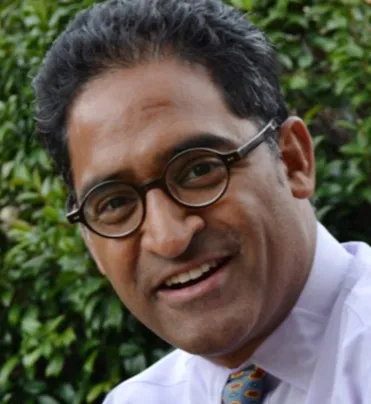
Dr Raymond Perrier
Image: File
Dr Raymond Perrier is Director of the Denis Hurley Centre in Durban, and Chair of the National Homeless Network.
** The views expressed do not necessarily reflect the views of IOL or Independent Media.