

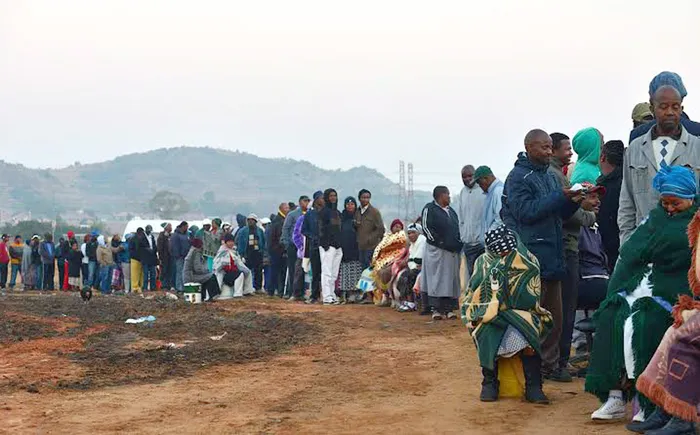
LONG LINE TO FREEDOM: In 1994, millions of South Africans stood patiently in voting queues for hours — many voting for the first time in their lives. That patience symbolised discipline, and faith in democracy.
Image: INDEPENDENT MEDIA
PUBLIC discourse carries responsibility. Words spoken by intellectuals, academics and public figures do not float in isolation – they shape perceptions, influence communities, and sometimes deepen wounds that history has not fully healed.
The article “Outrage as Wits professor Srilata Roy labels South Africans lazy and complacent”, refers.
History reminds us how damaging careless words and racial arrogance can be. Under colonial rule and apartheid, Indians were dehumanised both in South Africa and elsewhere. In many public spaces and entertainment venues, humiliating signs declared: “Indians and dogs not allowed.”
Such language was not merely offensive – it was a deliberate attempt to strip people of dignity and humanity. Black South Africans endured even harsher and more systematic brutality under apartheid’s racial hierarchy. These memories are not distant, they remain embedded in collective consciousness.
When sweeping labels are attached to an entire nation – especially one with South Africa’s past – it demands a firm, but dignified response.
South Africa is not defined by stereotypes. It is defined by struggle, resilience, reconciliation and contribution to humanity. And black South Africans, in particular, have shaped not only the destiny of their own country, but the moral direction of the modern world.
This article is not written in anger. It is written with clarity, respect and historical truth.
The moral giants who changed the world
Few nations have gifted the world leaders of such moral magnitude.
Nelson Mandela did not merely become South Africa’s first democratically-elected president. He became a universal symbol of forgiveness over revenge, unity over hatred, and reconciliation over civil war. After 27 years in prison, he emerged without bitterness. That level of discipline and emotional intelligence reshaped global leadership standards.
Oliver Tambo carried the Struggle into international diplomacy. His relentless efforts ensured apartheid became a global moral crisis, not just a domestic injustice. Steve Biko revolutionised consciousness itself. His philosophy of Black Consciousness empowered generations to reclaim psychological dignity before political freedom. Albertina Sisulu and countless black women sustained resistance networks while facing harassment, imprisonment and exile.
These were not passive people. They were architects of freedom whose ideas are studied globally. A complacent nation does not produce such leaders.
Building democracy from ashes
In 1994, millions of South Africans stood patiently in voting queues for hours – many voting for the first time in their lives. That patience symbolised discipline, and faith in democracy. The Constitution that followed became one of the most progressive in the world, enshrining equality, dignity and socio-economic rights. Institutions like the Constitutional Court of South Africa are cited internationally as models of constitutional jurisprudence.
Leaders including Cyril Ramaphosa played critical roles in delicate negotiations that prevented civil war. Negotiation under tension requires intellect, endurance and vision – not complacency.
“South Africa’s peaceful transition remains one of the most studied political transformations in modern history – a stark contrast to many other independence processes, including the 1947 Partition of India, when millions were displaced and large-scale communal violence led to immense human suffering across the newly-formed borders of India and Pakistan.”
Intellectual and academic contributions
Black South Africans continue to shape academia, governance and public accountability.
Thuli Madonsela strengthened constitutional democracy through fearless anti-corruption investigations. Her work reinforced institutional integrity at critical moments.
Across universities such as the University of the Witwatersrand, the University of Cape Town, and others, black scholars contribute to climate science research, public health innovation, African philosophy, development economics and legal scholarship
Many of these scholars overcame systemic educational disadvantages to achieve global recognition.
Excellence emerging from historical exclusion is not laziness – it is extraordinary resilience.
Health, science and global impact
South Africa has been central to global HIV/Aids research and treatment innovation. Black scientists, doctors and community health workers have saved millions of lives through research, prevention strategies and community outreach.
During the Covid-19 pandemic, South African researchers played a key role in genomic sequencing and variant identification, contributing significantly to global scientific understanding. In rural communities, healthcare professionals work under intense pressure, often with limited resources – yet continue serving with commitment.
This is dedication. Not complacency.
Cultural power that moves the world
Culture is where a nation’s spirit speaks. Miriam Makeba brought African music and the anti-apartheid Struggle to global audiences.
Hugh Masekela fused jazz with political resistance, influencing generations worldwide. Trevor Noah reshaped global political satire, bringing uniquely South African storytelling to international platforms.
From amapiano music to literature and film, black South African creatives influence global cultural currents.
Sporting excellence and national pride
In sports, discipline and sacrifice are visible to the world.
Caster Semenya symbolises resilience and excellence in athletics.
Siya Kolisi made history as the first black captain of the Springboks to lift the Rugby World Cup, a powerful symbol of post-apartheid unity.
The women’s national football team continues to inspire young girls across the continent. Behind every medal stands hard work and collective support.
Entrepreneurs and economic builders
From township businesses to multinational corporations, black South Africans are reshaping the economic landscape. Despite structural inequalities inherited from apartheid, innovation thrives. Every small business owner who opens their shop at dawn disproves the myth of laziness.
Diplomacy and continental leadership
South Africa plays a major role in African Union initiatives, BRICS co-operation, and Global South diplomacy. Black South African diplomats and policymakers shape global conversations.
The working class: the true backbone
Miners, factory workers, teachers, drivers, domestic workers – black labour built South Africa’s infrastructure under brutal conditions.
A nation cannot function without disciplined daily labour.
A shared history of racial classification and resistance
India understands racial humiliation. Under apartheid laws, Indians in South Africa were classified as “non-white” and subjected to discriminatory policies. Across colonial history, Indians were racially labelled and dehumanised.
We know what it means to be segregated. We know what it means to be treated as inferior. That shared pain is not a divider – it is a bond.
The liberation of South Africa was celebrated in India because it felt personal. It was not foreign – it was fraternal.
Unity over division
Before making sweeping statements about South Africans – especially by those who benefit from freedoms secured by their sacrifices – one must remember: an insult directed at them echoes against all of us who share histories of racial oppression.
Division weakens the Global South. Solidarity strengthens it.
The world once tried to fragment us through racial hierarchy and colonial narratives. We must not repeat that fragmentation ourselves.
Let us find commonalities rather than differences.
Let us build partnerships rather than stereotypes.
Let us honour dignity rather than diminish it.
South Africa stands not as a nation of complacency, but as a nation of courage. And in that courage, India recognises a brother.
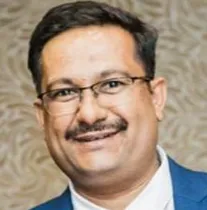
Amit More
Image: Facebook
Amit More is the president of the Indian Association of South Africa and an EXCO member of the India South Africa Chamber of Commerce
** The views expressed do not necessarily reflect the views of IOL or Independent Media.