

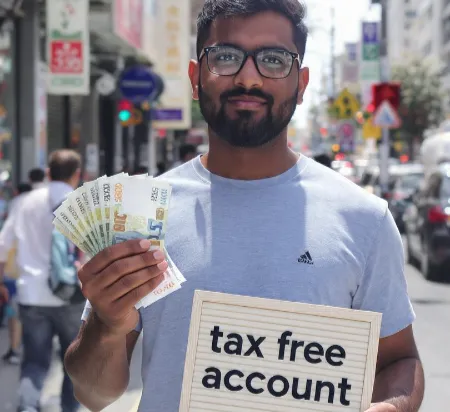
To reduce South Africa’s dependence on foreign debt and improve household financial health, the minister introduced several incentives aimed at encouraging a culture of saving within the economy. One of them is a tax-free savings account. The annual contribution limit for tax-free investment accounts has increased from R36,000 to R46,000. Picture: Meta AI
Image: Meta AI
THE 2026 Budget speech, delivered by Finance Minister Enoch Godongwana last week, comes at a rare moment of cautious optimism for South Africa. After years of fiscal "belt-tightening" and the looming threat of a VAT increase in previous Budgets, the 2026 Budget represents a "holding pattern" that prioritises stability over shock. Perhaps, at last, we are poised to witness a focus on growth, and an expansion of support for small- and medium-sized enterprises (SMEs). Is this our new “wings of change”?
For the ordinary South African – whether an office worker in uMhlanga or a grandmother in a rural village – the Budget is not merely a collection of macroeconomic figures; it serves as a direct roadmap for their cost of living over the next year. Here is a breakdown of how the 2026 Budget impacts the financial well-being and daily lives of South African citizens.
In 2026, middle-class and salaried workers benefit from the cancellation of a proposed R20 billion tax increase, which provides direct tax relief and financial breathing room. The government has adjusted personal income tax brackets and medical tax credits for inflation, which is set at 3,4%. This adjustment addresses the issue of "bracket creep", where nominal salary increases meant to keep up with inflation inadvertently push workers into higher tax brackets, reducing take-home pay. Many middle-class individuals faced this situation in previous years.
For the 2026/27 tax year, individuals earning under R100,000 per year (about R8,333 per month) will pay no income tax. Monthly tax credits for medical scheme contributions have also risen to R376 for the first two members and R254 for additional members, translating to approximately R15,120 in annual tax savings for a family of four.
The current Budget aims to create an environment for growth, with an increase in the compulsory VAT registration threshold from R1 million to R2,3 million. This now alleviates the administrative compliance burden on SMEs. Another measure to support SMEs is the capital gains tax exemption for older persons selling a small business, from R1,8 million to R2,7 million.
While income taxes have seen some relief, the government has found a way to raise revenue at petrol stations. We are facing increases in commuting costs and fuel prices. After a three-year freeze on the general fuel levy, the government has reinstated inflation-linked increases. Starting April 1 this year, motorists will experience a combined 21-cent per litre increase for both petrol and diesel.
Though a 21-cent increase may seem minor, the secondary effects affect ordinary citizens the most. Higher fuel prices will inevitably lead to increased taxi fares and higher transport costs for food, which keeps grocery prices uncomfortably high. In short, the cost of living has inadvertently risen.
South Africa’s Budget is among the most redistributive in the world, with approximately 60% of non-interest spending dedicated to the "social wage", which includes education, health and social grants. For the millions of South Africans who depend on state support for survival, the 2026 Budget offers a modest safety net:
- Grant increases: permanent grants have been increased above the inflation rate. The old age and disability grants now amount to R2,400 per month, while the child support grant has increased to R580 per month.
- The social relief of distress (SRD) grant: This serves as a lifeline for the unemployed and has been extended at its current levels. However, discussions regarding a permanent basic income grant have been postponed to future fiscal cycles. We are reminded that the country has one of the highest unemployment rates at 41%.
- School nutrition: funding for the school nutrition programme continues, ensuring that nearly 10 million pupils receive at least one nutritious meal each day. This critical intervention addresses the rising rates of child stunting in the country.
To reduce South Africa’s dependence on foreign debt and improve household financial health, the minister introduced several incentives aimed at encouraging a culture of saving within the economy:
- Tax-free savings: the annual contribution limit for tax-free investment accounts has been increased from R36,000 to R46,000.
- Retirement contributions: for the first time in a decade, the annual limit for tax-deductible retirement fund contributions has been raised from R350,000 to R430,000.
- Property and death: the primary residence exclusion for Capital Gains Tax (CGT) has been raised to R3 million, and the CGT exclusion upon death has increased to R440,000. These changes provide relief for families inheriting assets or selling their homes.
As expected, "sin taxes" on alcohol and tobacco products increased by approximately 3,4%.
- The tax on a 340ml can of beer or cider has risen by 8 cents.
- A 750ml bottle of spirits, such as brandy or vodka, now costs R3,20 more in tax.
- There has also been an increase in excise duties on vaping products and electronic nicotine delivery systems, reflecting the government's ongoing focus on health-related taxation.
The 2026 Budget is considered the most "consumer-friendly" in recent years, thanks to stronger revenue collection and a reduced budget deficit of 4.5% of GDP. By avoiding a VAT hike and providing income tax relief, the government has offered households a much-needed break. This Budget also sees the highest increase in capital investment and a co-ordinated approach that includes lower inflation and a reduced cost of capital.
Over R1 trillion is allocated for infrastructure – specifically in energy, water, and transport – over the next three years. If this funding leads to fewer water outages, better roads and more reliable rail services, citizens will benefit significantly beyond just small tax rebates.
While tax increases are currently on hold for South Africans, concerns remain about rising fuel costs and the slow pace of municipal reform, which is vital for economic growth.
** The views expressed do not necessarily reflect the views of IOL or Independent Media.